
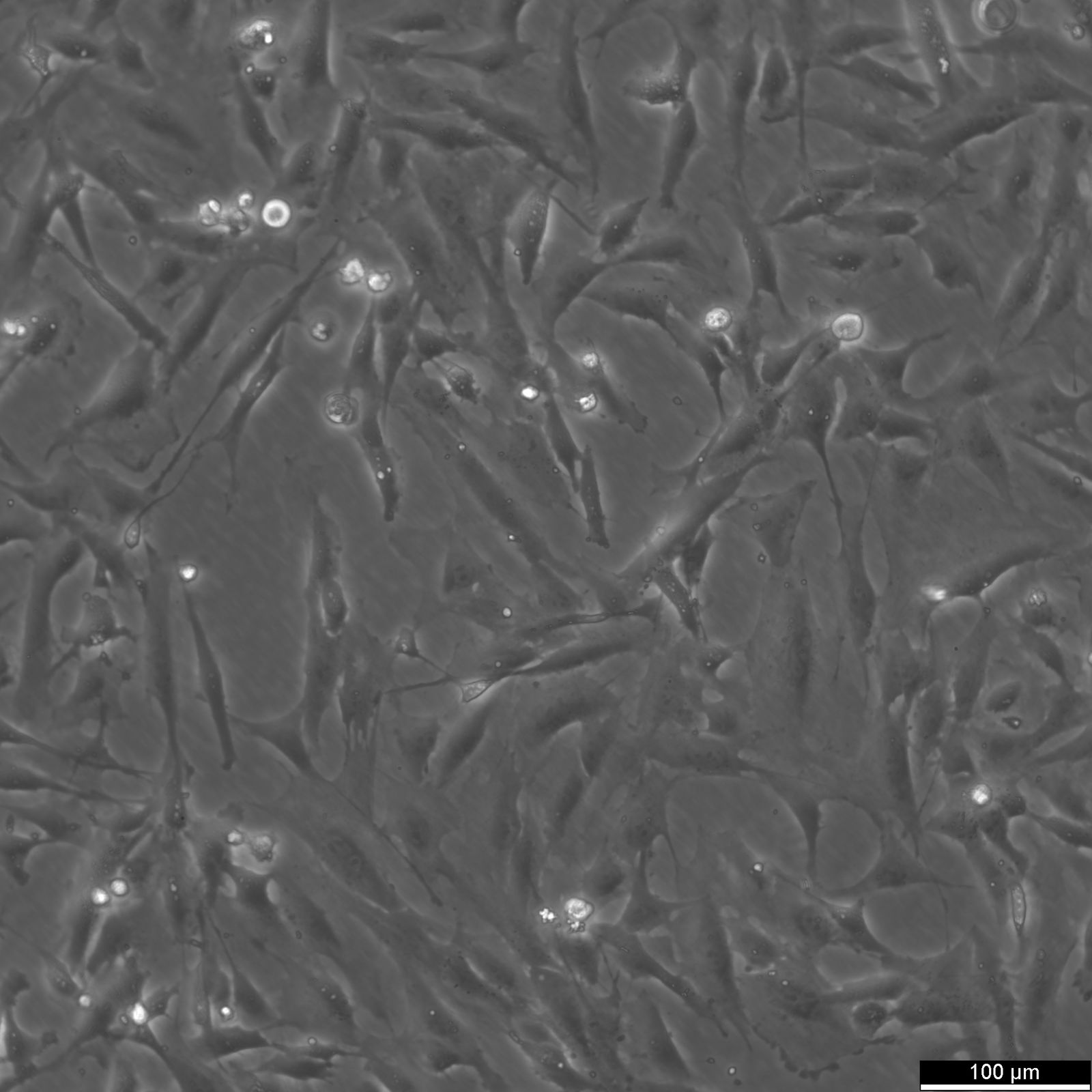
SF126 Cells
USUSD$800.00*
Products are shipped frozen on dry ice in cryotubes. Each cryotube typically contains 3 × 10⁶ cells for adherent lines or 5 × 10⁶ cells for suspension lines (refer to the batch CoA for details).
一般資訊
| 說明 | The SF126 cell line is a human glioblastoma cell line, widely utilized in research on brain tumors, particularly in studies exploring the molecular mechanisms of glioblastoma and its response to various treatments. Derived from a patient with glioblastoma multiforme, SF126 cells are known for their aggressive growth and invasive behavior, typical of glioblastomas, making them a crucial model for investigating therapeutic strategies and understanding tumor biology. One of the notable features of SF126 is its use in exploring both apoptosis (programmed cell death) and autophagy, as these processes are central to cancer cell survival and resistance to treatment. SF126 has been extensively studied for its interactions with p53, a tumor suppressor gene frequently mutated in cancers. In SF126, researchers have investigated the effects of wild-type and mutant p53 on cell death mechanisms. It was found that p53 induces both apoptosis and autophagy, with autophagic cell death playing a significant role in p53-dependent cell death. This has implications for therapies targeting autophagic pathways, which may enhance the efficacy of treatments aimed at inducing tumor cell death. Additionally, studies have shown that manipulating autophagy can influence the overall tumor response to p53 activation, offering potential therapeutic angles for glioblastoma treatment. Further research on SF126 has explored its binding properties with opioid peptides, such as β-endorphins, revealing specific binding sites for these molecules. This has provided insights into how glioblastoma cells might interact with endogenous hormones and signaling molecules in the brain, further underscoring the complexity of glioblastoma biology and potential novel therapeutic targets. |
|---|---|
| 生物體 | Human |
| 組織 | Brain, left frontal lobe |
| 疾病 | Glioblastoma |
| 應用 | cell biology studies of gliomas |
| 同義詞 | SF-126, SF 126 |
特徵
| 年齡 | 50 years |
|---|---|
| 性別 | Female |
| 族裔 | European |
| 生長特性 | Adherent |
監管數據
| 引用 | SF126 (Cytion catalog number 300608) |
|---|---|
| 生物安全等級 | 1 |
| NCBI_TaxID | 9606 |
| Cellosaurus 編號 | CVCL_1688 |
生物分子資料
| 致瘤性 | No (tested in athymic mice) |
|---|---|
| 產品 | Procollagen III, forms collagen fibers in vitro (interstitial collagen synthesis) |
| 倍性狀態 | Aneuploid |
處理方式
| 培養基 | EMEM (MEM Eagle), w: 2 mM L-Glutamine, w: 2.2 g/L NaHCO3, w: EBSS (Cytion article number 820100a) |
|---|---|
| 營養補充品 | Supplement the medium with 10% FBS and 1% NEAA |
| 解離試劑 | Accutase |
| 傳代培養 | Remove the old medium from the adherent cells and wash them with PBS that lacks calcium and magnesium. For T25 flasks, use 3-5 ml of PBS, and for T75 flasks, use 5-10 ml. Then, cover the cells completely with Accutase, using 1-2 ml for T25 flasks and 2.5 ml for T75 flasks. Let the cells incubate at room temperature for 8-10 minutes to detach them. After incubation, gently mix the cells with 10 ml of medium to resuspend them, then centrifuge at 300xg for 3 minutes. Discard the supernatant, resuspend the cells in fresh medium, and transfer them into new flasks that already contain fresh medium. |
| 冷凍培養基 | As a cryopreservation medium, we use 50% basal medium + 40% FBS + 10% DMSO, or CM-1 (Cytion catalog number 800100), which includes optimized osmoprotectants and metabolic stabilizers to enhance recovery and reduce cryo-induced stress. |
| 細胞解凍與培養 |
|
| 培養環境 | 37°C, 5% CO2, humidified atmosphere. |
| 運送條款 | Cryopreserved cell lines are shipped on dry ice in validated, insulated packaging with sufficient refrigerant to maintain approximately −78 °C throughout transit. On receipt, inspect the container immediately and transfer vials without delay to appropriate storage. |
| 儲存條件 | For long-term preservation, place vials in vapor-phase liquid nitrogen at about −150 to −196 °C. Storage at −80 °C is acceptable only as a short interim step before transfer to liquid nitrogen. |
品質控制與分子分析
| 不孕症 | Mycoplasma contamination is excluded using both PCR-based assays and luminescence-based mycoplasma detection methods. To ensure there is no bacterial, fungal, or yeast contamination, cell cultures are subjected to daily visual inspections. |
|---|
分析證明書 (CoA)
| 批次編號 | 證書類型 | 日期 | 型號 |
|---|---|---|---|
| 300608-080724 | 分析證明書 | 23. May. 2025 | 300608 |