
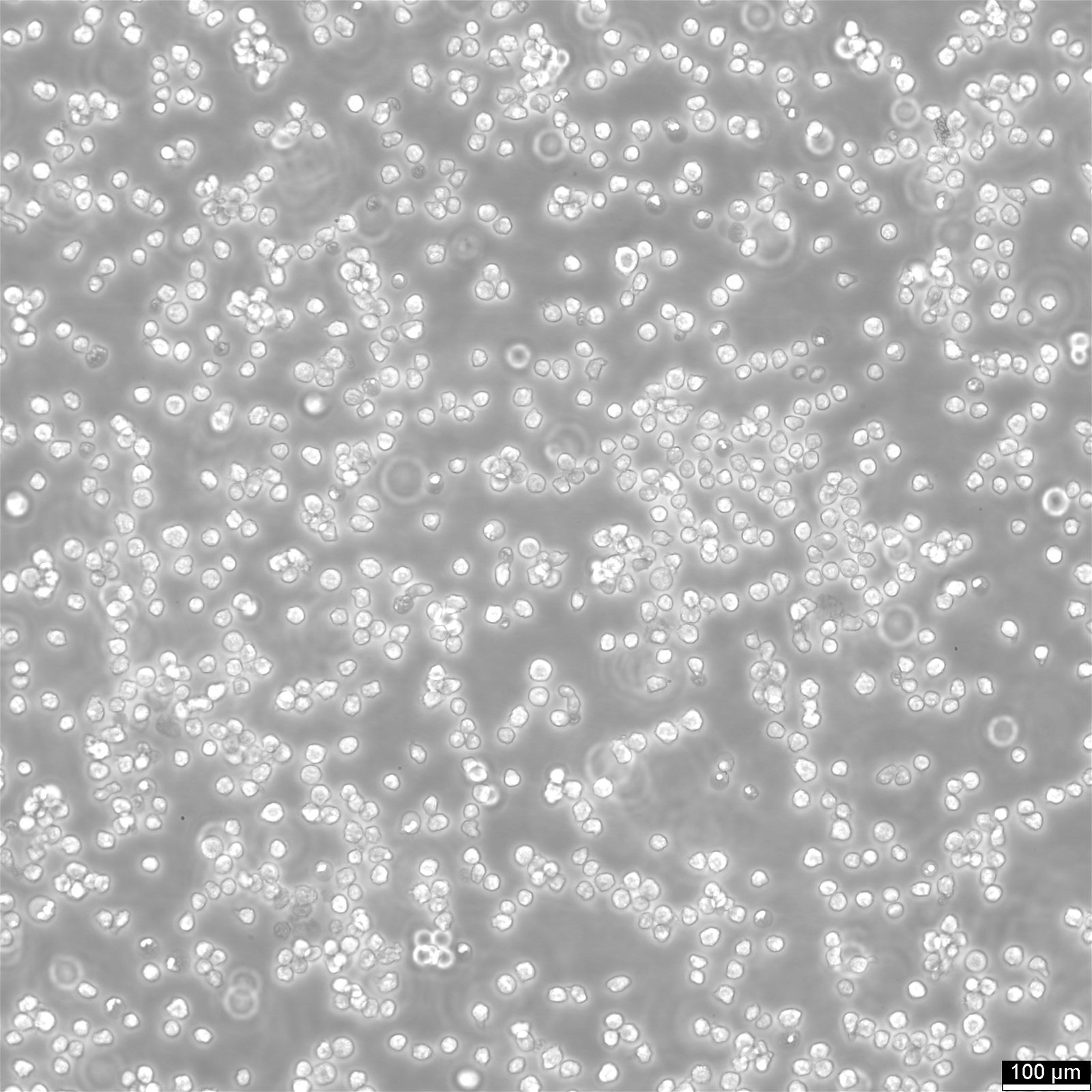
Nalm-6 Cells
USUSD$395.00*
Products are shipped frozen on dry ice in cryotubes. Each cryotube typically contains 3 × 10⁶ cells for adherent lines or 5 × 10⁶ cells for suspension lines (refer to the batch CoA for details).
Insights on the Nalm-6 cell line
| 說明 | The Nalm-6 cell line, derived from the peripheral blood of a patient with B-cell precursor acute lymphoblastic leukemia (ALL), has become a critical tool in leukemia research. The human cell line Nalm 6 encapsulates the biological characteristics of B-cell ALL, providing a unique window into the disease's genomic landscape, including genome instability and DNA repair mechanisms. The utility of Nalm-6 cells extends to studying the efficacy of available therapeutic targets and existing resistance mechanisms. The cell line's sensitivity to cytotoxic agents and its role in elucidating the homologous recombination (HDR) repair functions are of particular interest, especially concerning the HDR cells' ability to correct DNA damage. The Nalm6 cell line is a reliable model for studying the complex nature of acute leukemia. It facilitates research into the gene expression profiles involved in glycolysis, lipid and carbohydrates metabolism, and the mTORC1 pathway, highlighting the metabolic reprogramming in leukemia cells. Furthermore, the cell line's application in reverse genetics and whole transcriptome analysis aids in dissecting the intricate molecular networks driving leukemia progression and resistance. Research utilizing the Nalm-6 cell line, including studies on clonal variants like clone G5 and resistant cell lines such as those with a high HPRT mutation frequency or C9 with resistance index, provides insights into leukemia's heterogeneity. The exploration of leukemia dynamics, especially in the context of glucocorticoid resistance and MSH2 expression, underscores the potential for developing more targeted and effective treatments for ALL. In summary, the Nalm-6 cell line is a pivotal resource in leukemia research, offering profound insights into B-cell ALL through its applications in studying genomic instability, DNA repair mechanisms, therapeutic target efficacy, resistance mechanisms, and the underlying molecular pathways influencing leukemia's complex biology and heterogeneity. |
|---|---|
| 生物體 | Human |
| 組織 | Blood |
| 疾病 | Adult B acute lymphoblastic leukemia |
| 同義詞 | NALM-6, NALM 6, Nalm 6, NALM6, Nalm6, NALM-6-M1 |
Details of the lymphoblastic leukemia cell line Nalm-6
| 年齡 | 19 years |
|---|---|
| 性別 | Male |
| 形態學 | Round cells |
| 細胞類型 | B cell precursor |
| 生長特性 | Suspension |
Documentation
| 引用 | Nalm-6 (Cytion catalog number 300297) |
|---|---|
| 生物安全等級 | 1 |
| NCBI_TaxID | 9606 |
| Cellosaurus 編號 | CVCL_0092 |
Genomics
| 逆轉錄酶 | Negative |
|---|
Handling Nalm6 cells
| 培養基 | RPMI 1640, w: 2.0 mM stable Glutamine, w: 2.0 g/L NaHCO3 (Cytion article number 820700a) |
|---|---|
| 營養補充品 | Supplement the medium with 10% FBS |
| 倍增時間 | 35 to 40 hours |
| 傳代培養 | Maintain cultures by periodically adding or replacing the medium. Initiate cultures with a density of 5 x 10⁵ cells/ml and keep the cell concentration within the range of 3 x 10⁵ to 1 x 10⁶ cells/ml for optimal growth. |
| 冷凍培養基 | As a cryopreservation medium, we use complete growth medium (including FBS) + 10% DMSO for adequate post-thaw viability, or CM-1 (Cytion catalog number 800100), which includes optimized osmoprotectants and metabolic stabilizers to enhance recovery and reduce cryo-induced stress. |
| 細胞解凍與培養 |
|
| 培養環境 | 37°C, 5% CO2, humidified atmosphere. |
| 運送條款 | Cryopreserved cell lines are shipped on dry ice in validated, insulated packaging with sufficient refrigerant to maintain approximately −78 °C throughout transit. On receipt, inspect the container immediately and transfer vials without delay to appropriate storage. |
| 儲存條件 | For long-term preservation, place vials in vapor-phase liquid nitrogen at about −150 to −196 °C. Storage at −80 °C is acceptable only as a short interim step before transfer to liquid nitrogen. |
Quality control
| 不孕症 | Mycoplasma contamination is excluded using both PCR-based assays and luminescence-based mycoplasma detection methods. To ensure there is no bacterial, fungal, or yeast contamination, cell cultures are subjected to daily visual inspections. |
|---|
分析證明書 (CoA)
| 批次編號 | 證書類型 | 日期 | 型號 |
|---|---|---|---|
| 300297-422 | 分析證明書 | 23. May. 2025 | 300297 |
| 300297-322 | 分析證明書 | 18. Aug. 2025 | 300297 |