
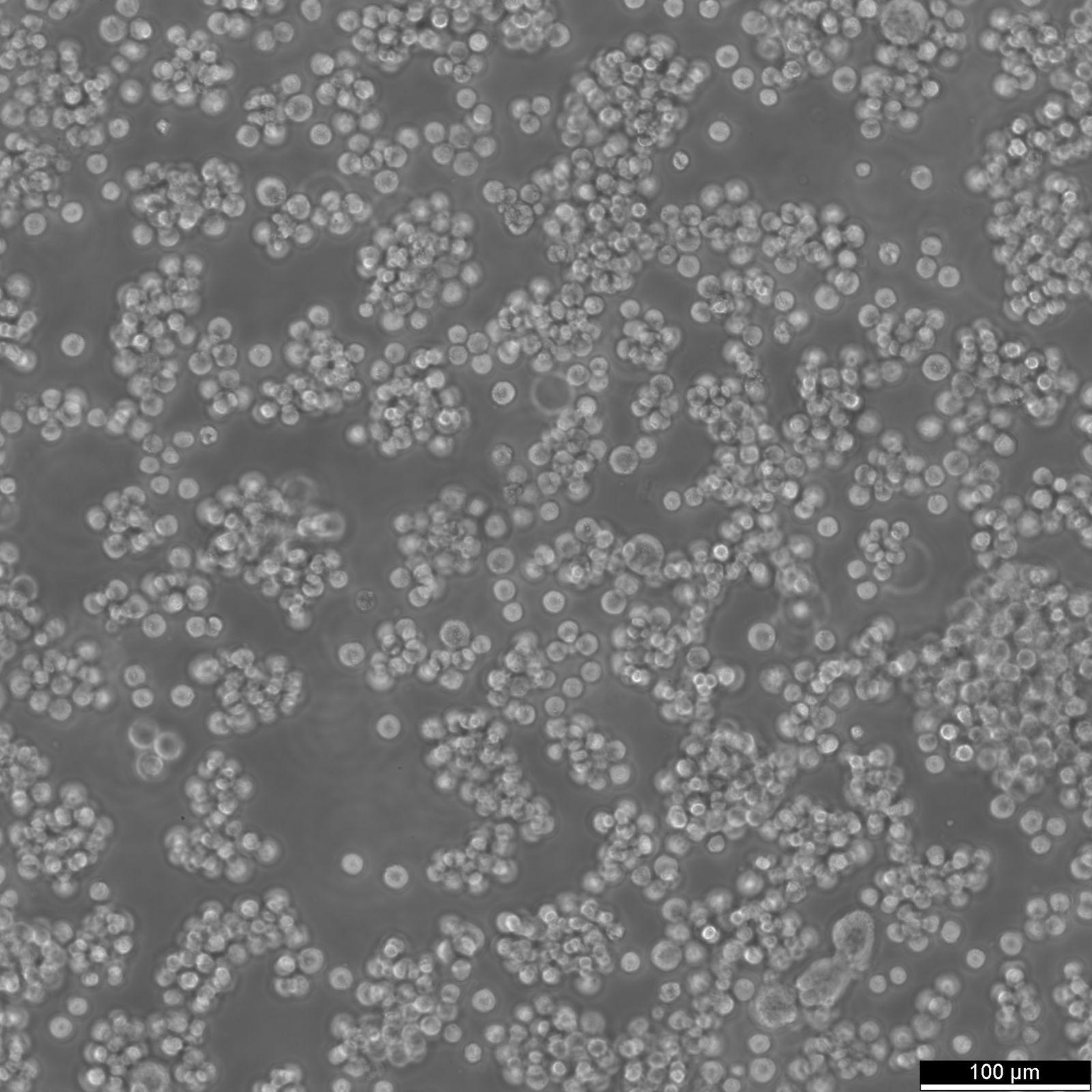
AKATA Cells
USUSD$550.00*
Products are shipped frozen on dry ice in cryotubes. Each cryotube typically contains 3 × 10⁶ cells for adherent lines or 5 × 10⁶ cells for suspension lines (refer to the batch CoA for details).
一般資訊
| 說明 | The AKATA cell line, derived from Burkitt’s lymphoma, is a widely used model to study Epstein-Barr virus (EBV) latency and reactivation. EBV is a ubiquitous herpesvirus linked to a range of cancers, including Burkitt lymphoma, and typically establishes a latent infection within B cells. In AKATA cells, EBV is maintained in an episomal state with a type I latency program, expressing a limited set of viral genes such as EBNA-1, EBER RNAs, and BamHI-A rightward transcripts (BARTs). This restricted gene expression allows the virus to persist in the host without initiating a full lytic cycle. However, AKATA cells can be triggered to enter the lytic phase, where the virus actively replicates and produces progeny. This reactivation is commonly induced through cross-linking surface immunoglobulins, which makes AKATA cells an excellent tool for studying EBV reactivation dynamics and viral gene regulation. Research utilizing the AKATA cell line has also examined the impact of chemotherapeutic agents on EBV reactivation. For instance, drugs like etoposide and doxorubicin have been shown to influence viral latency. Etoposide induces apoptosis in AKATA cells but reactivates EBV less effectively than doxorubicin, which promotes higher levels of lytic gene expression and viral progeny production. Additionally, studies involving gene editing techniques, such as CRISPR/Cas9, have explored the role of epigenetic regulators in AKATA cells. For example, knockout of the histone methyltransferase EZH2 in AKATA cells disrupts the maintenance of latency by reducing the trimethylation of histone H3K27, leading to increased expression of both latent and lytic EBV genes, as well as enhanced viral replication and cell proliferation. AKATA cells also display distinct phenotypic characteristics based on EBV presence, such as increased sensitivity to apoptosis-inducing agents and variations in gene expression related to apoptotic pathways. These differences make EBV-positive AKATA cells a powerful model for dissecting EBV's influence on host cell survival, gene expression, and the virus's lifecycle, particularly in the context of cancer development and potential therapeutic interventions targeting EBV-associated malignancies. |
|---|---|
| 生物體 | Human |
| 組織 | Blood |
| 疾病 | Burkitt lymphoma |
| 同義詞 | Akata, Akata-BL, Akata BL, Akata-EC, Akata-Early Culture |
特徵
| 年齡 | 4 years |
|---|---|
| 性別 | Female |
| 族裔 | Japanese |
| 形態學 | Lymphoblast |
| 細胞類型 | B cell |
| 生長特性 | Suspension |
監管數據
| 引用 | AKATA (Cytion catalog number 305510) |
|---|---|
| 生物安全等級 | 2 |
| NCBI_TaxID | 9606 |
| Cellosaurus 編號 | CVCL_0148 |
生物分子資料
| 病毒 | Transformant: EBV |
|---|
處理方式
| 培養基 | RPMI 1640, w: 2.0 mM stable Glutamine, w: 2.0 g/L NaHCO3 (Cytion article number 820700a) |
|---|---|
| 營養補充品 | Supplement the medium with 10% FBS |
| 傳代培養 | Gather the suspension cells in a 15 ml tube and gently wash the adherent cells with PBS lacking calcium and magnesium (use 3-5 ml for T25 flasks and 5-10 ml for T75 flasks). Apply Accutase (1-2 ml for T25 flasks, 2.5 ml for T75 flasks) ensuring full coverage of the cell layer. Allow the cells to incubate at room temperature for 10 minutes. Following incubation, combine and centrifuge both the suspension and adherent cells. After centrifugation, carefully resuspend the cell pellet and transfer the cell suspension into new flasks containing fresh medium. |
| 冷凍培養基 | As a cryopreservation medium, we use complete growth medium (including FBS) + 10% DMSO for adequate post-thaw viability, or CM-1 (Cytion catalog number 800100), which includes optimized osmoprotectants and metabolic stabilizers to enhance recovery and reduce cryo-induced stress. |
| 細胞解凍與培養 |
|
| 培養環境 | 37°C, 5% CO2, humidified atmosphere. |
| 運送條款 | Cryopreserved cell lines are shipped on dry ice in validated, insulated packaging with sufficient refrigerant to maintain approximately −78 °C throughout transit. On receipt, inspect the container immediately and transfer vials without delay to appropriate storage. |
| 儲存條件 | For long-term preservation, place vials in vapor-phase liquid nitrogen at about −150 to −196 °C. Storage at −80 °C is acceptable only as a short interim step before transfer to liquid nitrogen. |
品質控制與分子分析
| 不孕症 | Mycoplasma contamination is excluded using both PCR-based assays and luminescence-based mycoplasma detection methods. To ensure there is no bacterial, fungal, or yeast contamination, cell cultures are subjected to daily visual inspections. |
|---|
分析證明書 (CoA)
| 批次編號 | 證書類型 | 日期 | 型號 |
|---|---|---|---|
| 305510-130225 | 分析證明書 | 23. May. 2025 | 305510 |
| 305510-200326 | 分析證明書 | 04. May. 2026 | 305510 |