
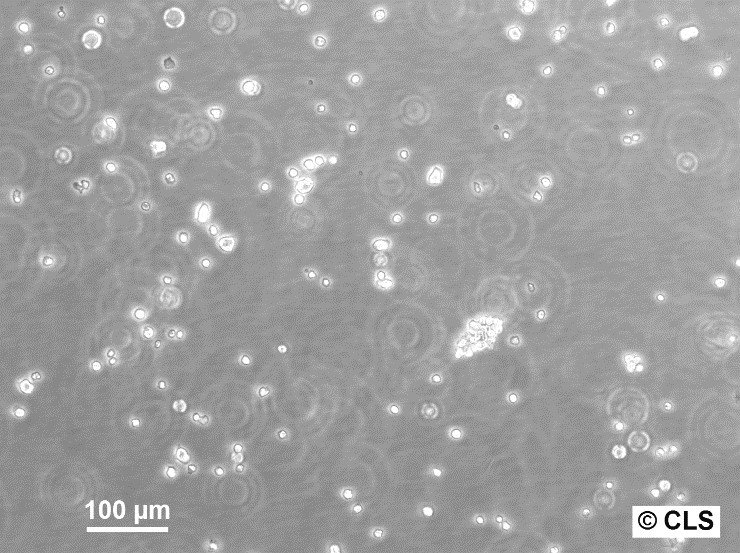
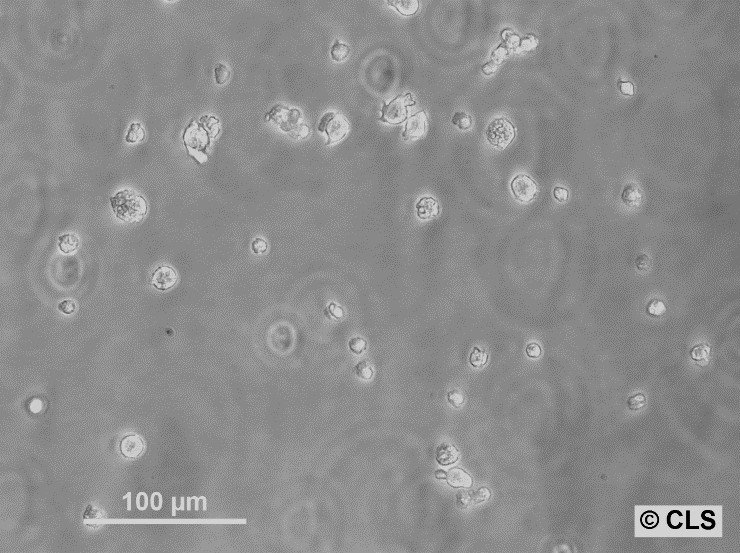
WEHI-3 Cells
US$ 395,00*
Products are shipped frozen on dry ice in cryotubes. Each cryotube typically contains 3 × 10⁶ cells for adherent lines or 5 × 10⁶ cells for suspension lines (refer to the batch CoA for details).
Informações gerais
| Descrição | The WEHI-3 cell line is a murine leukemia cell line, specifically derived from the BALB/c strain. It was originally established from a spontaneous myelomonocytic leukemia found in a mouse. This cell line is extensively used as a model to study myeloid differentiation and the immune response, particularly the mechanisms underlying leukemia progression and the response of leukemic cells to various treatments. WEHI-3 cells are capable of producing interleukin-3 (IL-3) and are often used in research as a source of this cytokine. In laboratory settings, WEHI-3 cells have been employed to assess the differentiation potential of various compounds and the biological activities that modulate the hematopoietic system. These cells have proven instrumental in understanding how alterations in gene expression affect myeloid cells, serving as a critical tool in the development of therapeutic strategies against myeloid leukemias. The cell line is also used in vivo to establish murine models of disease through transplantation into susceptible mouse strains, enabling studies of tumor progression and the efficacy of anti-cancer agents. |
|---|---|
| Organismo | Mouse |
| Tecido | Peripheral blood |
| Doença | Leukemia |
| Sinônimos | WEHI 3, WEHI3, Wehi-3 |
Características
| Raça/Subespécie | BALB/c |
|---|---|
| Morfologia | Macrophage-like |
| Tipo de célula | Myelomonocyte |
| Propriedades de crescimento | Suspension |
Dados regulatórios
| Referência | WEHI-3 (Cytion catalog number 400381) |
|---|---|
| Nível de biossegurança | 2 |
| NCBI_TaxID | 10090 |
| Número de acesso do Cellosaurus | CVCL_3622 |
Dados biomoleculares
| Receptores expressos | Immunoglobulin (Fc), complement (C3) |
|---|---|
| Vírus | Ectromelia virus (mousepox) negative |
| Produtos | Lysozyme, granulocyte colony stimulating activity (G-CSA), interleukin-3 (interleukin 3, IL-3) |
Manuseio
| Meio de cultura | RPMI 1640, w: 2.0 mM stable Glutamine, w: 2.0 g/L NaHCO3 (Cytion article number 820700a) |
|---|---|
| Suplementos | Supplement the medium with 10% FBS |
| Subcultura | Cultures can be maintained by addition or replacement of fresh medium. Start cultures at 5 x 10⁵ cells/ml and maintain between 3 x 10⁵ and 1x10⁶ cells/ml. Adherent cells can be recovered by scraping. |
| Renovação de fluidos | 2 to 3 times per week |
| Meio de congelamento | As a cryopreservation medium, we use complete growth medium (including FBS) + 10% DMSO for adequate post-thaw viability, or CM-1 (Cytion catalog number 800100), which includes optimized osmoprotectants and metabolic stabilizers to enhance recovery and reduce cryo-induced stress. |
| Descongelamento e cultura de células |
|
| Atmosfera de incubação | 37°C, 5% CO2, humidified atmosphere. |
| Condições de envio | Cryopreserved cell lines are shipped on dry ice in validated, insulated packaging with sufficient refrigerant to maintain approximately −78 °C throughout transit. On receipt, inspect the container immediately and transfer vials without delay to appropriate storage. |
| Condições de armazenamento | For long-term preservation, place vials in vapor-phase liquid nitrogen at about −150 to −196 °C. Storage at −80 °C is acceptable only as a short interim step before transfer to liquid nitrogen. |
Controle de Qualidade e Análise Molecular
| Esterilidade | Mycoplasma contamination is excluded using both PCR-based assays and luminescence-based mycoplasma detection methods. To ensure there is no bacterial, fungal, or yeast contamination, cell cultures are subjected to daily visual inspections. |
|---|