
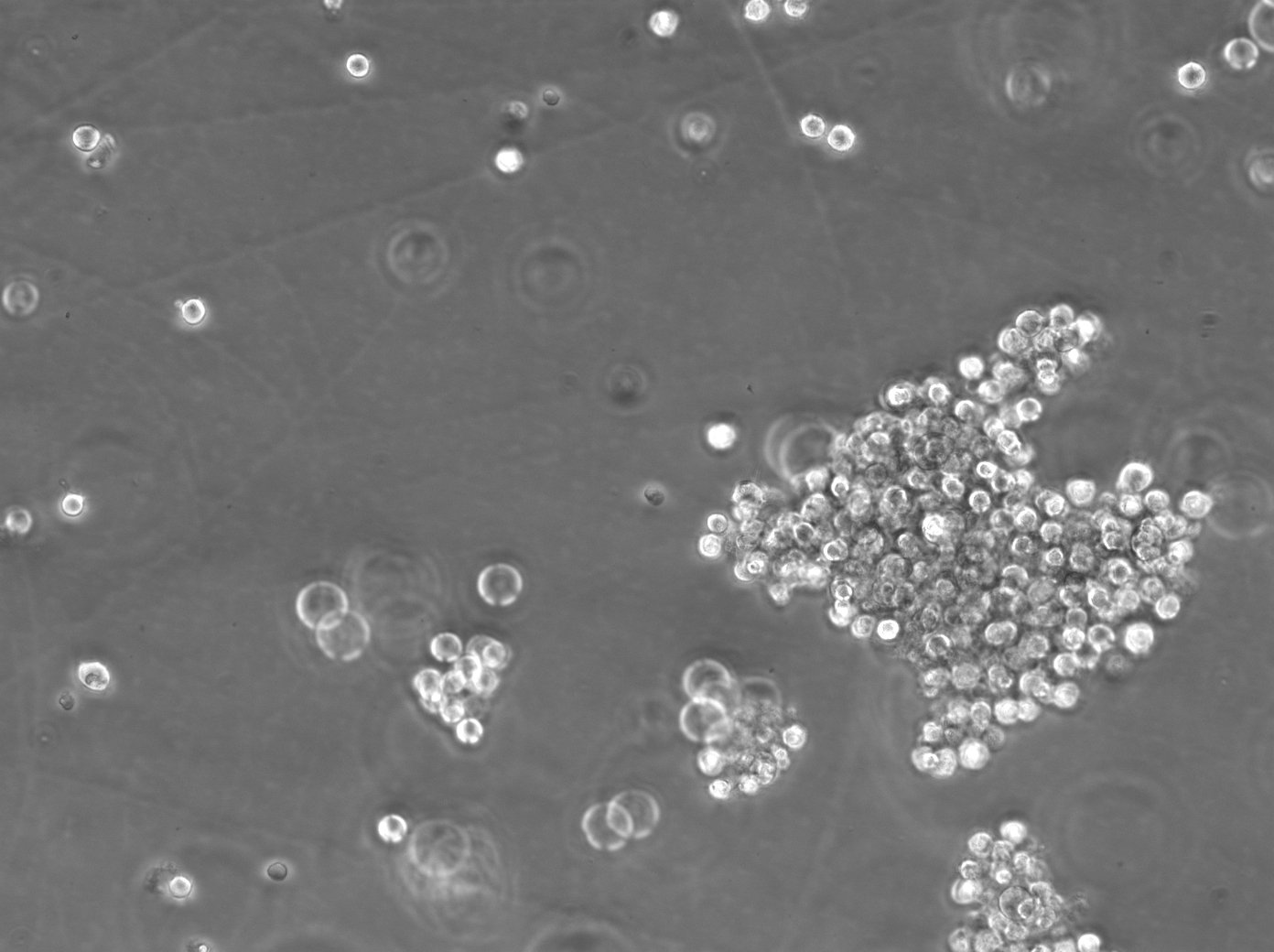
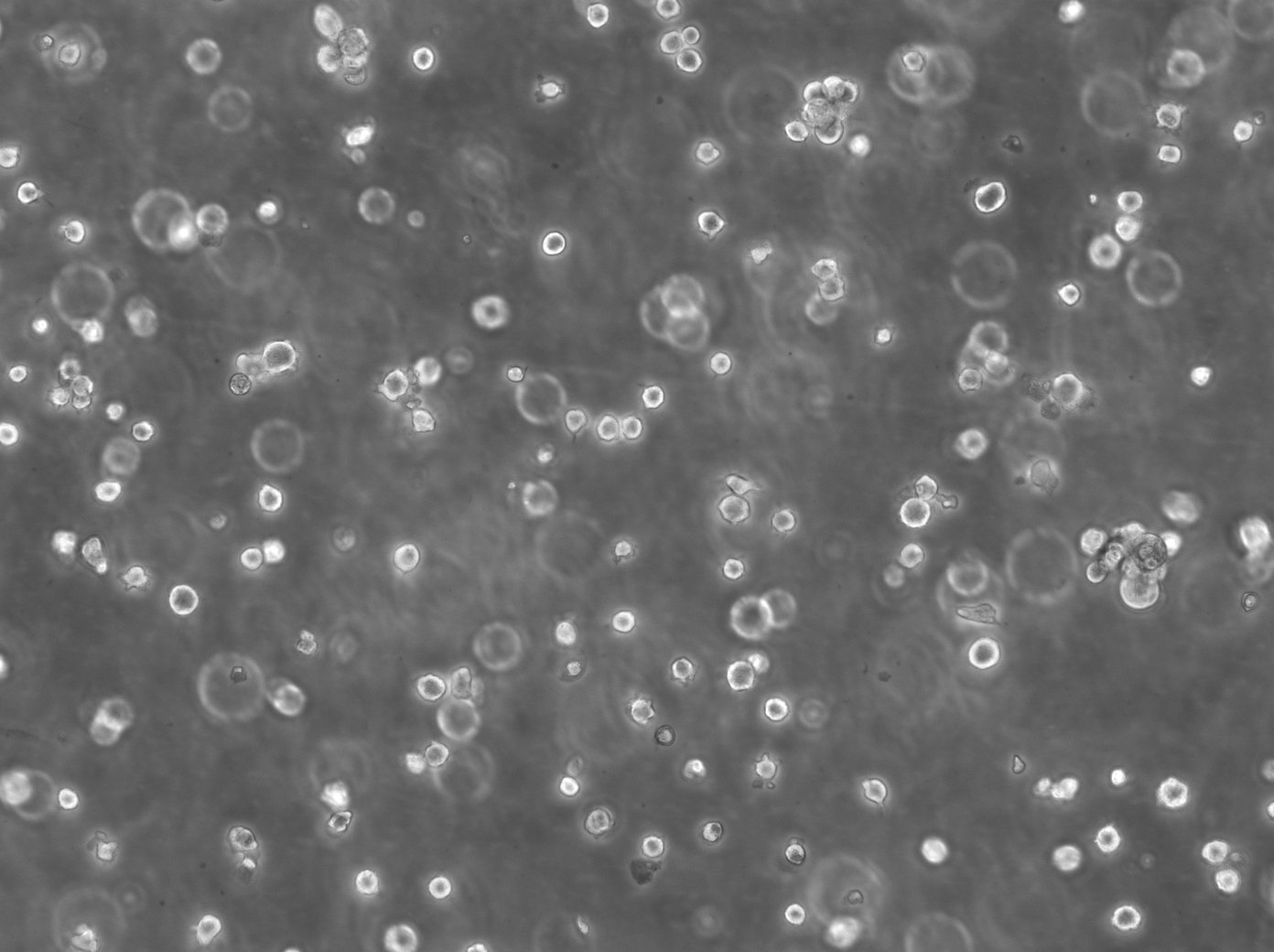
L-428 Cells
US$ 395,00*
Products are shipped frozen on dry ice in cryotubes. Each cryotube typically contains 3 × 10⁶ cells for adherent lines or 5 × 10⁶ cells for suspension lines (refer to the batch CoA for details).
Informações gerais
| Descrição | The L428 cell line is a well-established neoplastic cell line derived from the pleural effusion of a female patient diagnosed with Hodgkin's disease of the nodular sclerosing type. The establishment of this cell line has provided a valuable model for studying the cellular characteristics and molecular mechanisms underlying Hodgkin's lymphoma. L428 cells closely resemble the Reed-Sternberg (RS) and Hodgkin (H) cells, which are hallmark cells of Hodgkin's lymphoma. These cells demonstrate a unique phenotype distinct from typical B cells, T cells, and other hematopoietic cell types, contributing to ongoing debates about the exact cellular origin of RS and H cells. The L428 cell line exhibits several distinctive characteristics, including aneuploidy and the presence of multiple structural and numerical chromosomal abnormalities, which are typical markers of its neoplastic nature. These cells lack surface or cytoplasmic immunoglobulins (Igs), despite their derivation from a lymphoid malignancy, which suggests significant differentiation from normal lymphoid cells. The absence of Epstein-Barr Virus (EBV) antigens, such as EBNA and VCA, further distinguishes L428 from other EBV-positive Hodgkin's lymphoma cell lines. The cells also lack lysozyme, peroxidase, and chloracetate esterase activity, reinforcing their distinction from myeloid cells, monocytes, or macrophages. In terms of morphology, L428 cells exhibit a range of sizes, from small mononuclear cells to large multinucleated cells, with some cells displaying villous projections on their membranes. The cells are also notable for their large, often kidney-shaped nucleoli. Functionally, L428 cells express Ia-like antigens and T-cell receptors but are devoid of other common lymphoid and myeloid markers. This unique immunophenotype, combined with the chromosomal and morphological features, supports the classification of L428 as a model of Hodgkin's lymphoma, particularly for studying the biology of RS and H cells. The L428 cell line has been used extensively in research to explore the pathogenesis of Hodgkin's disease and to investigate potential therapeutic targets. Its ability to proliferate in vitro and its unique properties make it a critical resource for advancing the understanding of this complex hematological malignancy. |
|---|---|
| Organismo | Human |
| Tecido | Pleural effusion |
| Doença | Hodgkin lymphoma |
| Sinônimos | L-428, L 428 |
Características
| Idade | 37 years |
|---|---|
| Gênero | Female |
| Etnia | Caucasian |
| Morfologia | Round cells |
| Tipo de célula | Lymphoblast |
| Propriedades de crescimento | Suspension |
Dados regulatórios
| Referência | L428 (Cytion catalog number 300200) |
|---|---|
| Nível de biossegurança | 1 |
| NCBI_TaxID | 9606 |
| Número de acesso do Cellosaurus | CVCL_1361 |
Dados biomoleculares
Manuseio
| Meio de cultura | RPMI 1640, w: 2.0 mM stable Glutamine, w: 2.0 g/L NaHCO3 (Cytion article number 820700a) |
|---|---|
| Suplementos | Supplement the medium with 10% FBS, 1 mM sodium pyruvate, 1% NEAA |
| Subcultura | Maintain cultures by periodically adding or replacing the medium. Initiate cultures with a density of 5 x 10⁵ cells/ml and keep the cell concentration within the range of 3 x 10⁵ to 1 x 10⁶ cells/ml for optimal growth. |
| Densidade de semeadura | 1 x 10⁵ cells/ml |
| Renovação de fluidos | Every 3 days |
| Recuperação pós-degelo | Fast |
| Meio de congelamento | As a cryopreservation medium, we use complete growth medium (including FBS) + 10% DMSO for adequate post-thaw viability, or CM-1 (Cytion catalog number 800100), which includes optimized osmoprotectants and metabolic stabilizers to enhance recovery and reduce cryo-induced stress. |
| Descongelamento e cultura de células |
|
| Atmosfera de incubação | 37°C, 5% CO2, humidified atmosphere. |
| Condições de envio | Cryopreserved cell lines are shipped on dry ice in validated, insulated packaging with sufficient refrigerant to maintain approximately −78 °C throughout transit. On receipt, inspect the container immediately and transfer vials without delay to appropriate storage. |
| Condições de armazenamento | For long-term preservation, place vials in vapor-phase liquid nitrogen at about −150 to −196 °C. Storage at −80 °C is acceptable only as a short interim step before transfer to liquid nitrogen. |
Controle de Qualidade e Análise Molecular
| Esterilidade | Mycoplasma contamination is excluded using both PCR-based assays and luminescence-based mycoplasma detection methods. To ensure there is no bacterial, fungal, or yeast contamination, cell cultures are subjected to daily visual inspections. |
|---|
Certificado de Análise (CoA)
| Número do lote | Tipo de certificado | Data | Número de catálogo |
|---|---|---|---|
| 300200-310723 | Certificado de Análise | 23. May. 2025 | 300200 |