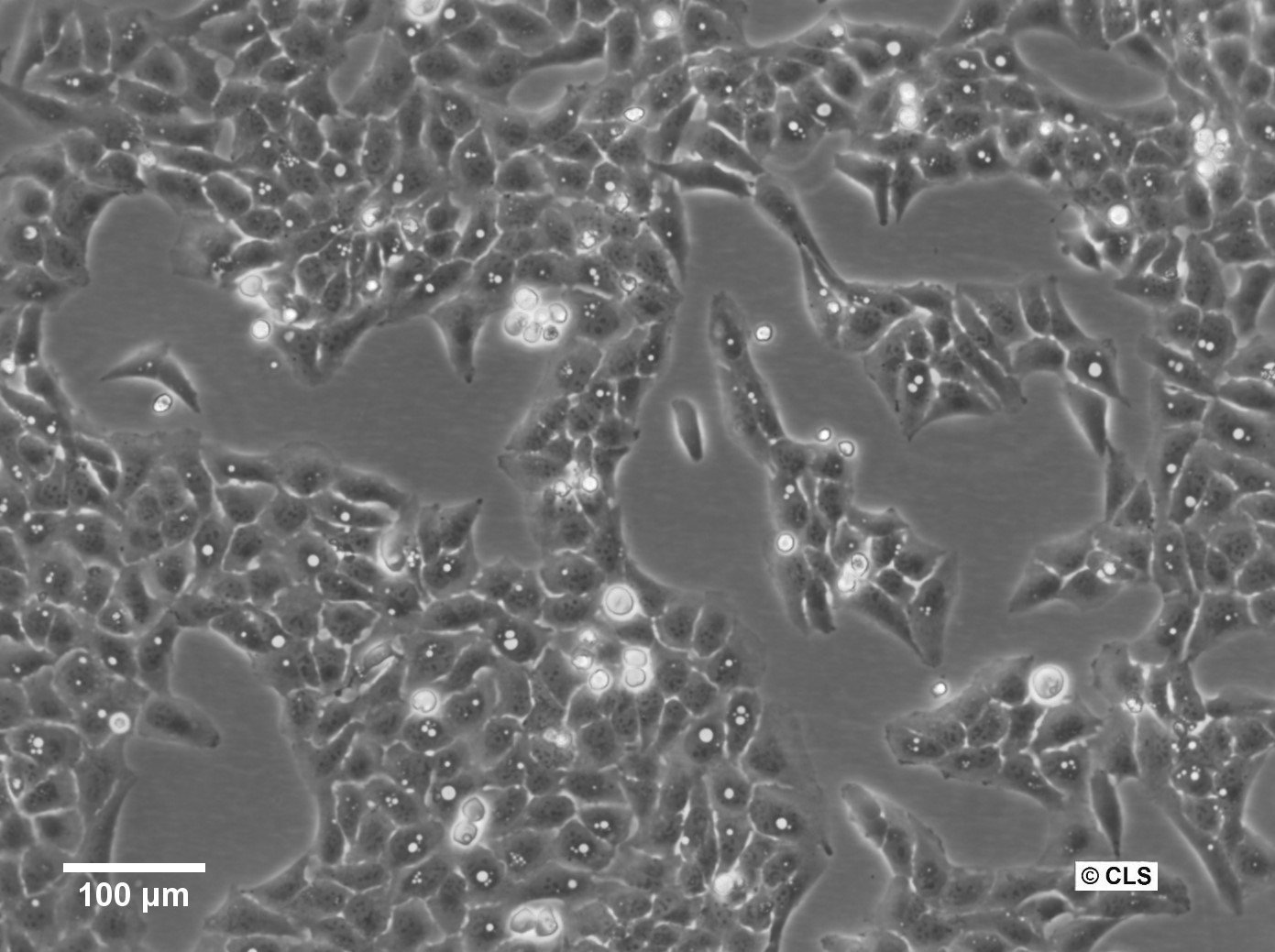
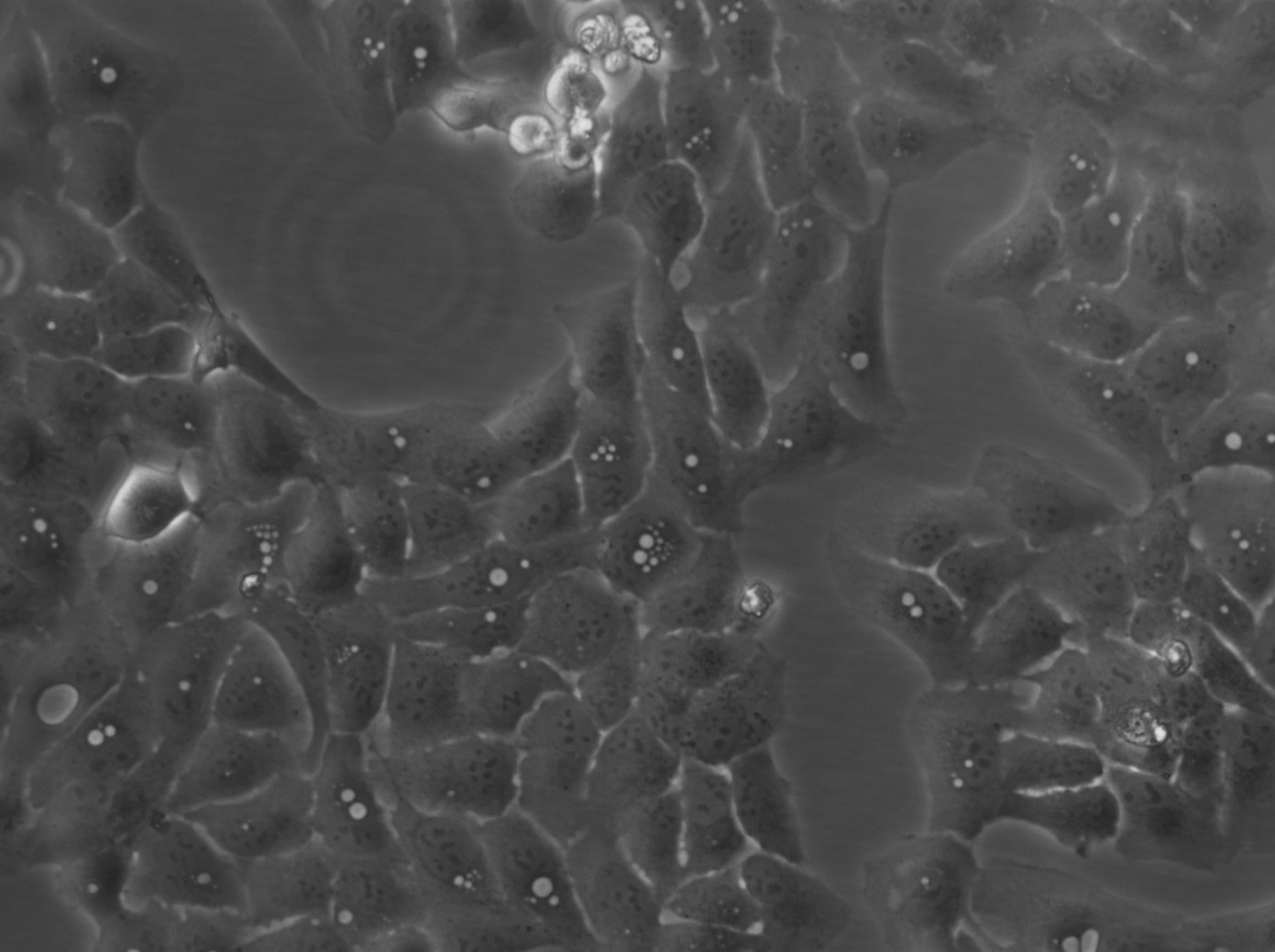
U2OS-CRISPR-NUP96-mMaple Cells
USD 800.00*
Products are shipped frozen on dry ice in cryotubes. Each cryotube typically contains 3 × 10⁶ cells for adherent lines or 5 × 10⁶ cells for suspension lines (refer to the batch CoA for details).
Información general
| Descripción | The U-2 OS-CRISPR-NUP96-mMaple is a genetically engineered osteosarcoma cell line derived from the human U-2 OS cell line, known for its robust growth characteristics and utility in various biological studies. This particular clone has been modified using CRISPR/Cas9 gene editing technology to incorporate mMaple, a photoconvertible fluorescent protein, into the NUP96 gene. The mMaple protein allows for advanced imaging techniques such as live-cell imaging and super-resolution microscopy, providing dynamic insights into the nuclear pore complex (NPC) behavior and cellular import-export mechanisms through the nuclear envelope. The NUP96 gene, which encodes a crucial component of the NPC, is vital for nucleocytoplasmic transport. Alteration of NUP96 can affect not only transport mechanisms but also overall nuclear architecture and function. This cell line thus serves as an excellent model for studying NPC-related pathologies and the role of nuclear transport in cellular metabolism and signaling. The integration of mMaple into NUP96 permits real-time tracking and visualization of NUP96 dynamics in vivo, making it an indispensable tool for researchers focused on cell nucleus studies and those exploring the implications of NPC dysfunctions in diseases such as cancer and viral infections. As a specialized tool, U-2 OS-CRISPR-NUP96-mMaple clone no.16 supports high-resolution imaging and provides substantial data regarding the spatial and temporal distribution of NPC components. It is particularly valuable for experiments requiring detailed analysis of gene expression, protein localization, and nuclear transport under physiological and pathological conditions, facilitating a deeper understanding of cellular processes at the molecular level. |
|---|---|
| Organismo | Human |
| Tejido | Bone |
| Enfermedad | Osteosarcoma |
Características
| Edad | 15 years |
|---|---|
| Género | Female |
| Origen étnico | Caucasian |
| Propiedades de crecimiento | Adherent |
Datos normativos
| Referencia | U-2 OS-CRISPR-NUP96-mMaple (Cytion catalog number 300461) |
|---|---|
| Nivel de bioseguridad | 1 |
| NCBI_TaxID | 9606 |
| N.º de acceso de Cellosaurus | CVCL_B7FK |
| Depositante | The Ellenberg Lab (EMBL) |
| Estado de los OGM | GMO-S1: This human osteosarcoma cell line (U2OS-CRISPR-NUP96-mMaple, clone 16) contains a CRISPR-mediated NUP96-mMaple fusion enabling photoconvertible labeling of nuclear pore structures. The construct is stably present. This classification applies only within Germany and may differ elsewhere. |
Datos biomoleculares
| Expresión de proteínas | NUP96-mMaple (endogenous nuclear pore complex protein 96, mMaple tagged) |
|---|
Manejo
| Medio de cultivo | McCoys 5a, w: 3.0 g/L Glucose, w: stable Glutamine, w: 2.0 mM Sodium pyruvate, w: 2.2 g/L NaHCO3 (Cytion article number 820200a) |
|---|---|
| Suplementos | Supplement the medium with 10% FBS, 1% NEAA |
| Reactivo de disociación | Accutase |
| Subcultivo | Remove the old medium from the adherent cells and wash them with PBS that lacks calcium and magnesium. For T25 flasks, use 3-5 ml of PBS, and for T75 flasks, use 5-10 ml. Then, cover the cells completely with Accutase, using 1-2 ml for T25 flasks and 2.5 ml for T75 flasks. Let the cells incubate at room temperature for 8-10 minutes to detach them. After incubation, gently mix the cells with 10 ml of medium to resuspend them, then centrifuge at 300xg for 3 minutes. Discard the supernatant, resuspend the cells in fresh medium, and transfer them into new flasks that already contain fresh medium. |
| Densidad de siembra | 1 x 10⁴ cells/cm2 |
| Renovación de fluidos | 2 to 3 times per week |
| Medio de congelación | As a cryopreservation medium, we use complete growth medium (including FBS) + 10% DMSO for adequate post-thaw viability, or CM-1 (Cytion catalog number 800100), which includes optimized osmoprotectants and metabolic stabilizers to enhance recovery and reduce cryo-induced stress. |
| Descongelación y cultivo de células |
|
| Atmósfera de incubación | 37°C, 5% CO2, humidified atmosphere. |
| Condiciones de envío | Cryopreserved cell lines are shipped on dry ice in validated, insulated packaging with sufficient refrigerant to maintain approximately −78 °C throughout transit. On receipt, inspect the container immediately and transfer vials without delay to appropriate storage. |
| Condiciones de almacenamiento | For long-term preservation, place vials in vapor-phase liquid nitrogen at about −150 to −196 °C. Storage at −80 °C is acceptable only as a short interim step before transfer to liquid nitrogen. |
Control de calidad y análisis molecular
| Esterilidad | Mycoplasma contamination is excluded using both PCR-based assays and luminescence-based mycoplasma detection methods. To ensure there is no bacterial, fungal, or yeast contamination, cell cultures are subjected to daily visual inspections. |
|---|
Certificado de análisis (CoA)
| Número de lote | Tipo de certificado | Fecha | Número de catálogo |
|---|---|---|---|
| 300461-210524 | Certificado de análisis | 18. Aug. 2025 | 300461 |