
TT Cells
USD 395.00*
Products are shipped frozen on dry ice in cryotubes. Each cryotube typically contains 3 × 10⁶ cells for adherent lines or 5 × 10⁶ cells for suspension lines (refer to the batch CoA for details).
Información general
| Descripción | TT cells continuously produce high levels of calcitonin and CEA.Immunoreactive calcitonin was found to be produced in cell culture at levels of 3900 pg/million cells and 7700 pg/million cells 24 and 72 hours respectively, after a medium change.CEA was found to accumulate to greater than 27 ng/million cells over a 72 hours period.Chromosomal analysis of the cell line and tumors induced in nude mice reveal an aneuploid human karyotype with several marker chromosomes.The initial characterization studies of the TT cell line were conducted using early passage TT cells cultivated in RPMI 1640 medium supplemented with 15% fetal bovine serum and 1mM L-glutamine.It is not known if the neuropeptides reported to be produced by this cell line when it was grown in RPMI 1640 medium are also produced by the cells when they are cultured in Ham's F-12K medium.Chromosomal analysis of the cell line and tumors induced in nude mice reveal an aneuploid human karyotype with several marker chromosomes. |
|---|---|
| Organismo | Human |
| Tejido | Thyroid, medulla |
| Enfermedad | Hereditary thyroid gland medullary carcinoma, Multiple endocrine neoplasia type 2 |
| Lugar de metástasis | Not applicable (primary hereditary medullary thyroid carcinoma; no documented distant metastasis) |
| Aplicaciones | Medullary thyroid carcinoma research; neuroendocrine tumor biology; calcitonin secretion studies; MEN2 biology; RET proto-oncogene pathway analysis; drug sensitivity (cabozantinib, vandetanib, everolimus); neuroendocrine biomarker research; CEA assay development |
| Sinónimos | MTC-TT |
Características
| Edad | 77 years |
|---|---|
| Género | Female |
| Origen étnico | European |
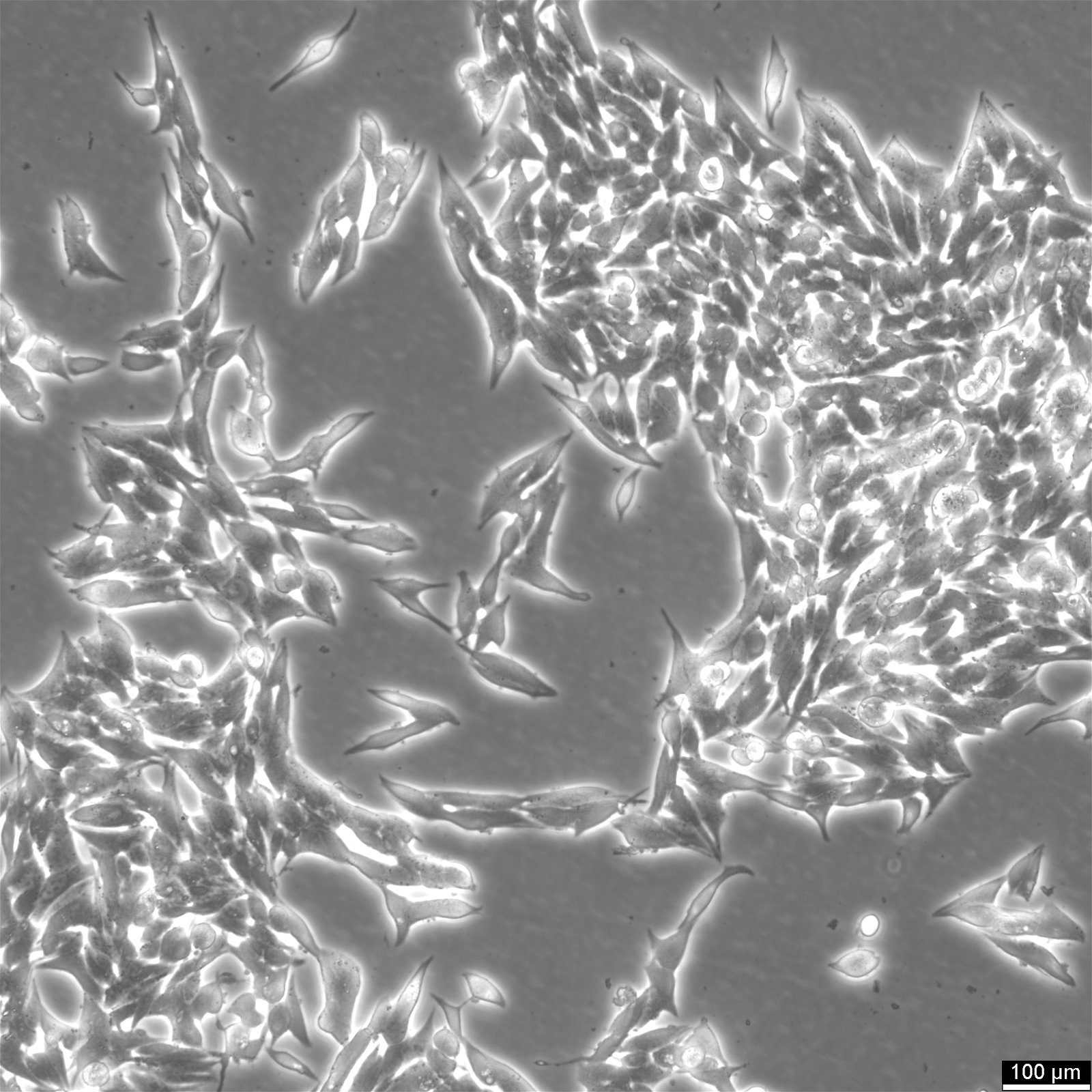
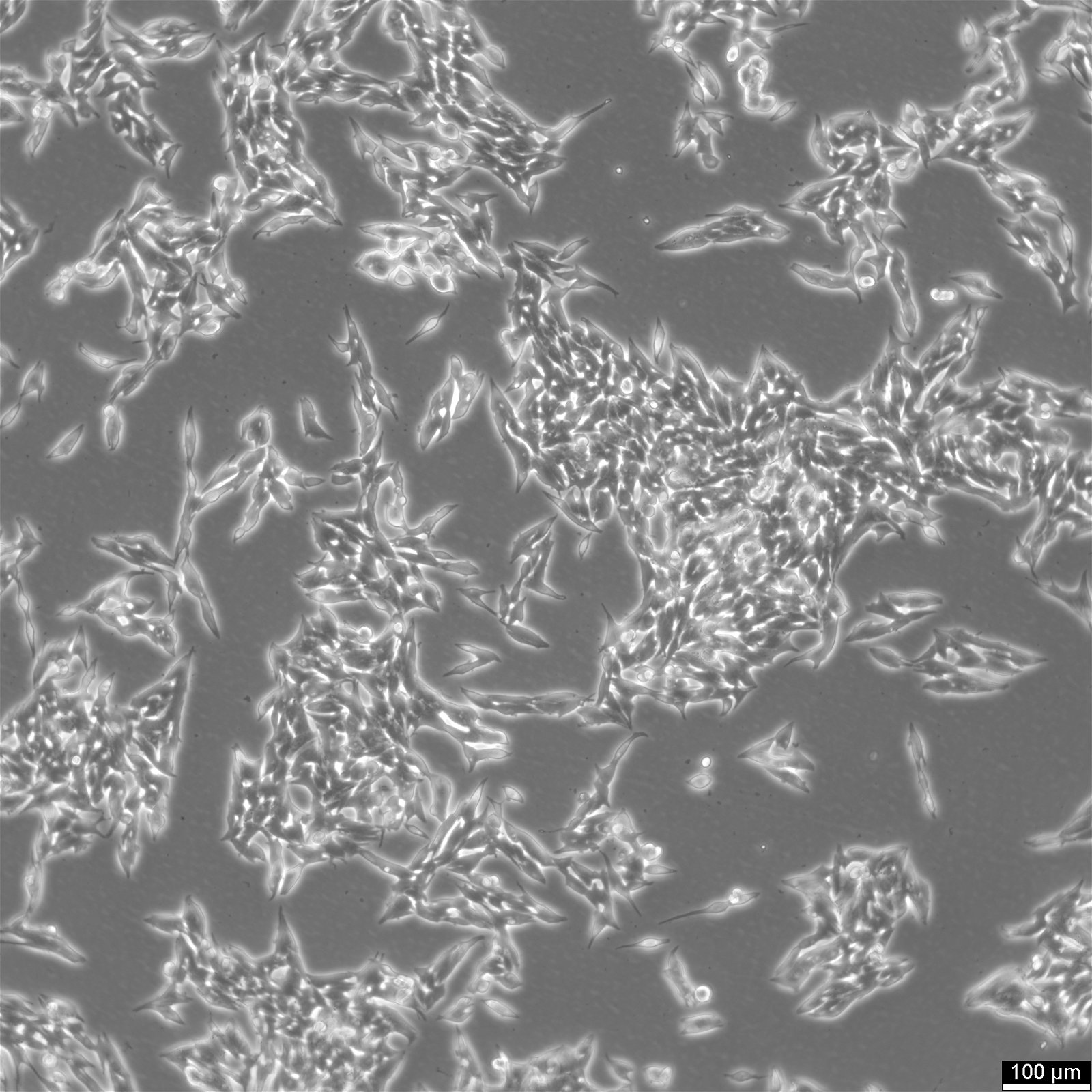
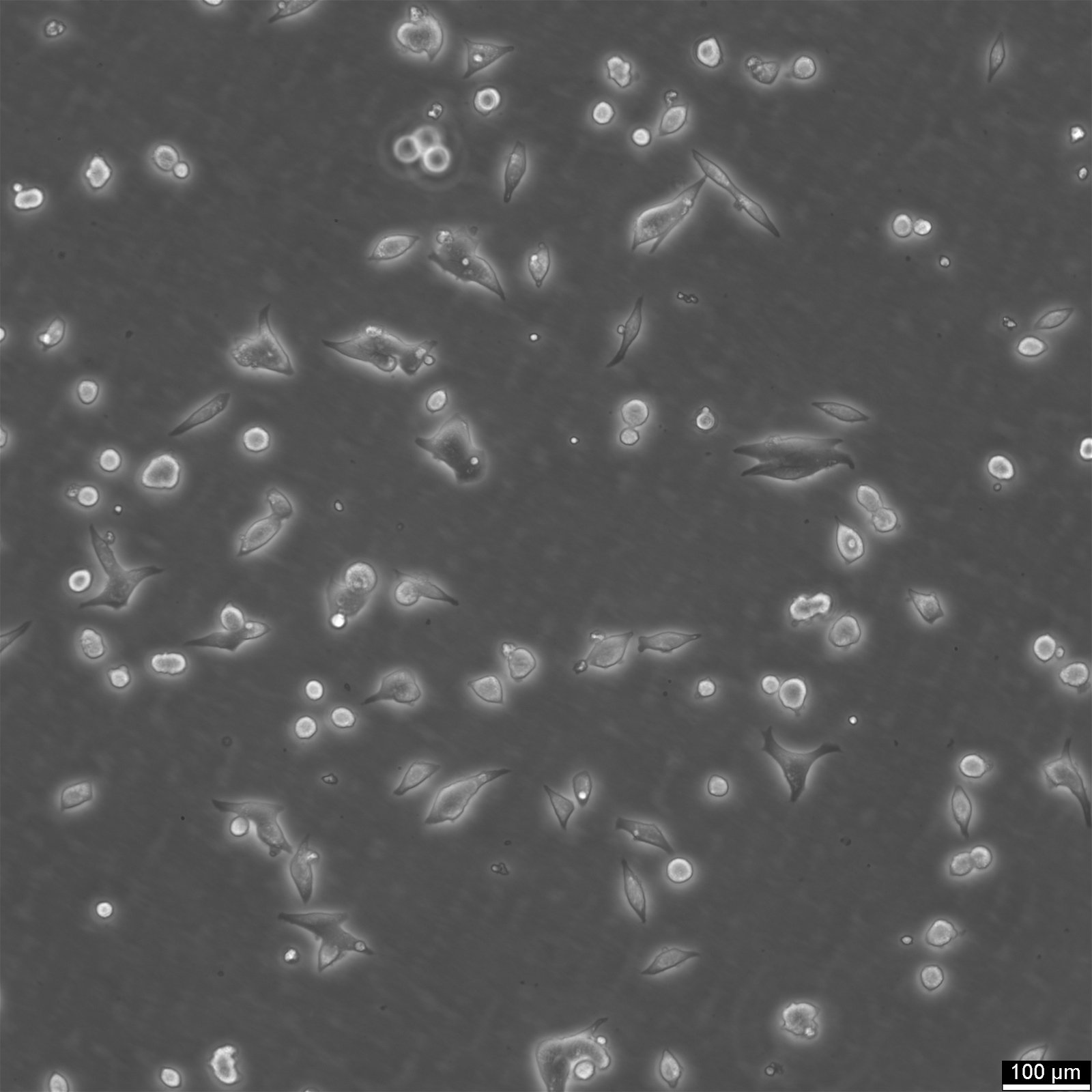
| Morfología | Epithelial-like |
| Tipo de célula | Neuroendocrine cells (C cells / parafollicular cells) |
| Propiedades de crecimiento | Adherent |
Datos normativos
| Referencia | TT (Cytion catalog number 305027) |
|---|---|
| Nivel de bioseguridad | 1 |
| NCBI_TaxID | 9606 |
| N.º de acceso de Cellosaurus | CVCL_1774 |
| Estado de los OGM | No genetic modification; wildtype hereditary medullary thyroid carcinoma cell line |
Datos biomoleculares
| Expresión de proteínas | Calcitonin, Carcinoembryonic Antigen(CEA) |
|---|---|
| Tumorigénico | Yes |
Manejo
| Medio de cultivo | Ham's F12K Medium, w: 2.0 mM L-Glutamine, w: 2.0 mM Sodium pyruvate, w: 2.5 g/L NaHCO3 (Cytion article number 820608a) |
|---|---|
| Suplementos | Supplement the medium with 10% FBS, 1% NEAA and 1mM Sodiumpyruvat |
| Reactivo de disociación | Accutase |
| Tiempo de duplicación | approx. 36 to 48 hours |
| Subcultivo | Remove the old medium from the adherent cells and wash them with PBS that lacks calcium and magnesium. For T25 flasks, use 3-5 ml of PBS, and for T75 flasks, use 5-10 ml. Then, cover the cells completely with Accutase, using 1-2 ml for T25 flasks and 2.5 ml for T75 flasks. Let the cells incubate at room temperature for 8-10 minutes to detach them. After incubation, gently mix the cells with 10 ml of medium to resuspend them, then centrifuge at 300xg for 3 minutes. Discard the supernatant, resuspend the cells in fresh medium, and transfer them into new flasks that already contain fresh medium. |
| Relación de división | 1 to 3 |
| Densidad de siembra | 1 to 3 × 10⁴ cells/cm² |
| Renovación de fluidos | 2 to 3 times per week |
| Recuperación tras el deshielo | After thawing, plate the cells at 5 × 10⁴ cells/cm² and allow at least 24 hours for adherence before the first medium change. Note: Calcitonin production may require 24–72 hours post-thaw before reaching stable secretion levels. |
| Medio de congelación | As a cryopreservation medium, we use complete growth medium (including FBS) + 10% DMSO for adequate post-thaw viability, or CM-1 (Cytion catalog number 800100), which includes optimized osmoprotectants and metabolic stabilizers to enhance recovery and reduce cryo-induced stress. |
| Descongelación y cultivo de células |
|
| Atmósfera de incubación | 37°C, 5% CO2, humidified atmosphere. |
| Condiciones de envío | Cryopreserved cell lines are shipped on dry ice in validated, insulated packaging with sufficient refrigerant to maintain approximately −78 °C throughout transit. On receipt, inspect the container immediately and transfer vials without delay to appropriate storage. |
| Condiciones de almacenamiento | For long-term preservation, place vials in vapor-phase liquid nitrogen at about −150 to −196 °C. Storage at −80 °C is acceptable only as a short interim step before transfer to liquid nitrogen. |
Control de calidad y análisis molecular
| Esterilidad | Mycoplasma contamination is excluded using both PCR-based assays and luminescence-based mycoplasma detection methods. To ensure there is no bacterial, fungal, or yeast contamination, cell cultures are subjected to daily visual inspections. |
|---|
Certificado de análisis (CoA)
| Número de lote | Tipo de certificado | Fecha | Número de catálogo |
|---|---|---|---|
| 305027-141022 | Certificado de análisis | 23. May. 2025 | 305027 |
| 305027-120925 | Certificado de análisis | 05. Dec. 2025 | 305027 |