
RF/6A Cells
USD 550.00*
Products are shipped frozen on dry ice in cryotubes. Each cryotube typically contains 3 × 10⁶ cells for adherent lines or 5 × 10⁶ cells for suspension lines (refer to the batch CoA for details).
Información general
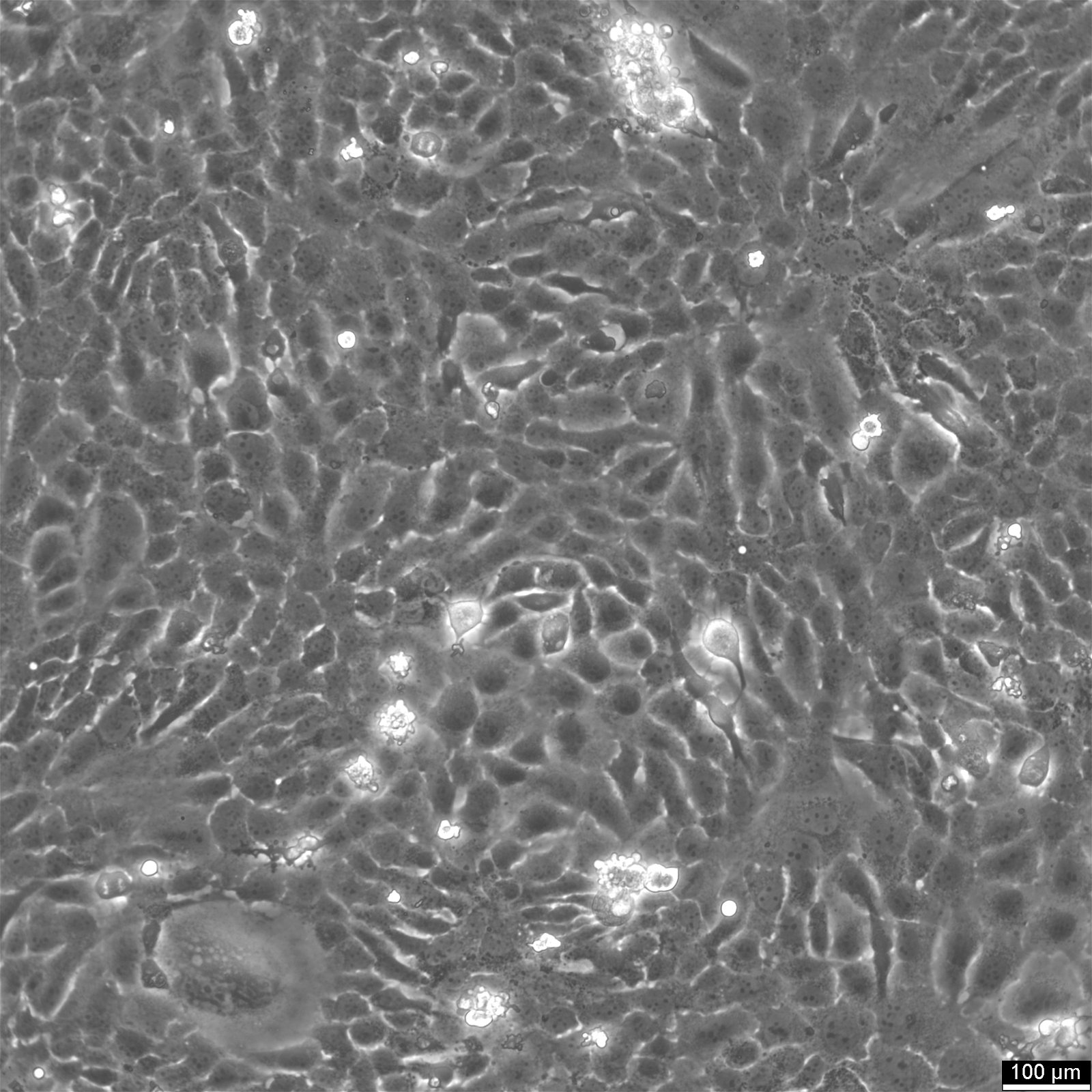
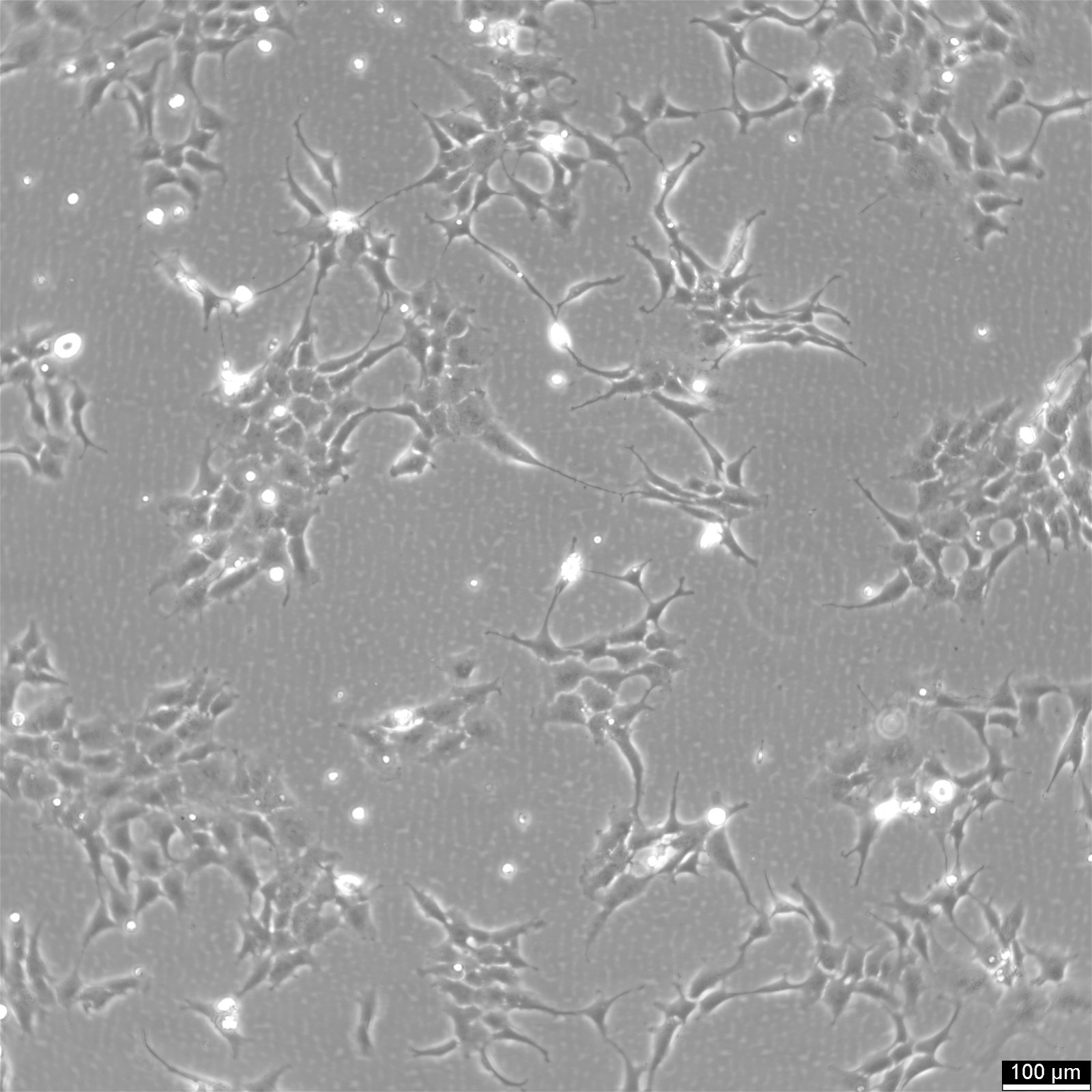
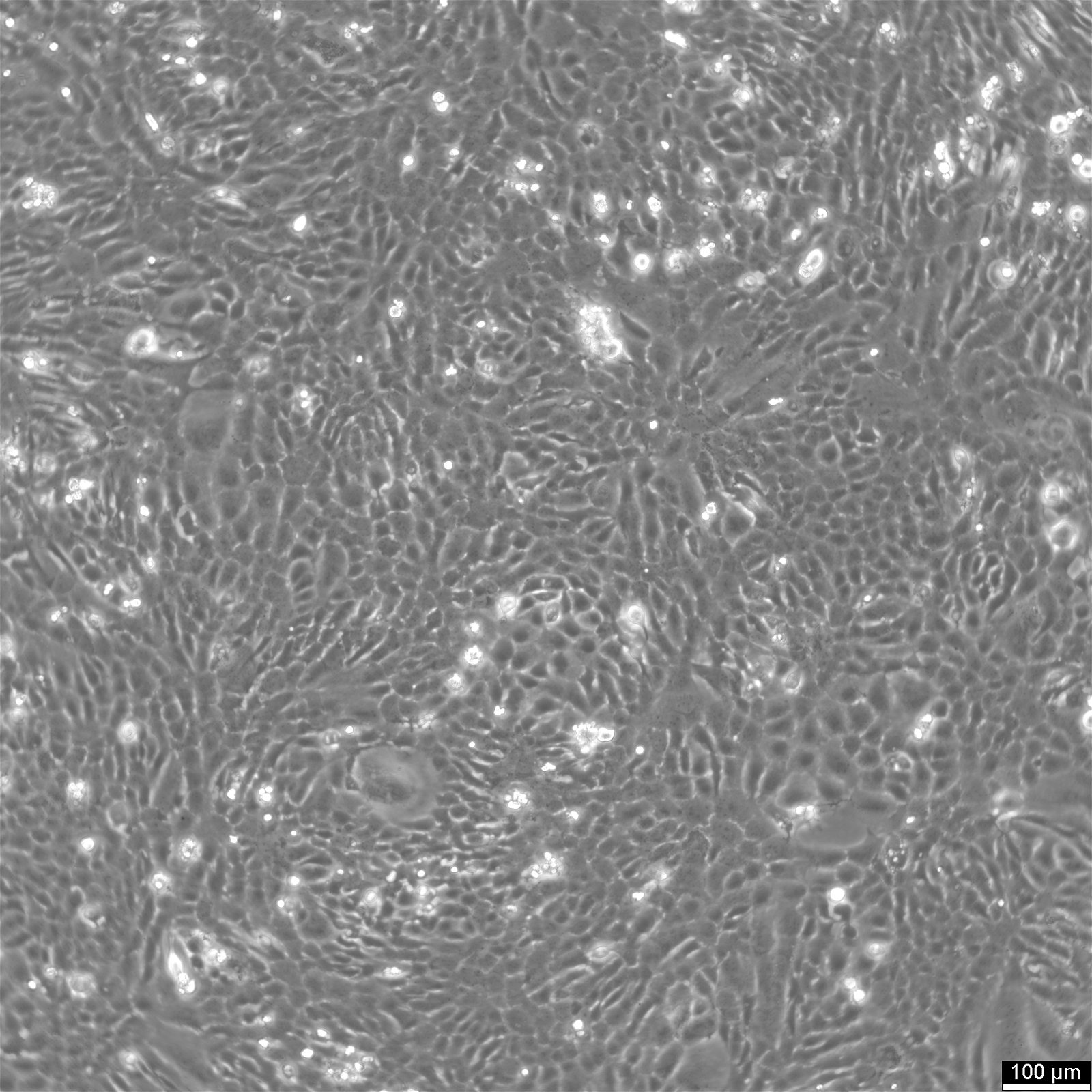
| Descripción | RF/6A is a rhesus macaque (Macaca mulatta) retinal choroidal endothelial cell line established from fetal choroid and retina tissue. The line is registered in Cellosaurus as CVCL_4552 and grows as an adherent monolayer with epithelial-like morphology. RF/6A cells retain key endothelial characteristics including expression of Factor VIII (von Willebrand factor), fibronectin, and Weibel-Palade granules detectable by electron microscopy — the latter confirming their endothelial identity. The line was originally established for studies of retinal and choroidal vascularization and has been widely adopted as a primate endothelial model for ocular angiogenesis research. RF/6A is applicable in ocular angiogenesis research, studies of retinal and choroidal vascularization, evaluation of anti-angiogenic agents (VEGF inhibitors, bevacizumab, ranibizumab), age-related macular degeneration (AMD) modeling, diabetic retinopathy biology, and assessment of vascular permeability in the ocular microenvironment. The non-human primate (NHP) origin makes RF/6A closer to human retinal vascular biology than rodent endothelial models, particularly for studies involving primate-specific VEGF isoform responses and ocular pharmacology. The line is commonly used in tube formation assays, migration assays, and VEGF-stimulation experiments. RF/6A is maintained as an adherent culture in EMEM supplemented with 10% FBS and 1% NEAA at 37°C in a humidified 5% CO₂ atmosphere. Cells are subcultured with Accutase at 70–80% confluency to prevent contact inhibition and loss of endothelial phenotype. Split ratio 1:3 to 1:5, seeding density 1–2 × 10⁴ cells/cm². Medium renewed 2–3 times per week. |
|---|---|
| Organismo | Rhesus macaque |
| Tejido | Choroid, retina |
| Enfermedad | Normal retinal choroidal endothelium (fetal; non-tumorigenic) |
| Lugar de metástasis | Not applicable (normal fetal retinal choroidal endothelial cell line) |
| Aplicaciones | Ocular angiogenesis research; retinal and choroidal vascularization; anti-VEGF therapy evaluation (bevacizumab, ranibizumab); AMD and diabetic retinopathy modeling; tube formation assays; vascular permeability; NHP primate retinal endothelial model |
Características
| Edad | Fetus |
|---|---|
| Género | Sex unspecified |
| Origen étnico | Not applicable (non-human primate cell line; Macaca mulatta) |
| Morfología | Epithelial-like |
| Tipo de célula | Endothelial cells |
| Propiedades de crecimiento | Adherent |
Datos normativos
| Referencia | RF/6A (Cytion catalog number 305150) |
|---|---|
| Nivel de bioseguridad | 1 |
| NCBI_TaxID | 9544 |
| N.º de acceso de Cellosaurus | CVCL_4552 |
| Estado de los OGM | No genetic modification; wildtype rhesus macaque fetal retinal choroidal endothelial cell line |
Datos biomoleculares
| Expresión de proteínas | Factor Ⅷ, Fibronectin |
|---|
Manejo
| Medio de cultivo | EMEM (MEM Eagle), w: 2 mM L-Glutamine, w: 2.2 g/L NaHCO3, w: EBSS (Cytion article number 820100a) |
|---|---|
| Suplementos | Supplement the medium with 10% FBS and 1% NEAA |
| Reactivo de disociación | Accutase |
| Tiempo de duplicación | approx. 24 to 36 hours |
| Subcultivo | Remove the old medium from the adherent cells and wash them with PBS that lacks calcium and magnesium. For T25 flasks, use 3-5 ml of PBS, and for T75 flasks, use 5-10 ml. Then, cover the cells completely with Accutase, using 1-2 ml for T25 flasks and 2.5 ml for T75 flasks. Let the cells incubate at room temperature for 8-10 minutes to detach them. After incubation, gently mix the cells with 10 ml of medium to resuspend them, then centrifuge at 300xg for 3 minutes. Discard the supernatant, resuspend the cells in fresh medium, and transfer them into new flasks that already contain fresh medium. |
| Relación de división | 1 to 5 |
| Densidad de siembra | 1 to 2 × 10⁴ cells/cm² |
| Renovación de fluidos | 2 to 3 times per week |
| Recuperación tras el deshielo | After thawing, plate the cells at 5 × 10⁴ cells/cm² and allow at least 24 hours for adherence before the first medium change. Do not allow cultures to reach full confluency as contact inhibition may reduce endothelial phenotype. |
| Medio de congelación | As a cryopreservation medium, we use complete growth medium (including FBS) + 10% DMSO for adequate post-thaw viability, or CM-1 (Cytion catalog number 800100), which includes optimized osmoprotectants and metabolic stabilizers to enhance recovery and reduce cryo-induced stress. |
| Descongelación y cultivo de células |
|
| Atmósfera de incubación | 37°C, 5% CO2, humidified atmosphere. |
| Condiciones de envío | Cryopreserved cell lines are shipped on dry ice in validated, insulated packaging with sufficient refrigerant to maintain approximately −78 °C throughout transit. On receipt, inspect the container immediately and transfer vials without delay to appropriate storage. |
| Condiciones de almacenamiento | For long-term preservation, place vials in vapor-phase liquid nitrogen at about −150 to −196 °C. Storage at −80 °C is acceptable only as a short interim step before transfer to liquid nitrogen. |
Control de calidad y análisis molecular
| Esterilidad | Mycoplasma contamination is excluded using both PCR-based assays and luminescence-based mycoplasma detection methods. To ensure there is no bacterial, fungal, or yeast contamination, cell cultures are subjected to daily visual inspections. |
|---|
Certificado de análisis (CoA)
| Número de lote | Tipo de certificado | Fecha | Número de catálogo |
|---|---|---|---|
| 305150-160223 | Certificado de análisis | 23. May. 2025 | 305150 |
| 305150-160223SF | Certificado de análisis | 23. May. 2025 | 305150 |
| 305150-180625 | Certificado de análisis | 18. Aug. 2025 | 305150 |
| 305150-260723 | Certificado de análisis | 22. Jan. 2026 | 305150 |