
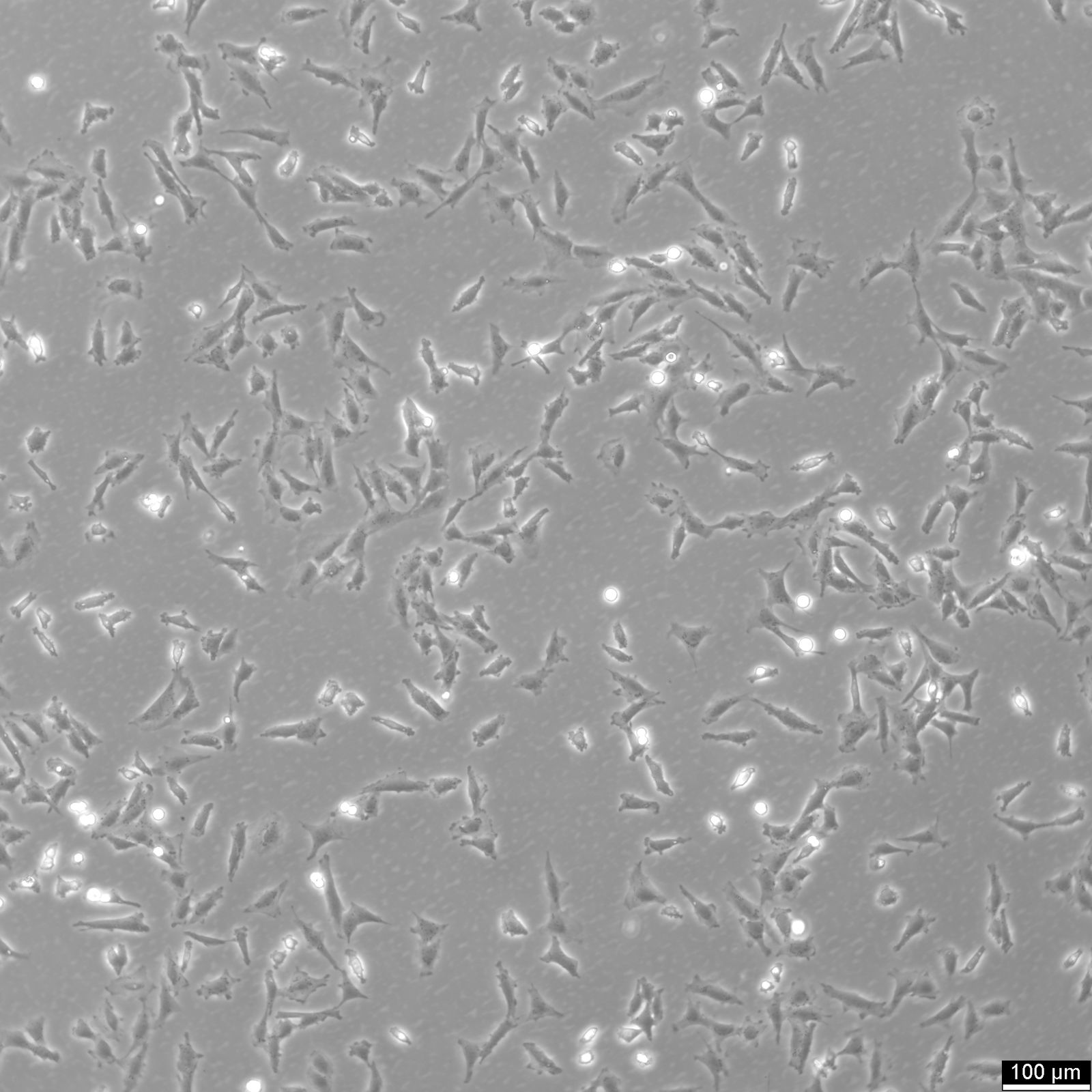
DI TNC1 Cells
USD 550.00*
Products are shipped frozen on dry ice in cryotubes. Each cryotube typically contains 3 × 10⁶ cells for adherent lines or 5 × 10⁶ cells for suspension lines (refer to the batch CoA for details).
Información general
| Descripción | The DI TNC1 cell line is an immortalized astrocyte model derived from primary type-1 astrocytes taken from the diencephalon of a neonatal rat. The cells were immortalized using the polyomavirus middle T-antigen, granting them the ability to proliferate indefinitely while maintaining several characteristics of primary astrocytes. DI TNC1 cells are widely used in neuroinflammation and neuroprotection studies, particularly for exploring astrocytic energy metabolism, response to oxidative stress, and the regulation of inflammatory pathways. These cells express key astrocytic markers, such as glial fibrillary acidic protein (GFAP) and S100β protein, and are involved in metabolic processes, including glycogen storage and energy provision to neurons. One of the hallmark features of DI TNC1 astrocytes is their involvement in energy metabolism studies. Research has demonstrated that these cells respond to various neurotransmitters, such as noradrenaline and vasoactive intestinal peptide (VIP), by undergoing glycogenolysis and modulating cyclic AMP (cAMP) levels. Additionally, DI TNC1 cells have been shown to utilize glucose and produce lactate, which are crucial for supporting neuronal functions. However, certain responses seen in primary astrocytes, like glutamate-stimulated glycolysis or significant long-term glycogen resynthesis, are not as robust in DI TNC1 cells. This highlights the utility of DI TNC1 cells in dissecting specific aspects of astrocyte physiology that are relevant to energy dynamics in the central nervous system. Another significant area of study using DI TNC1 cells involves the investigation of oxidative stress and inflammatory signaling pathways. For example, DI TNC1 cells have been used to analyze the regulation of the nuclear factor kappa-light-chain-enhancer of activated B cells (NF-κB) and the nuclear factor erythroid 2-related factor 2 (Nrf2) pathways. Experiments with botanical polyphenols like quercetin and extracts from plants such as Ashwagandha have shown that these compounds can modulate the NF-κB and Nrf2/ARE (antioxidant response element) pathways in DI TNC1 astrocytes. Specifically, quercetin has been found to inhibit lipopolysaccharide (LPS)-induced NF-κB activity and enhance Nrf2-mediated antioxidant defenses, illustrating the potential of these cells for screening anti-inflammatory and neuroprotective agents. |
|---|---|
| Organismo | Rat |
| Tejido | Brain, diencephalon |
| Enfermedad | Normal |
| Sinónimos | DITNC1, DI-TNC1, DI TNC-1 |
Características
| Raza/Subespecie | Sprague Dawley |
|---|---|
| Edad | 1 day |
| Género | Unspecified |
| Morfología | Fibroblast |
| Tipo de célula | Astrocyte, type II |
| Propiedades de crecimiento | Adherent |
Datos normativos
| Referencia | DI TNC1 (Cytion catalog number 305343) |
|---|---|
| Nivel de bioseguridad | 2 |
| NCBI_TaxID | 10116 |
| N.º de acceso de Cellosaurus | CVCL_0247 |
| Estado de los OGM | GMO-S1: This rat astrocyte cell line (DI TNC1) contains an SV40 early-region construct under GFAP promoter control delivered via plasmid transfection, enabling immortalization. The insert is stable in primary astrocyte-derived cells. This classification applies only within Germany and may differ elsewhere. |
Datos biomoleculares
| Expresión de proteínas | Genes expressed: alpha 2 macroglobulin, transferrin |
|---|---|
| Tumorigénico | No, tested in immunosuppressed mice, but did form colonies in semisolid medium |
| Virus | Transformant: Simian virus 40 (SV40) |
Manejo
| Medio de cultivo | DMEM, w: 4.5 g/L Glucose, w: 4 mM L-Glutamine, w: 3.7 g/L NaHCO3, w: 1.0 mM Sodium pyruvate (Cytion article number 820300a) |
|---|---|
| Suplementos | Supplement the medium with 10% FBS |
| Reactivo de disociación | Accutase |
| Subcultivo | Remove the old medium from the adherent cells and wash them with PBS that lacks calcium and magnesium. For T25 flasks, use 3-5 ml of PBS, and for T75 flasks, use 5-10 ml. Then, cover the cells completely with Accutase, using 1-2 ml for T25 flasks and 2.5 ml for T75 flasks. Let the cells incubate at room temperature for 8-10 minutes to detach them. After incubation, gently mix the cells with 10 ml of medium to resuspend them, then centrifuge at 300xg for 3 minutes. Discard the supernatant, resuspend the cells in fresh medium, and transfer them into new flasks that already contain fresh medium. |
| Renovación de fluidos | 2 to 3 times per week |
| Medio de congelación | As a cryopreservation medium, we use complete growth medium (including FBS) + 10% DMSO for adequate post-thaw viability, or CM-1 (Cytion catalog number 800100), which includes optimized osmoprotectants and metabolic stabilizers to enhance recovery and reduce cryo-induced stress. |
| Descongelación y cultivo de células |
|
| Atmósfera de incubación | 37°C, 5% CO2, humidified atmosphere. |
| Condiciones de envío | Cryopreserved cell lines are shipped on dry ice in validated, insulated packaging with sufficient refrigerant to maintain approximately −78 °C throughout transit. On receipt, inspect the container immediately and transfer vials without delay to appropriate storage. |
| Condiciones de almacenamiento | For long-term preservation, place vials in vapor-phase liquid nitrogen at about −150 to −196 °C. Storage at −80 °C is acceptable only as a short interim step before transfer to liquid nitrogen. |
Control de calidad y análisis molecular
| Esterilidad | Mycoplasma contamination is excluded using both PCR-based assays and luminescence-based mycoplasma detection methods. To ensure there is no bacterial, fungal, or yeast contamination, cell cultures are subjected to daily visual inspections. |
|---|
Certificado de análisis (CoA)
| Número de lote | Tipo de certificado | Fecha | Número de catálogo |
|---|---|---|---|
| 305343-130924 | Certificado de análisis | 23. May. 2025 | 305343 |