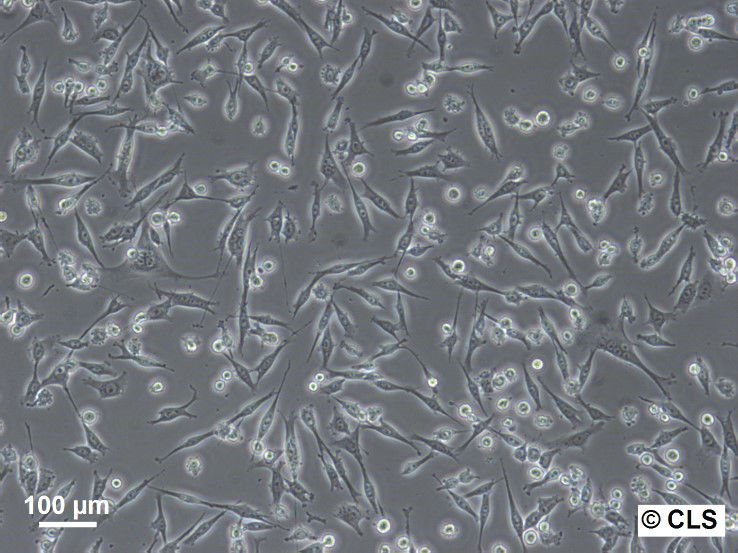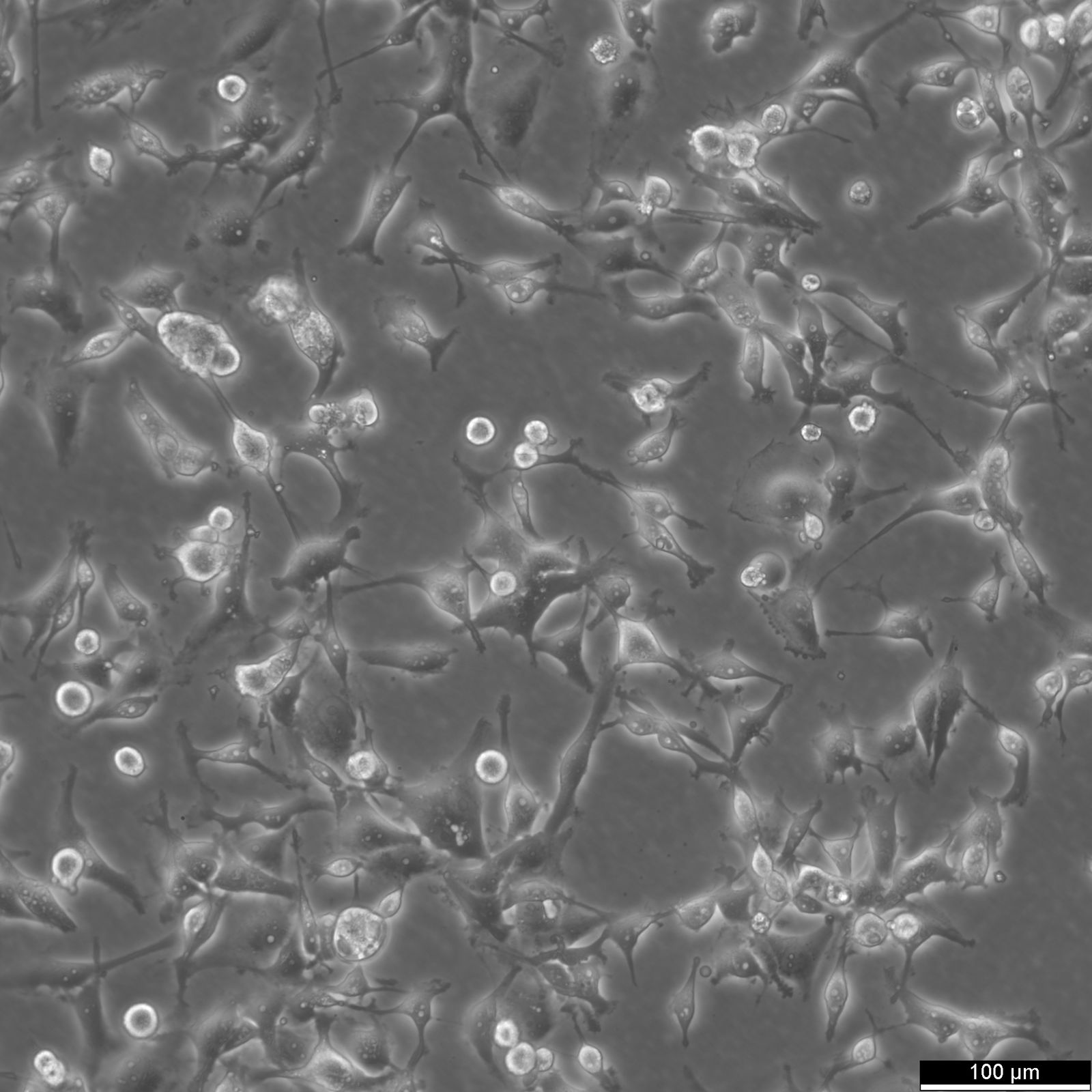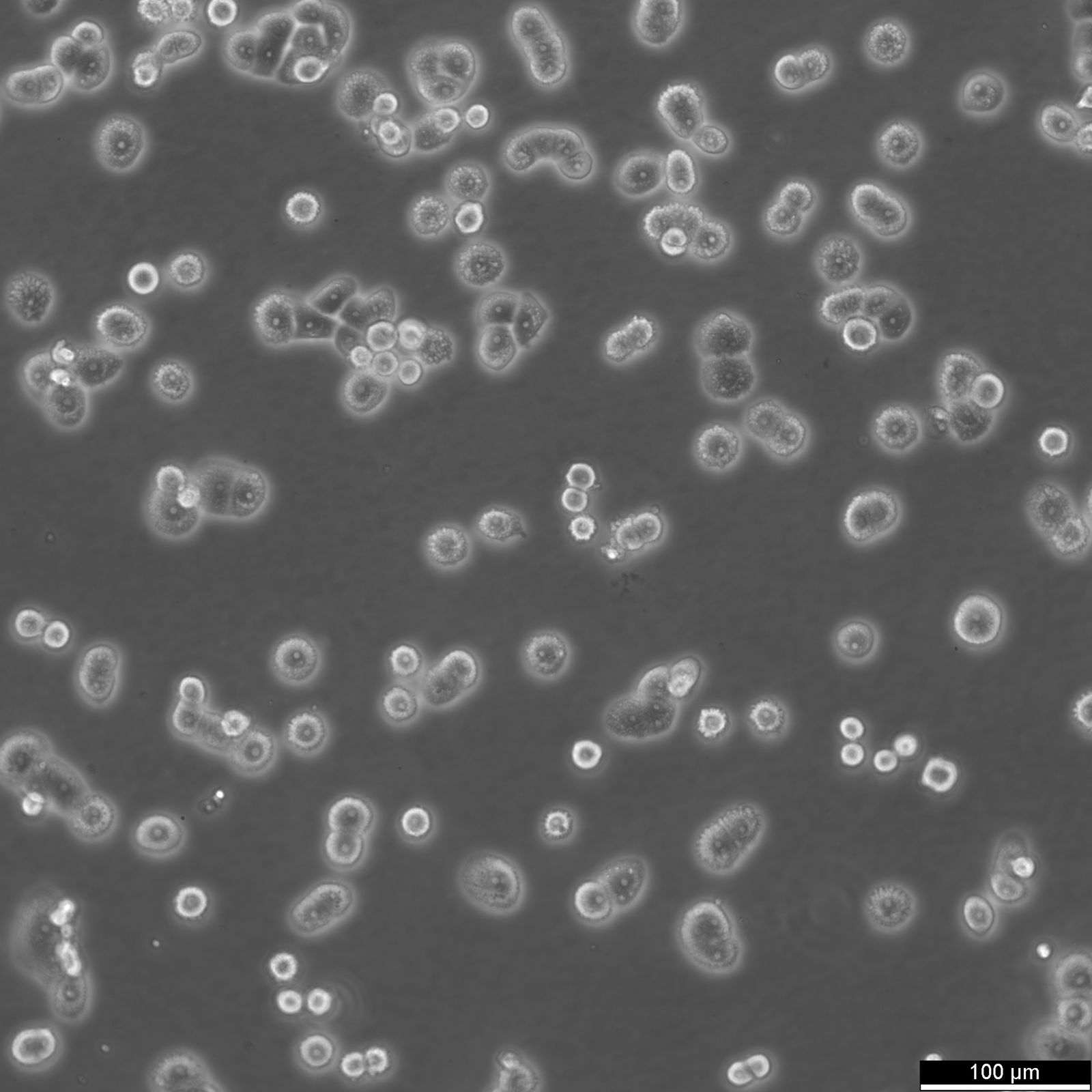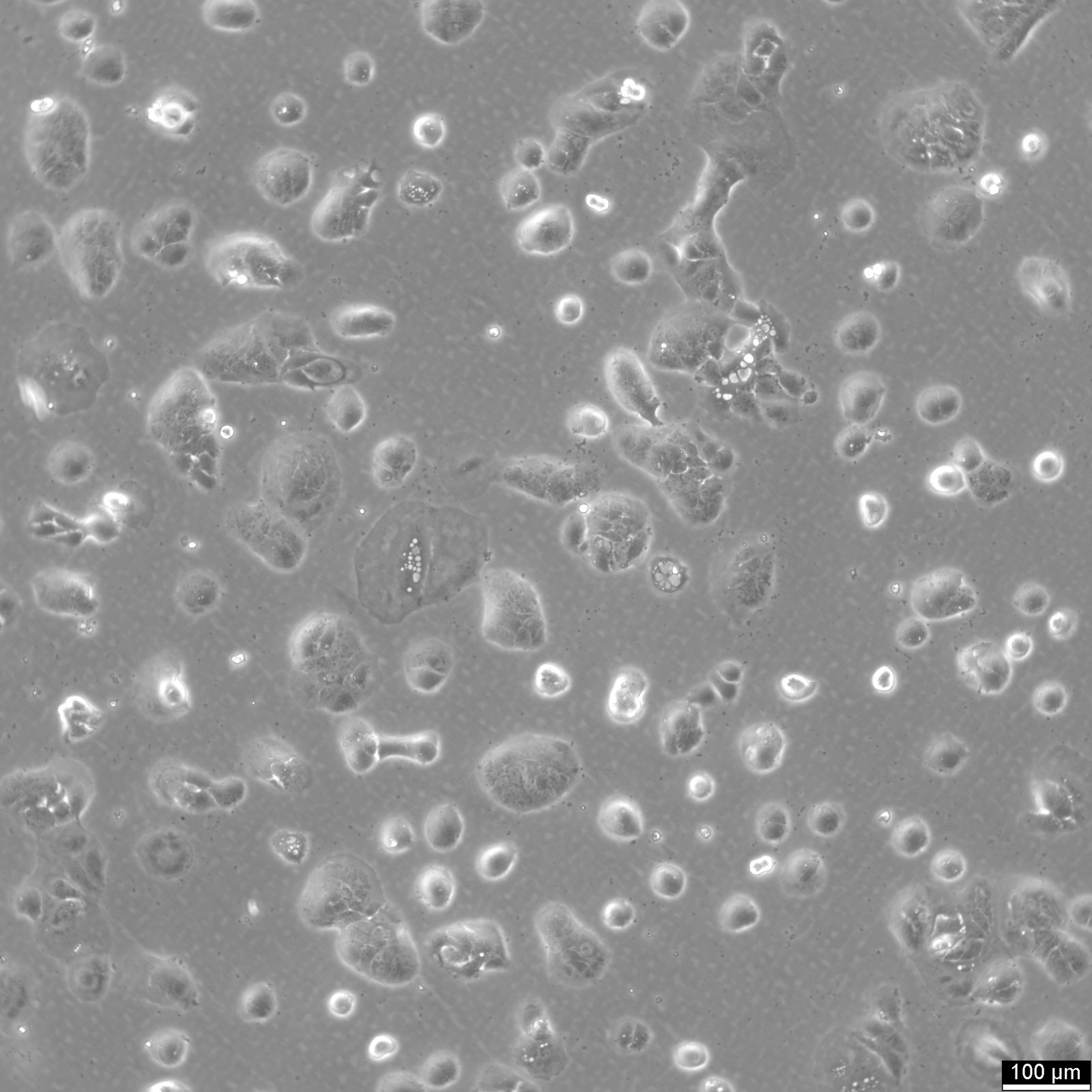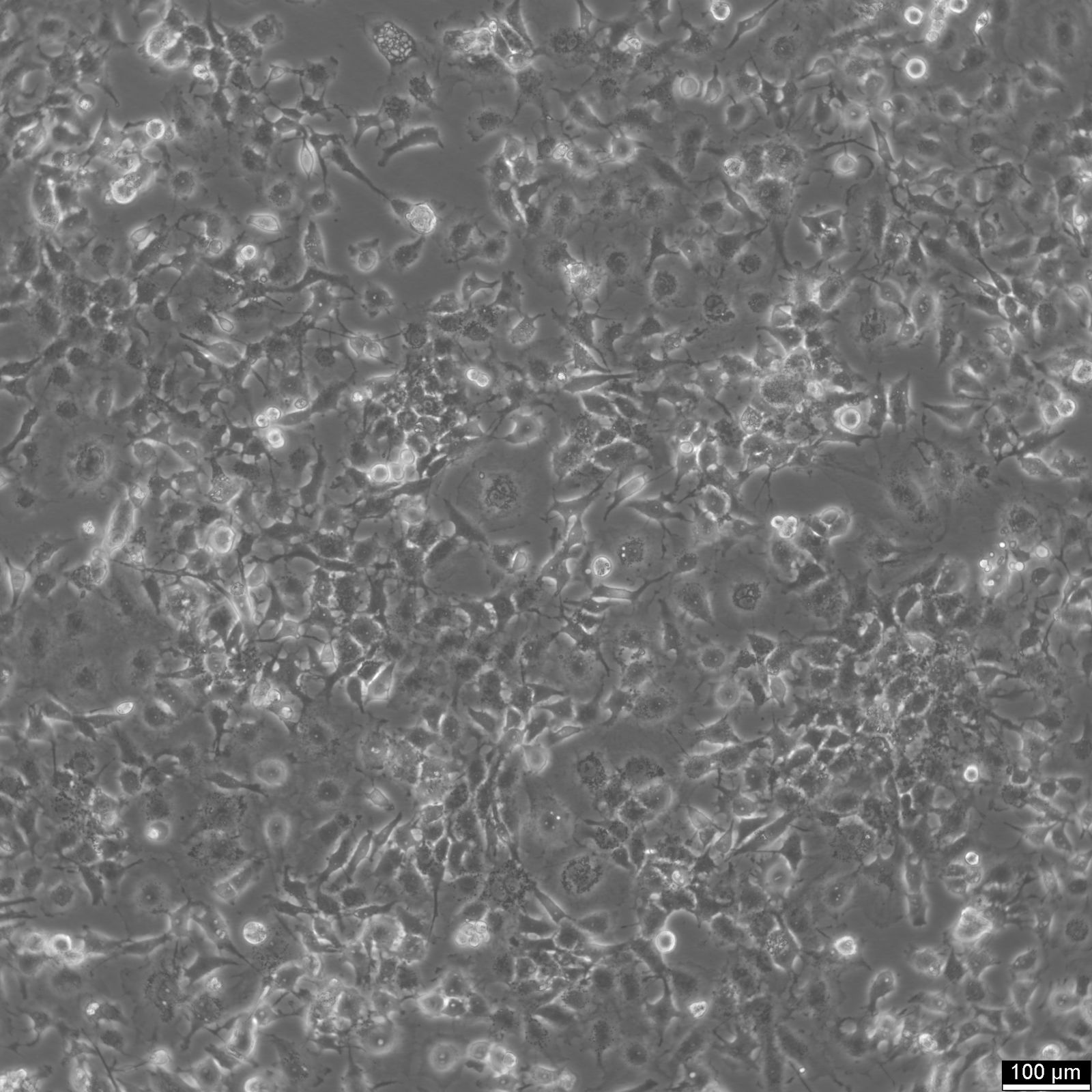
MDA-MB-157 Cells
USUSD$395.00*
Products are shipped frozen on dry ice in cryotubes. Each cryotube typically contains 3 × 10⁶ cells for adherent lines or 5 × 10⁶ cells for suspension lines (refer to the batch CoA for details).
一般資訊
| 說明 | The MDA-MB-157 cell line is derived from a human breast carcinoma, specifically from a pleural effusion of a metastatic breast cancer patient. This cell line is extensively used in breast cancer research, particularly for studying the biology of triple-negative breast cancer (TNBC), a subtype that lacks expression of estrogen receptor (ER), progesterone receptor (PR), and HER2/neu. MDA-MB-157 cells provide a valuable model for investigating the molecular mechanisms driving TNBC, as well as for testing potential therapeutic agents targeting this aggressive form of breast cancer. MDA-MB-157 cells exhibit an epithelial morphology and are characterized by their high metastatic potential. They express markers typical of basal-like breast cancer, including cytokeratins 5/6 and epidermal growth factor receptor (EGFR). Researchers utilize MDA-MB-157 cells to explore key signaling pathways involved in TNBC progression, such as the PI3K/Akt, MAPK, and Notch pathways. These cells are also employed in drug screening assays to evaluate the efficacy of chemotherapeutic agents, targeted therapies, and combination treatments. Additionally, MDA-MB-157 cells are used to study the mechanisms of drug resistance and to develop strategies to overcome it. The relevance of the MDA-MB-157 cell line in triple-negative breast cancer research underscores its importance in advancing our understanding of this challenging subtype of breast cancer and in developing more effective therapeutic approaches for TNBC patients. |
|---|---|
| 生物體 | Human |
| 組織 | Breast |
| 疾病 | Carcinoma |
| 轉移部位 | Pleural effusion |
| 同義詞 | MDA-MB157, MDAMB157, MDA-157, MDA157, MB 157, MB157, MD Anderson-Metastatic Breast-157 |
特徵
| 年齡 | 44 years |
|---|---|
| 性別 | Female |
| 族裔 | African American |
| 形態學 | Epithelial |
| 生長特性 | Adherent |
監管數據
| 引用 | MDA-MB-157 (Cytion catalog number 305280) |
|---|---|
| 生物安全等級 | 1 |
| NCBI_TaxID | 9606 |
| Cellosaurus 編號 | CVCL_0618 |
生物分子資料
| 表面抗原 | Blood Type B, Rh - |
|---|---|
| 致癌基因 | WNT7B + |
| 致瘤性 | Yes, in nude mice and in immunosuppressed BALB/c mice |
| 突變譜 | Mutation: MSH6, p.Pro42Ser (c.124C>T), heterozygous; Mutation: MSH6, p.Arg644Ser (c.1932G>C), heterozygous; Mutation: TP53, p.Pro87fs*53 (c.261_286del26) (p.Ala88Cysfs*52), homozygous |
處理方式
| 培養基 | DMEM:Ham's F12 (1:1), w: 3.1 g/L Glucose, w: 2.5 mM L-Glutamine, w: 15 mM HEPES, w: 0.5 mM Sodium pyruvate, w: 1.2 g/L NaHCO3 (Cytion article number 820400a) |
|---|---|
| 營養補充品 | Supplement the medium with 20% FBS + Insulin (5 microgram/ml) |
| 解離試劑 | Accutase |
| 傳代培養 | Remove the old medium from the adherent cells and wash them with PBS that lacks calcium and magnesium. For T25 flasks, use 3-5 ml of PBS, and for T75 flasks, use 5-10 ml. Then, cover the cells completely with Accutase, using 1-2 ml for T25 flasks and 2.5 ml for T75 flasks. Let the cells incubate at room temperature for 8-10 minutes to detach them. After incubation, gently mix the cells with 10 ml of medium to resuspend them, then centrifuge at 300xg for 3 minutes. Discard the supernatant, resuspend the cells in fresh medium, and transfer them into new flasks that already contain fresh medium. |
| 流體更新 | 2 to 3 times per week |
| 冷凍培養基 | As a cryopreservation medium, we use complete growth medium (including FBS) + 10% DMSO for adequate post-thaw viability, or CM-1 (Cytion catalog number 800100), which includes optimized osmoprotectants and metabolic stabilizers to enhance recovery and reduce cryo-induced stress. |
| 細胞解凍與培養 |
|
| 培養環境 | 37°C, 5% CO2, humidified atmosphere. |
| 運送條款 | Cryopreserved cell lines are shipped on dry ice in validated, insulated packaging with sufficient refrigerant to maintain approximately −78 °C throughout transit. On receipt, inspect the container immediately and transfer vials without delay to appropriate storage. |
| 儲存條件 | For long-term preservation, place vials in vapor-phase liquid nitrogen at about −150 to −196 °C. Storage at −80 °C is acceptable only as a short interim step before transfer to liquid nitrogen. |
品質控制與分子分析
| 不孕症 | Mycoplasma contamination is excluded using both PCR-based assays and luminescence-based mycoplasma detection methods. To ensure there is no bacterial, fungal, or yeast contamination, cell cultures are subjected to daily visual inspections. |
|---|
-
Related products
Related products
MDA-MB-175-VII Cells生物體 Human 組織 Metastatic 疾病 Invasive breast carcinoma of no special type USUSD$550.00*