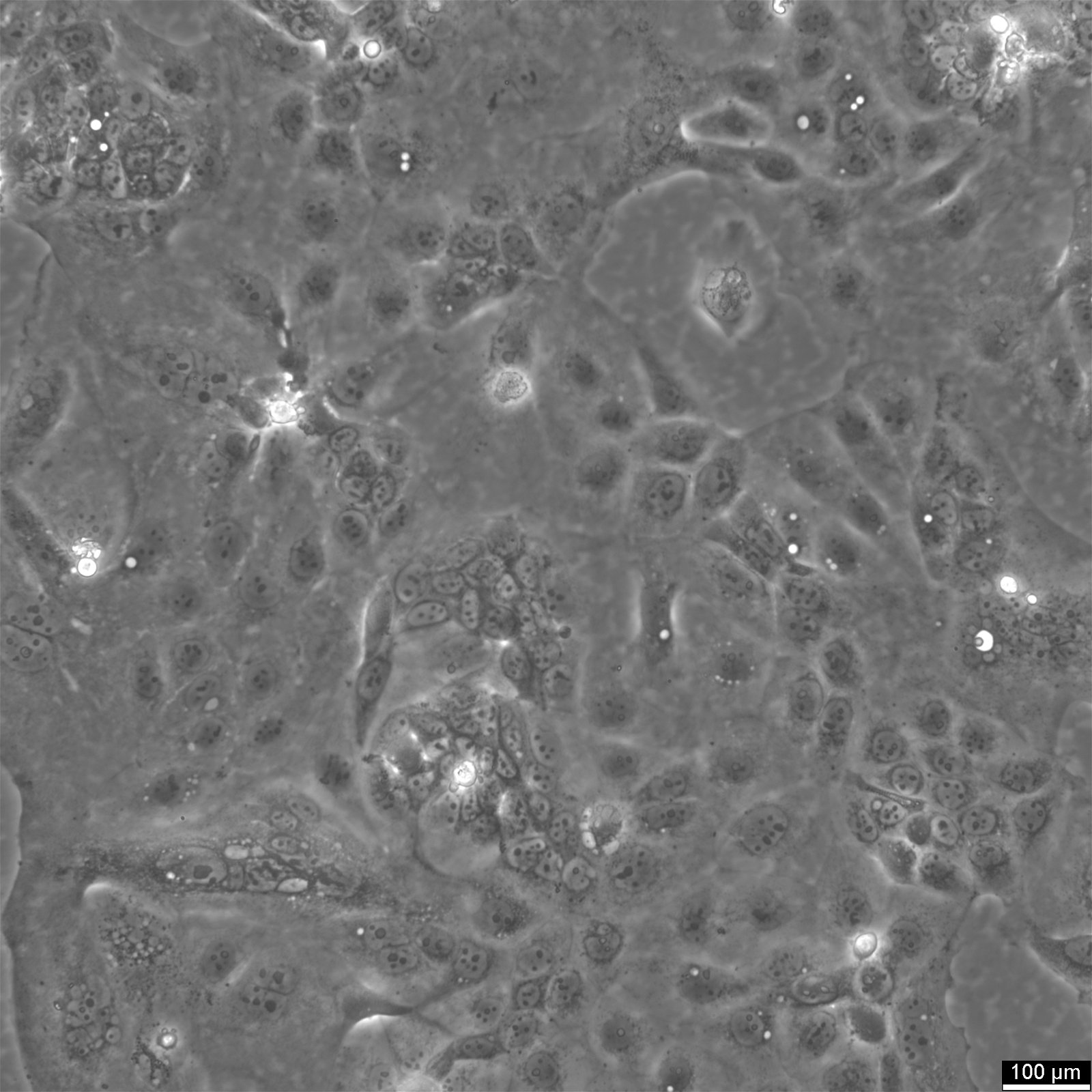
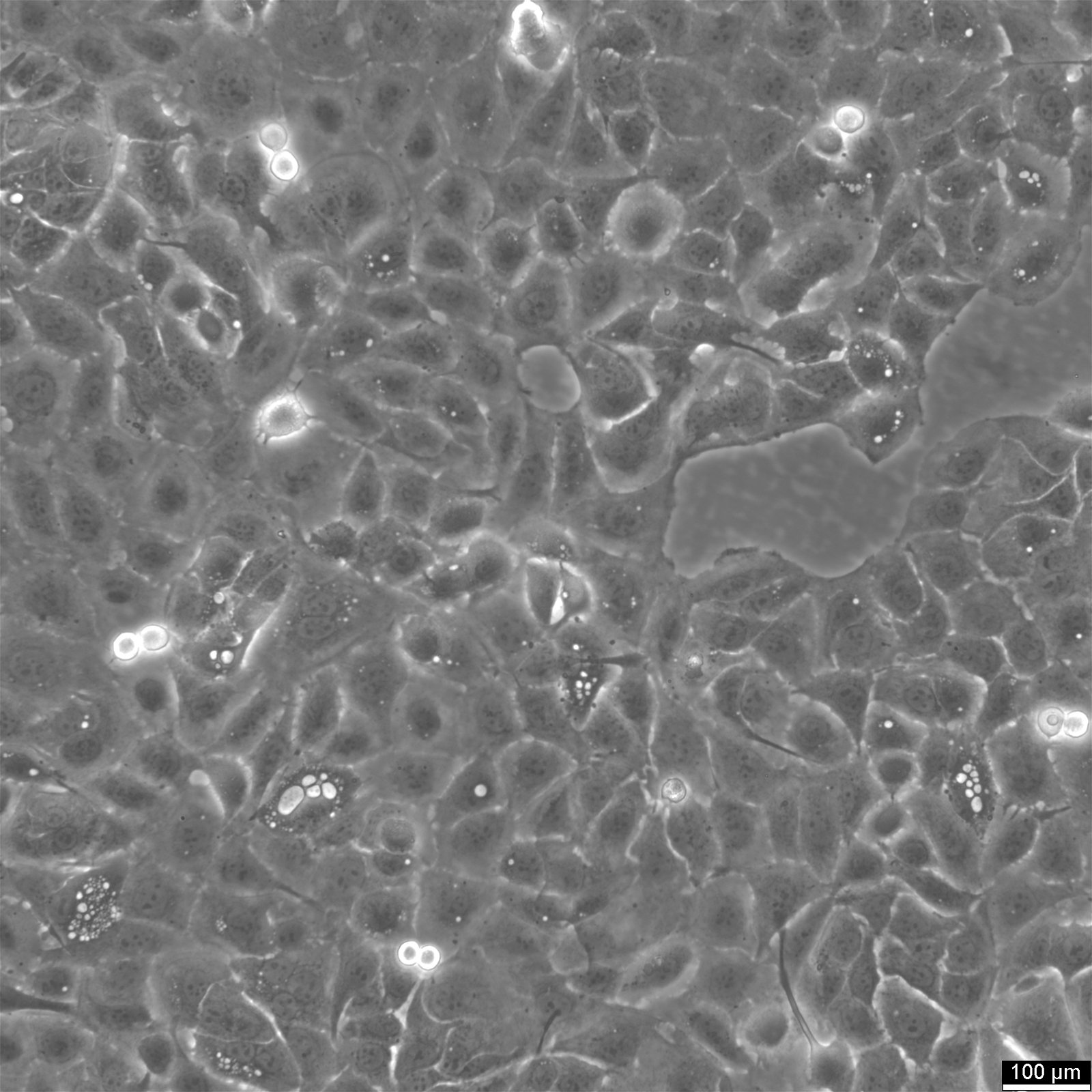
SW1271 Cells
1 104,00 CAD$*
Products are shipped frozen on dry ice in cryotubes. Each cryotube typically contains 3 × 10⁶ cells for adherent lines or 5 × 10⁶ cells for suspension lines (refer to the batch CoA for details).
Renseignements généraux
| Description | The SW1271 cell line is a human small cell lung carcinoma (SCLC) model derived from an adult patient. It is characterized by its neuroendocrine phenotype, which is typical of SCLC, and displays molecular features relevant to therapeutic sensitivity and resistance. In a comprehensive epigenome-wide methylation analysis of SCLC cell lines, including SW1271, the line exhibited specific DNA methylation patterns that correlated with chemosensitivity to several classes of anticancer drugs. These included Aurora kinase inhibitors, CDK inhibitors, and DNA-damaging agents. The methylation status of key genes such as TREX1, SLFN11, CEP350, and KDM1A in SW1271 and other SCLC models has been associated with altered drug response, implicating epigenetic modulation as a determinant of therapeutic efficacy. Furthermore, SW1271 has been used in integrated genomic and epigenomic studies to understand subtype-specific vulnerabilities in SCLC. This cell line, along with others representing different SCLC transcriptional subtypes (ASCL1, NEUROD1, POU2F3, and YAP1), helps delineate the heterogeneity within the disease. The methylation profile of SW1271 contributes to our understanding of the regulatory mechanisms affecting gene expression and drug response, including suppression of tumor suppressor genes and dysregulation of lineage-specific transcription factors. These insights position SW1271 as a valuable model for investigating epigenetically driven pathways in SCLC and for identifying potential biomarkers and therapeutic targets. |
|---|---|
| Organisme | Human |
| Tissu | Lung |
| Maladie | Lung small cell carcinoma |
| Synonymes | SW-1271, SW 1271 |
Caractéristiques
| Âge | 69 years |
|---|---|
| Genre | Male |
| Origine ethnique | Caucasian |
| Morphologie | Epithelial |
| Type de cellule | Epithelial cell |
| Propriétés de croissance | Adherent |
Données réglementaires
| Référence | SW1271 (Cytion catalog number 305880) |
|---|---|
| Niveau de biosécurité | 1 |
| NCBI_Numéro d'identification fiscale | 9606 |
| Cellosaurus - Numéro d'enregistrement | CVCL_1716 |
Données biomoléculaires
| Expression de l'antigène | Blood Type A; Rh + |
|---|---|
| Profil mutationnel | Mutation: NRAS, Simple, p.Gln61Arg (c.182A>G), Homozygous, SMARCA4, Simple, p.Asn774Lys (c.2322C>A), Homozygous.Mutation, TP53, Simple, p.Cys277Phe (c.830G>T), Homozygous |
Manipulation
| Milieu de culture | DMEM:Ham's F12 (1:1), w: 3.1 g/L Glucose, w: 2.5 mM L-Glutamine, w: 15 mM HEPES, w: 0.5 mM Sodium pyruvate, w: 1.2 g/L NaHCO3 (Cytion article number 820400a) |
|---|---|
| Suppléments | Supplement the medium with 10% FBS, AB, 5µg/mL Insulin |
| Réactif de dissociation | Accutase |
| Renouvellement des fluides | 2 to 3 times per week |
| Milieu de congélation | As a cryopreservation medium, we use complete growth medium (including FBS) + 10% DMSO for adequate post-thaw viability, or CM-1 (Cytion catalog number 800100), which includes optimized osmoprotectants and metabolic stabilizers to enhance recovery and reduce cryo-induced stress. |
| Décongélation et culture des cellules |
|
| Atmosphère d'incubation | 37°C, 5% CO2, humidified atmosphere. |
| Conditions d'expédition | Cryopreserved cell lines are shipped on dry ice in validated, insulated packaging with sufficient refrigerant to maintain approximately −78 °C throughout transit. On receipt, inspect the container immediately and transfer vials without delay to appropriate storage. |
| Conditions d'entreposage | For long-term preservation, place vials in vapor-phase liquid nitrogen at about −150 to −196 °C. Storage at −80 °C is acceptable only as a short interim step before transfer to liquid nitrogen. |
Contrôle de la qualité et analyse moléculaire
| Stérilité | Mycoplasma contamination is excluded using both PCR-based assays and luminescence-based mycoplasma detection methods. To ensure there is no bacterial, fungal, or yeast contamination, cell cultures are subjected to daily visual inspections. |
|---|
Certificat d'analyse (CoA)
| Numéro de lot | Type de certificat | Date | Numéro de catalogue |
|---|---|---|---|
| 305880-191125 | Certificat d'analyse | 08. Jan. 2026 | 305880 |
-
Related products
Related products
SW480 CellsOrganisme Human Tissu Colon Maladie Adenocarcinoma, Grade IV, Dukes' type B. 545,10 CAD$*