
LMH Cells
759,00 CAD$*
Products are shipped frozen on dry ice in cryotubes. Each cryotube typically contains 3 × 10⁶ cells for adherent lines or 5 × 10⁶ cells for suspension lines (refer to the batch CoA for details).
Renseignements généraux
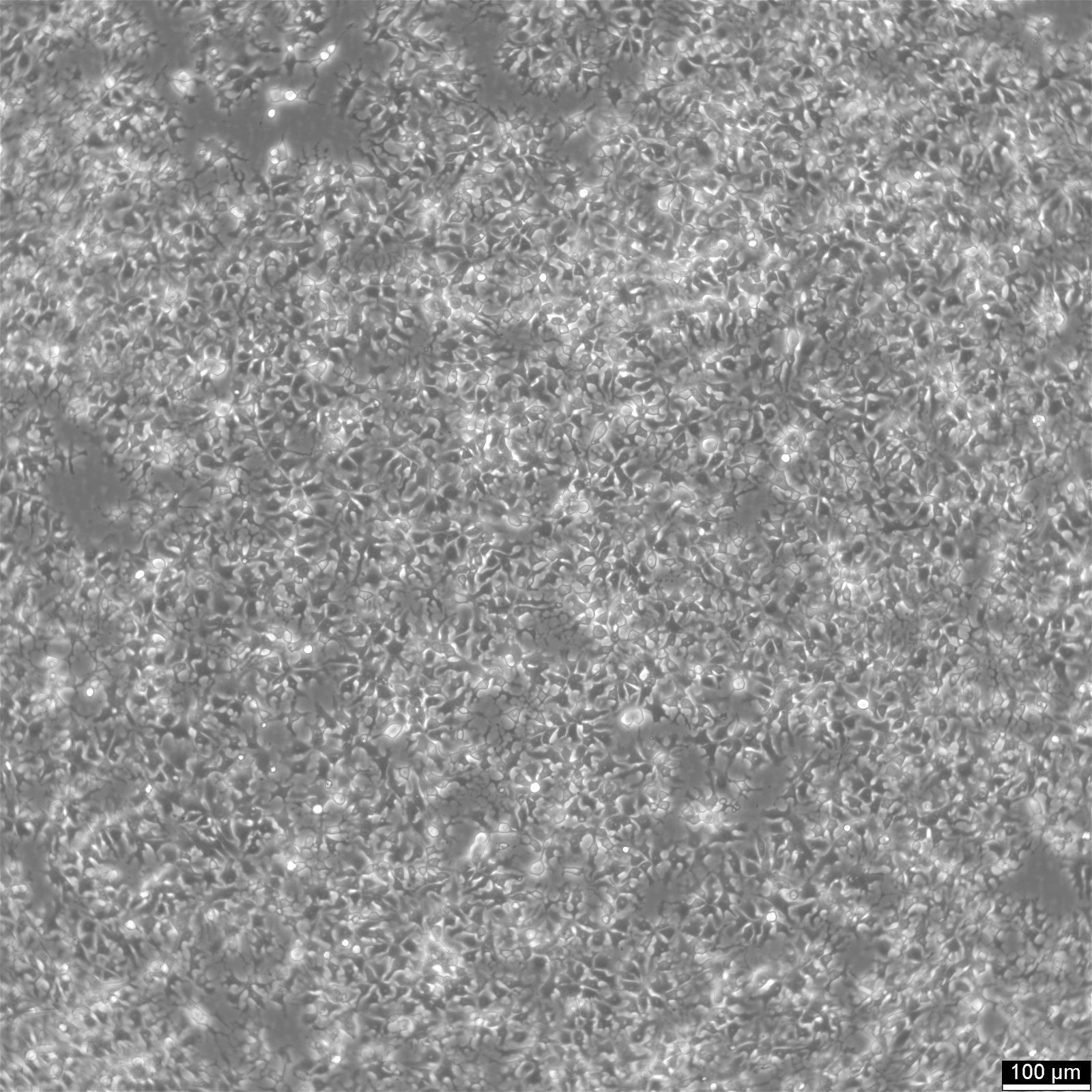
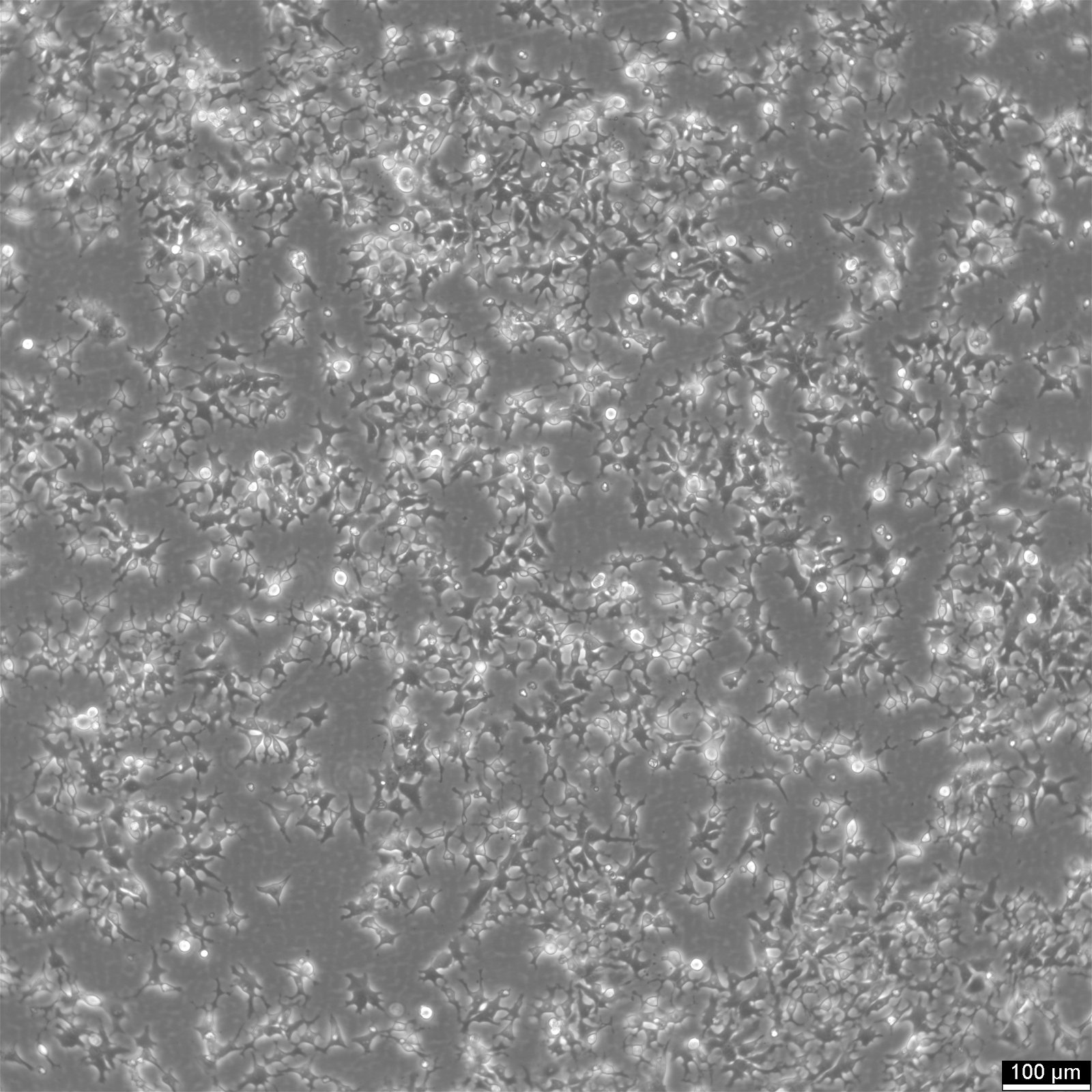
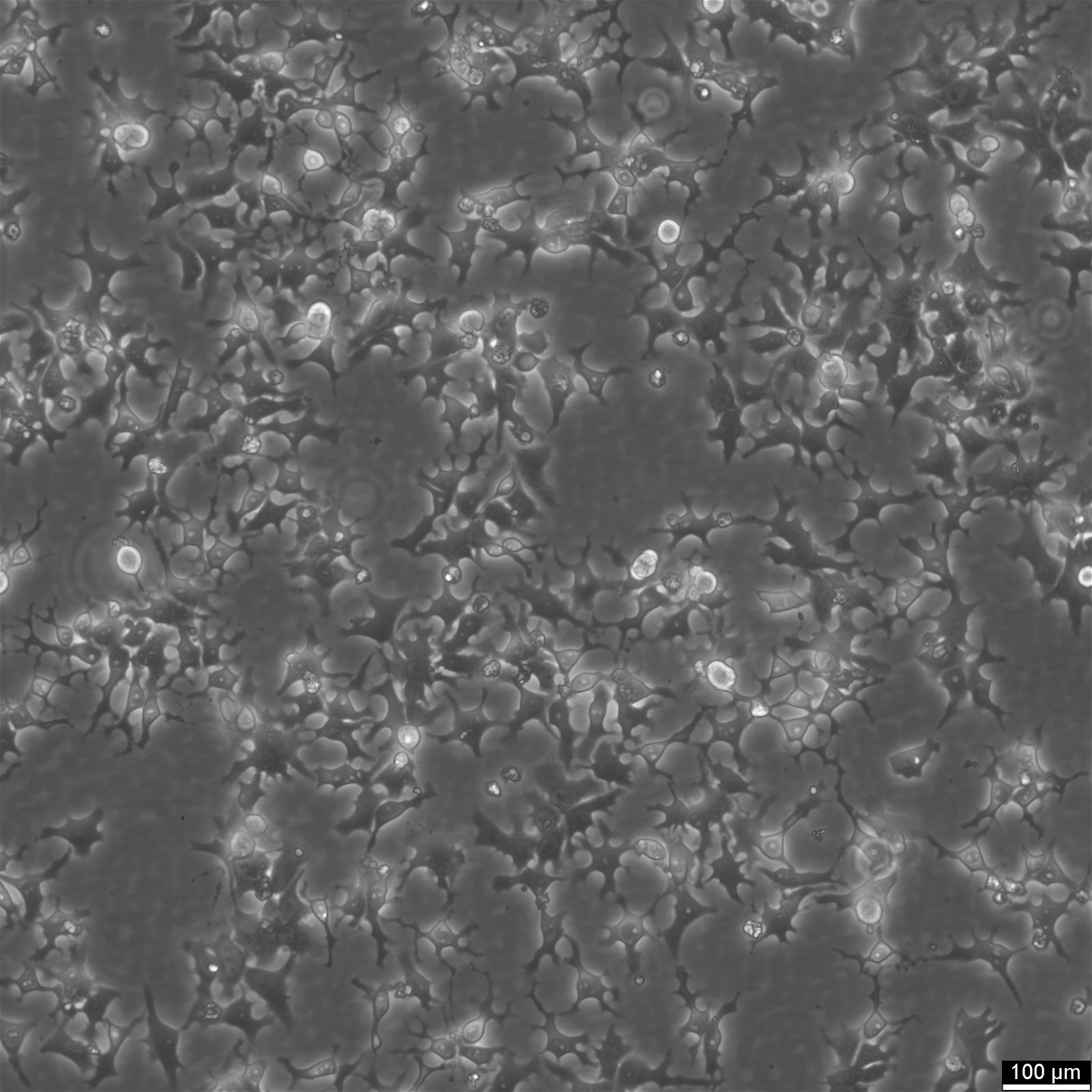
| Description | LMH cells, derived from a Leghorn male hepatoma, are a versatile cell line widely used in biological research. Tomoyuki Kitagawa established them in 1981 at the Cancer Institute in Tokyo, Japan. These cells have an epithelial phenotype and are particularly useful for studying host-pathogen interactions in the gastrointestinal tract of poultry. LMH cells are adherent and exhibit a dendritic-like morphology. They express glucose-6-phosphatase and weak canalicular ATPase activity. With a triploid karyotype and six marker chromosomes, these cells display distinct genetic characteristics. In terms of tumorigenicity, LMH cells have the ability to form tumors in athymic nude mice. This characteristic makes them an important model for studying hepatocellular carcinoma. LMH cells express the estrogen receptor and can be induced to express the liver-specific apolipoprotein II (apoII) gene. This indicates their involvement in estrogen signaling pathways and lipid metabolism. To culture LMH cells, it is necessary to precoat tissue culture vessels with collagen. This ensures proper cell adhesion and growth. |
|---|---|
| Organisme | Chicken |
| Tissu | Liver |
| Maladie | Hepatocellular carcinoma |
| Applications | The cell line is useful for transfection studies. |
| Synonymes | Leghorn Male Hepatoma cell line |
Caractéristiques
| Race/Sous-espèce | Leghorn |
|---|---|
| Âge | 16 months |
| Genre | Male |
| Morphologie | Epithelial-like, Dendritic like. |
| Propriétés de croissance | Adherent. It may take a couple of days until cells grow in fully adherent colonies. |
Données réglementaires
| Référence | LMH (Cytion catalog number 601411) |
|---|---|
| Niveau de biosécurité | 1 |
| NCBI_Numéro d'identification fiscale | 9031 |
| Cellosaurus - Numéro d'enregistrement | CVCL_2580 |
Données biomoléculaires
| Récepteurs exprimés | Estrogen (low level expression). |
|---|---|
| Tumorigène | LMH cells form tumors in athymic mice. |
| Produits | Glucose-6-phosphatase, canalicular ATPase activity (weak) |
| Caryotype | Triploid, modal number = 116, six marker chromosomes |
Manipulation
| Milieu de culture | EMEM (MEM Eagle), w: 2 mM L-Glutamine, w: 2.2 g/L NaHCO3, w: EBSS (Cytion article number 820100a) |
|---|---|
| Suppléments | Supplement the medium with 10% FBS and 1% NEAA |
| Réactif de dissociation | Accutase |
| Repiquage | LMH cells attach better to tissue culture vessels which have been precoated with Collagen. Remove medium and rinse the adherent cells using PBS without calcium and magnesium (3-5 ml PBS for T25, 5-10 ml for T75 cell culture flasks). Add Accutase (1-2 ml per T25, 2.5 ml per T75 cell culture flask), the cell sheet must be covered completely. Incubate at ambient temperature for 8-10 minutes. Carefully resuspend the cells with medium (10 ml), centrifuge for 3 min at 300 g, resuspend cells in fresh medium and dispense into new flasks which contain fresh medium. |
| Densité de semis | 1 to 3 x 10⁴ cells/cm2 |
| Renouvellement des fluides | Every 2 days |
| Milieu de congélation | As a cryopreservation medium, we use complete growth medium (including FBS) + 10% DMSO for adequate post-thaw viability, or CM-1 (Cytion catalog number 800100), which includes optimized osmoprotectants and metabolic stabilizers to enhance recovery and reduce cryo-induced stress. |
| Décongélation et culture des cellules |
|
| Atmosphère d'incubation | 37°C, 5% CO2, humidified atmosphere. |
| Conditions d'expédition | Cryopreserved cell lines are shipped on dry ice in validated, insulated packaging with sufficient refrigerant to maintain approximately −78 °C throughout transit. On receipt, inspect the container immediately and transfer vials without delay to appropriate storage. |
| Conditions d'entreposage | For long-term preservation, place vials in vapor-phase liquid nitrogen at about −150 to −196 °C. Storage at −80 °C is acceptable only as a short interim step before transfer to liquid nitrogen. |
Contrôle de la qualité et analyse moléculaire
| Stérilité | Mycoplasma contamination is excluded using both PCR-based assays and luminescence-based mycoplasma detection methods. To ensure there is no bacterial, fungal, or yeast contamination, cell cultures are subjected to daily visual inspections. |
|---|
Certificat d'analyse (CoA)
| Numéro de lot | Type de certificat | Date | Numéro de catalogue |
|---|---|---|---|
| 601411-150524 | Certificat d'analyse | 23. May. 2025 | 601411 |