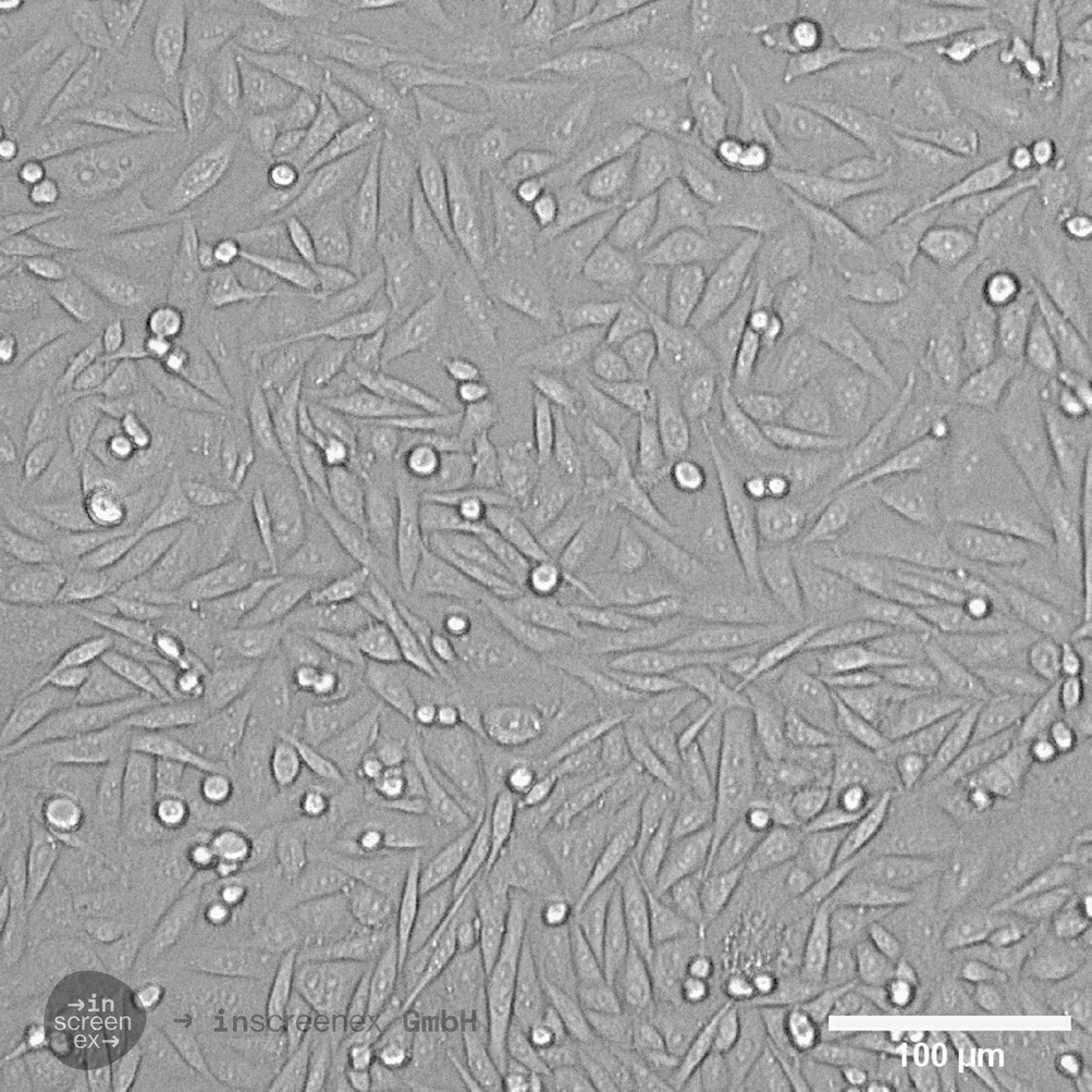
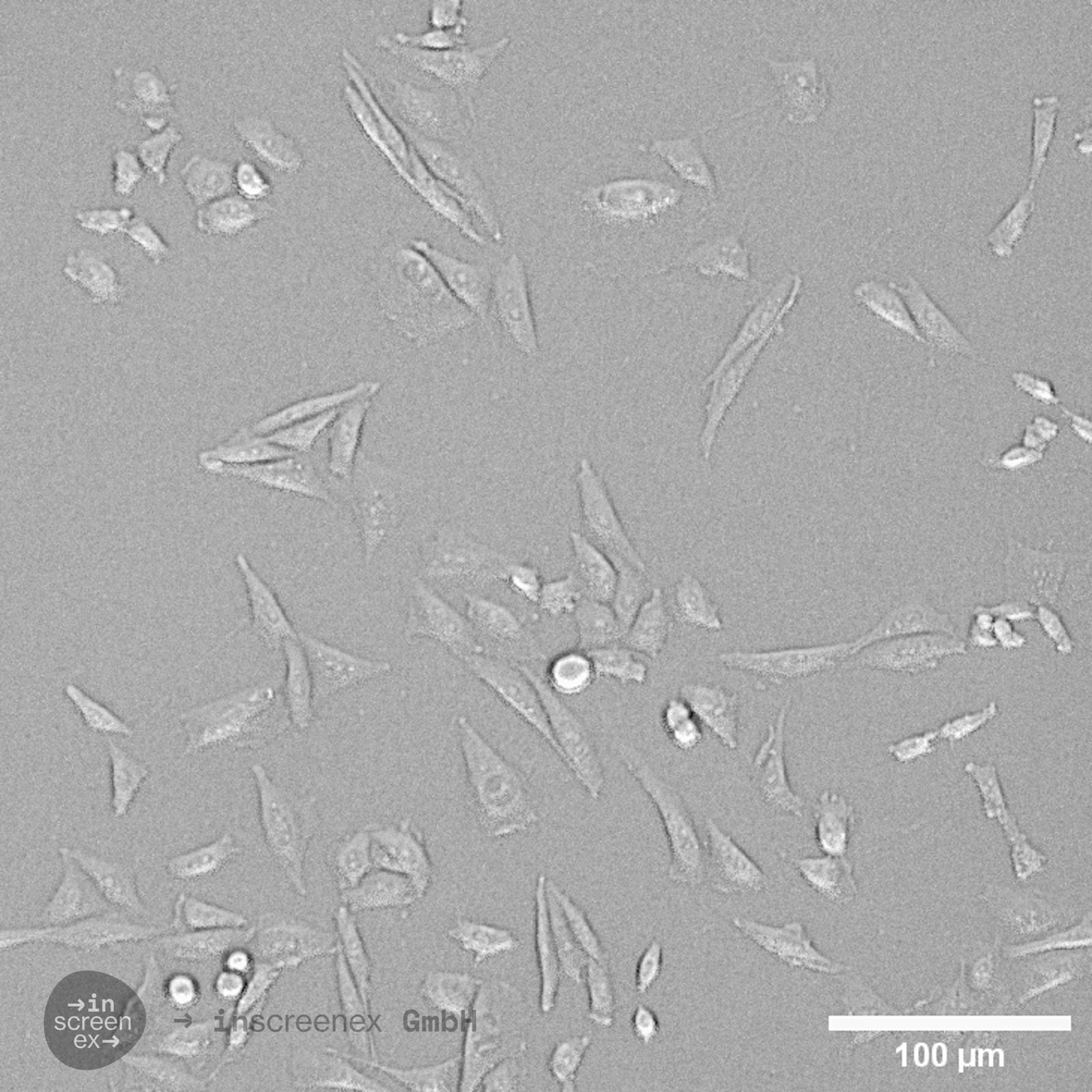
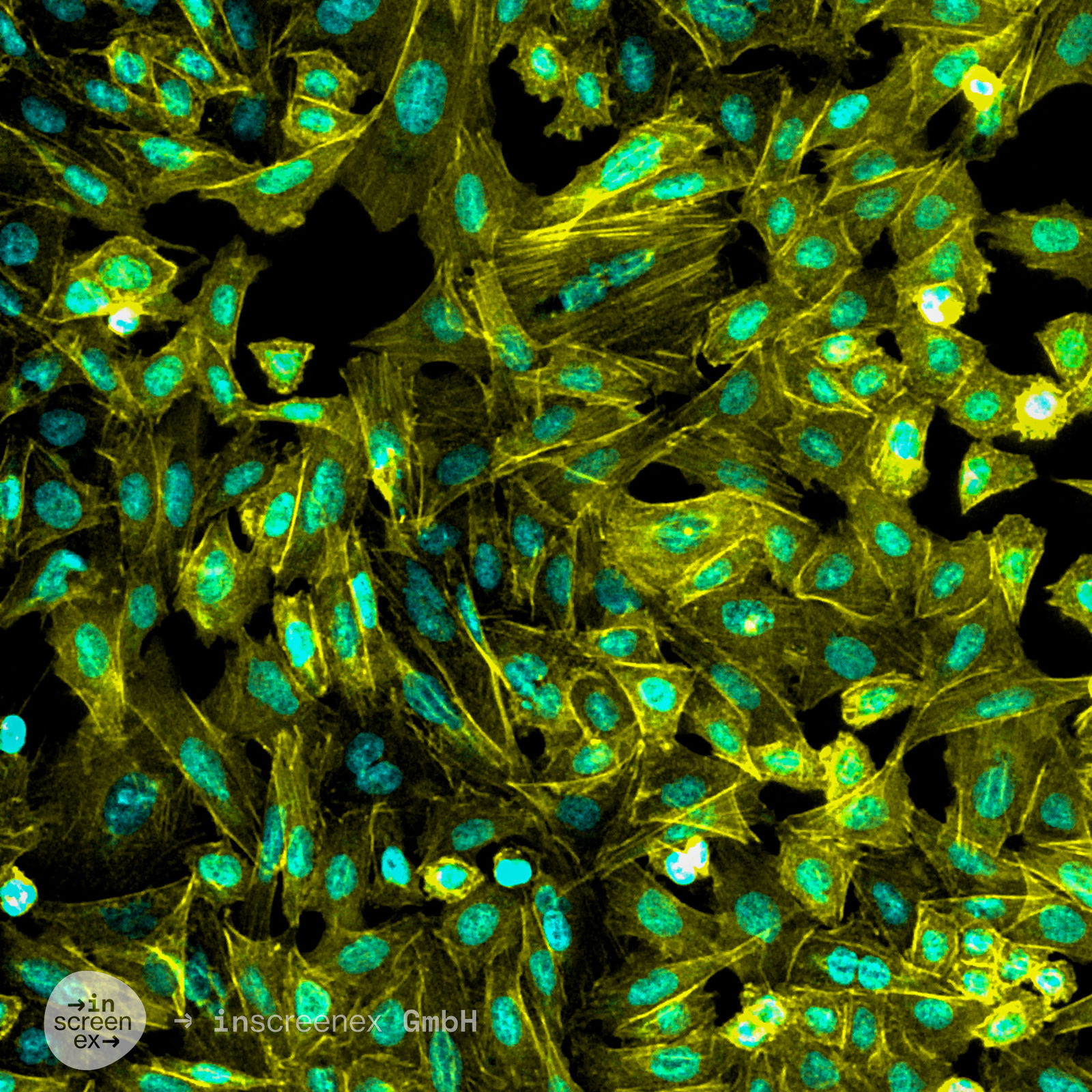
CHO-CXCR7 Cells (low)
3 100,00 CAD$*
Products are shipped frozen on dry ice in cryotubes. Each cryotube typically contains 3 × 10⁶ cells for adherent lines or 5 × 10⁶ cells for suspension lines (refer to the batch CoA for details).
Renseignements généraux
| Description | Disclaimer: The prices displayed for cell lines are exclusively for academic/not-for-profit customers. For commercial entitites the price is approximately €6,250. The CHO-CXCR7-Low cell line is a stable recombinant CHO (Chinese Hamster Ovary) cell line expressing the CXCR7 receptor at a low level. This cell line was generated using an innovative landing pad technology, allowing for reproducible and precise integration of the CXCR7 gene at a validated genomic locus. CXCR7, also known as ACKR3, is an atypical chemokine receptor involved in various biological processes, including immune modulation and tumor biology. Unlike classical GPCRs, CXCR7 does not signal through G proteins but instead modulates cellular responses by scavenging chemokines, such as CXCL12 and CXCL11, and interacting with CXCR4 through heterodimer formation. Overexpression of CXCR7 has been implicated in several cancers, including breast, lung, and prostate, where it is associated with enhanced tumor progression, metastasis, and poor prognosis. CXCR7 contributes to cancer progression by altering the tumor microenvironment, promoting angiogenesis, and facilitating cancer cell migration and invasion. Due to its significant role in cancer biology, CXCR7 is an important target in oncology research. The expression of CXCR7 in this cell line was confirmed using flow cytometry. |
|---|---|
| Organisme | Chinese hamster |
| Tissu | Ovary |
| Maladie | Chinese hamster ovary, non-neoplastic; genetically engineered for CXCR7 (ACKR3) surface expression (low expression level) |
| Applications | Antibody screening; CXCR7-targeted therapy development; chemokine receptor biology; tumor microenvironment research; flow cytometry |
| Synonymes | CHO-CXCR7 |
Caractéristiques
| Âge | Adult |
|---|---|
| Genre | Female |
| Morphologie | Epithelial-like |
| Type de cellule | Epithelial cells |
| Propriétés de croissance | Monolayer, adherent |
Données réglementaires
| Référence | CHO-CXCR7 Low (Cytion catalog number 305412L) |
|---|---|
| Niveau de biosécurité | 1 |
| NCBI_Numéro d'identification fiscale | 10029 |
| Cellosaurus - Numéro d'enregistrement | CVCL_A8W1 |
| Statut OGM | GMO-S1: This CHO cell line contains a recombinant CXCR7 expression cassette at low levels, suitable for controlled receptor-ligand studies. This classification applies only within Germany and may differ elsewhere. |
Données biomoléculaires
| Récepteurs exprimés | CXCR7 (ACKR3) |
|---|
Manipulation
| Milieu de culture | Ham's F12, w: 1.0 mM stable Glutamine, w: 1.0 mM Sodium pyruvate, w: 1.1 g/L NaHCO3 (Cytion article number 820600a) |
|---|---|
| Suppléments | Supplement the medium with 10% FBS. Add Geneticin (G418-Sulfat) to achieve a final concentration of 0.5 mg/mL. |
| Réactif de dissociation | Trypsin-EDTA |
| Temps de doublement | approx. 14-16 hours |
| Repiquage | For routine adherent cell culture: Aspirate the old culture medium from the adherent cells, and wash them with PBS to remove any remaining medium. After aspirating the PBS, add the appropriate volume of Trypsin/EDTA solution based on the culture vessel size (e.g., 1 ml for a T25 flask, 3 ml for a T75 flask) and incubate at room temperature or 37°C until the cells detach (5-10 minutes). Monitor detachment under a microscope, and gently tap the vessel if necessary to release the cells. Once detached, add complete medium to inactivate the Trypsin/EDTA, gently resuspend the cells, and transfer an aliquot of the cell suspension into a new culture vessel containing fresh medium. Place the vessel in an incubator set to 37°C with 5% CO2, and change the medium every 2-3 days. |
| Rapport de fractionnement | 1 to 5 |
| Densité de semis | 2 to 5 x 10⁴ cells/cm2 |
| Renouvellement des fluides | 2 to 3 times per week |
| Rétablissement après le dégel | After thawing, split the cells at a ratio of 1:2 to 1:3 in T25 flasks and allow the cells to recover from the freezing process and to adhere (for adherent cultures) for at least 24 hours. |
| Milieu de congélation | As a cryopreservation medium, we use complete growth medium (including FBS) + 10% DMSO for adequate post-thaw viability, or CM-1 (Cytion catalog number 800100), which includes optimized osmoprotectants and metabolic stabilizers to enhance recovery and reduce cryo-induced stress. |
| Décongélation et culture des cellules |
|
| Atmosphère d'incubation | 37°C, 5% CO2, humidified atmosphere. |
| Conditions d'expédition | Cryopreserved cell lines are shipped on dry ice in validated, insulated packaging with sufficient refrigerant to maintain approximately −78 °C throughout transit. On receipt, inspect the container immediately and transfer vials without delay to appropriate storage. |
| Conditions d'entreposage | For long-term preservation, place vials in vapor-phase liquid nitrogen at about −150 to −196 °C. Storage at −80 °C is acceptable only as a short interim step before transfer to liquid nitrogen. |
Contrôle de la qualité et analyse moléculaire
| Stérilité | Mycoplasma contamination is excluded using both PCR-based assays and luminescence-based mycoplasma detection methods. To ensure there is no bacterial, fungal, or yeast contamination, cell cultures are subjected to daily visual inspections. |
|---|