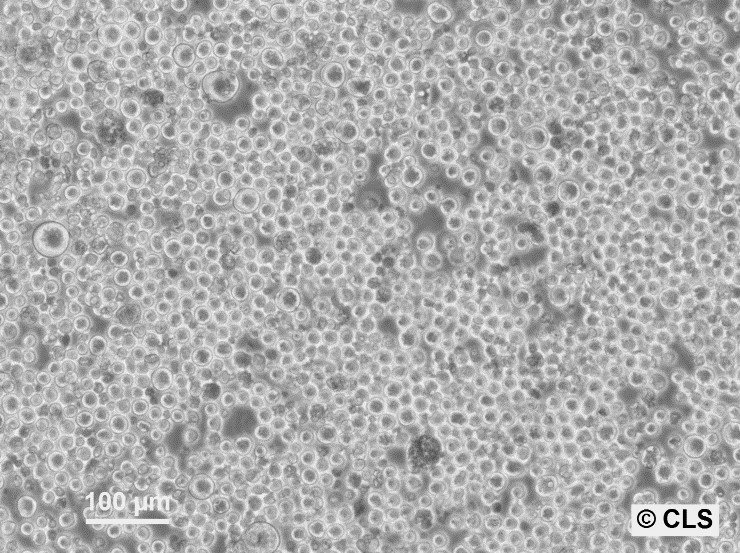
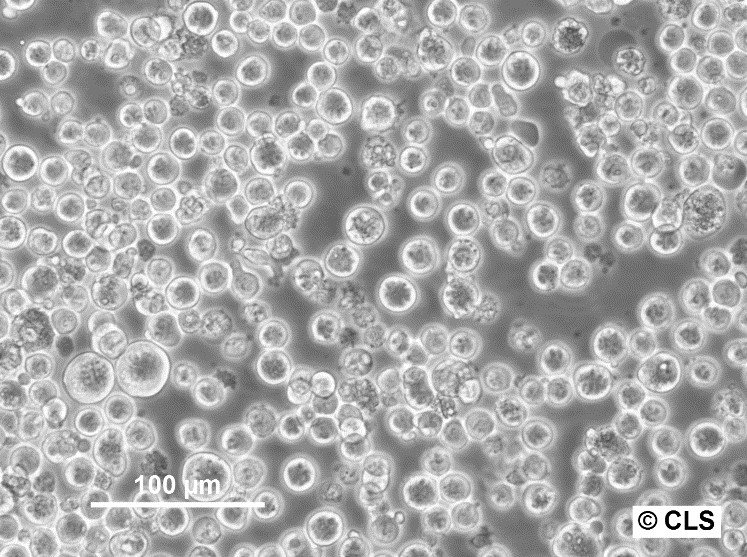
Meth A sarcoma Cells
USD$800.00*
Products are shipped frozen on dry ice in cryotubes. Each cryotube typically contains 3 × 10⁶ cells for adherent lines or 5 × 10⁶ cells for suspension lines (refer to the batch CoA for details).
General information
| Description | Meth A sarcoma cells, originating from a chemically induced tumor in Balb/c mice, provide a crucial model for understanding tumor biology and the molecular mechanisms driving sarcoma development. A key aspect of Meth A sarcoma cell research involves the study of the transformation-related protein p53, known for its role in tumor suppression. Typically, p53 is highly labile, but its stability is markedly increased in many fibrosarcoma cell lines derived from tumors induced by physical or chemical agents. This stabilization often correlates with the formation of a stable complex with the heat shock protein cognate hsc70. Interestingly, Meth A sarcoma cells exhibit unique behavior regarding p53 stability. Despite p53 being very stable in these cells, there is no detectable interaction with hsc70. This suggests that the inability to form such a complex is likely due to the primary structure of the endogenous p53. When other p53 variants are introduced into Meth A sarcoma cells, a p53-hsc70 complex does form, indicating that the primary structure of p53 is a critical determinant of its interaction with hsc70 and, consequently, its stability. Further investigations using stable transfection experiments have revealed that different p53 variants are degraded at distinct rates in various transformed cell types, emphasizing the role of p53's primary structure in determining its turnover rate. Additionally, the cellular environment also influences p53 stability, as evidenced by differing degradation rates of at least one p53 variant in nontransformed BALB/c-3T3 cells compared to transformed fibrosarcoma cells. This highlights the complex interplay between genetic factors and cellular context in regulating p53 stability and function in Meth A sarcoma cells. |
|---|---|
| Organism | Mouse |
| Tissue | Skin |
| Disease | Fibrosarcoma |
| Synonyms | Meth A, Meth-A, Meth-A-sarkom |
Characteristics
| Breed/Subspecies | BALB/c |
|---|---|
| Age | Adult |
| Gender | Female |
| Morphology | Round cells |
| Growth properties | Suspension |
Regulatory Data
| Citation | Meth A sarcoma (Cytion catalog number 400284) |
|---|---|
| Biosafety level | 1 |
| NCBI_TaxID | 10090 |
| CellosaurusAccession | CVCL_5798 |
Biomolecular Data
| Tumorigenic | Yes |
|---|
Handling
| Culture Medium | RPMI 1640, w: 2.0 mM stable Glutamine, w: 2.0 g/L NaHCO3 (Cytion article number 820700a) |
|---|---|
| Supplements | Supplement the medium with 10% FBS |
| Doubling time | 28 to 30 hours |
| Subculturing | Allow cell aggregates to settle to the bottom of the flask, discard the supernatant medium, disperse the cells with gentle pipetting and dispense into new flasks. Resuspend cell suspension in the flask and take representative aliquot to count the cell number per ml. Dilute cell suspension to 1x10⁵ cells/ml with fresh medium and transfer into new flasks. |
| Seeding density | Start new cultures using 2 to 3 x 10⁶ cells/ml. Once the cells have recovered from the freezing and thawing process after 1 to 2 passages, adjust the cell density to 1 x 10⁶ cells/ml when splitting the cells. |
| Fluid renewal | 2 to 3 times per week |
| Post-Thaw Recovery | About 53% of the initial cell number was collected after freezing. |
| Freeze medium | As a cryopreservation medium, we use complete growth medium (including FBS) + 10% DMSO for adequate post-thaw viability, or CM-1 (Cytion catalog number 800100), which includes optimized osmoprotectants and metabolic stabilizers to enhance recovery and reduce cryo-induced stress. |
| Thawing and Culturing Cells |
|
| Incubation Atmosphere | 37°C, 5% CO2, humidified atmosphere. |
| Shipping Conditions | Cryopreserved cell lines are shipped on dry ice in validated, insulated packaging with sufficient refrigerant to maintain approximately −78 °C throughout transit. On receipt, inspect the container immediately and transfer vials without delay to appropriate storage. |
| Storage Conditions | For long-term preservation, place vials in vapor-phase liquid nitrogen at about −150 to −196 °C. Storage at −80 °C is acceptable only as a short interim step before transfer to liquid nitrogen. |
Quality Control & Molecular Analysis
| Sterility | Mycoplasma contamination is excluded using both PCR-based assays and luminescence-based mycoplasma detection methods. To ensure there is no bacterial, fungal, or yeast contamination, cell cultures are subjected to daily visual inspections. |
|---|
Certificate of Analysis (CoA)
| Lot Number | Certificate Type | Date | Catalog Number |
|---|---|---|---|
| 400284-619SF | Certificate of Analysis | 23. May. 2025 | 400284 |
| 400284-190325 | Certificate of Analysis | 23. May. 2025 | 400284 |
| 400284-619 | Certificate of Analysis | 23. May. 2025 | 400284 |