
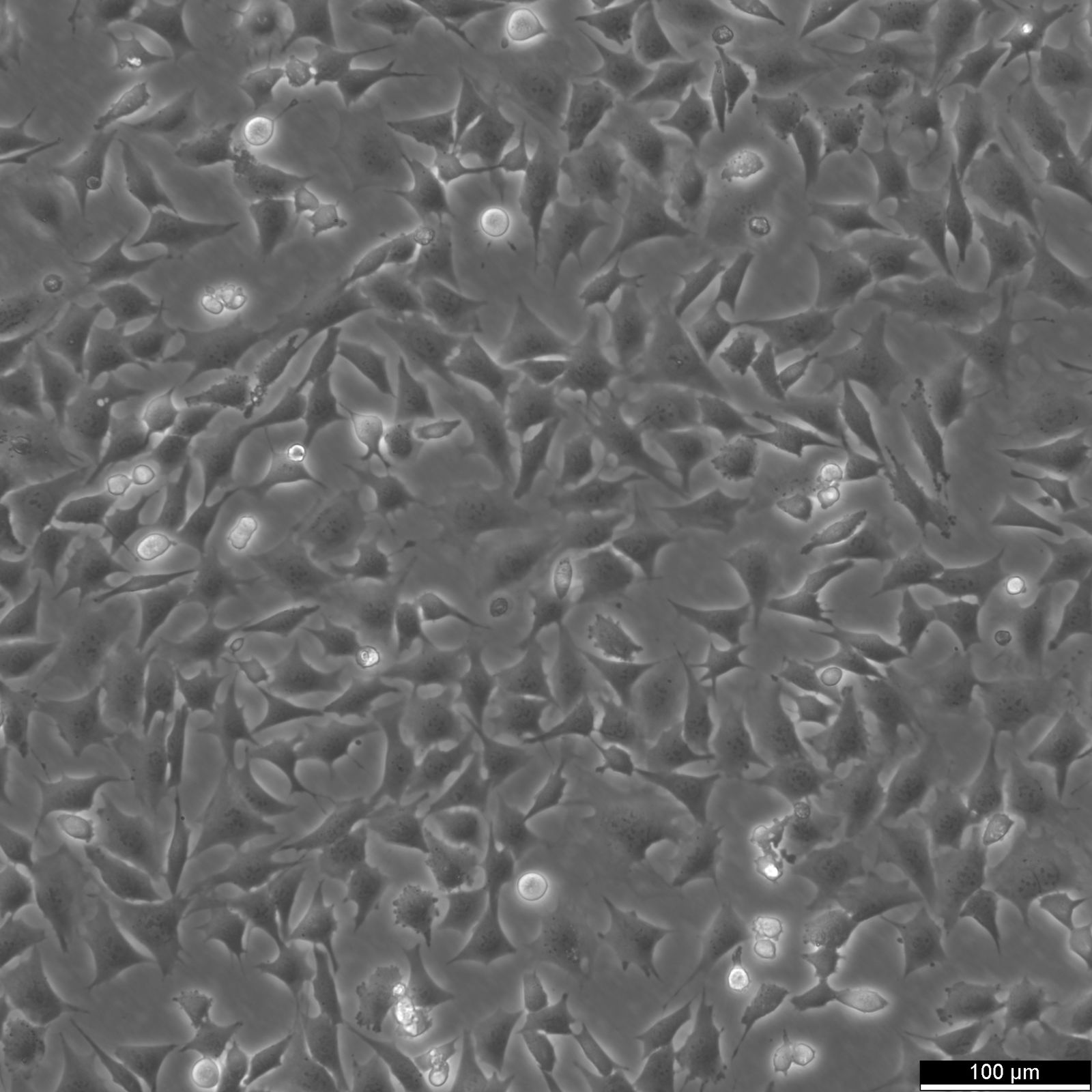
ATDC5 Cells
USD$450.00*
Products are shipped frozen on dry ice in cryotubes. Each cryotube typically contains 3 × 10⁶ cells for adherent lines or 5 × 10⁶ cells for suspension lines (refer to the batch CoA for details).
General information
| Description | ATDC5 is a murine chondrogenic cell line derived from mouse teratocarcinoma cells and is widely used as an in vitro model for studying chondrogenesis and cartilage development. This cell line undergoes sequential chondrogenic differentiation, mimicking in vivo processes such as cellular condensation, the expression of early chondrocytic markers like type II collagen and aggrecan, and the transition to hypertrophic chondrocytes, marked by type X collagen expression and matrix mineralization. Due to its ability to proliferate and differentiate efficiently, ATDC5 serves as a valuable model for exploring molecular mechanisms related to skeletal development, especially endochondral ossification. ATDC5 cells have been extensively used to study the influence of various growth factors, hormones, and transcription factors on chondrogenesis. For instance, transforming growth factor-beta (TGF-β) has been shown to promote early chondrogenic differentiation by modulating the expression of extracellular matrix components like fibronectin. Similarly, bone morphogenetic proteins (BMPs), particularly BMP-2, -4, and -7, play a critical role in promoting different stages of chondrocyte differentiation in ATDC5. Moreover, the activation of transient receptor potential vanilloid 4 (TRPV4) channels in these cells, combined with hyaluronan, has been demonstrated to enhance the expression of key chondrogenic markers such as SOX9 and Aggrecan, further supporting their utility in cartilage tissue engineering studies. This cell line has been instrumental in proteomics research as well, showing that ATDC5 cells can synthesize major cartilage extracellular matrix (ECM) components like aggrecan and type II collagen, along with the proper post-translational modifications required for cartilage function. Its capacity to recapitulate crucial ECM biosynthesis events makes ATDC5 an indispensable model for studying cartilage formation and related pathologies. |
|---|---|
| Organism | Mouse |
| Tissue | Embryo |
| Disease | Teratocarcinoma |
| Synonyms | ATDC-5 |
Characteristics
| Breed/Subspecies | 129 |
|---|---|
| Age | Embryo |
| Gender | Male |
| Morphology | Polygonal |
| Growth properties | Adherent |
Regulatory Data
| Citation | ATDC5 (Cytion catalog number 305427) |
|---|---|
| Biosafety level | 1 |
| NCBI_TaxID | 10090 |
Biomolecular Data
Handling
| Culture Medium | DMEM:Ham's F12 (1:1), w: 3.1 g/L Glucose, w: 2.5 mM L-Glutamine, w: 15 mM HEPES, w: 0.5 mM Sodium pyruvate, w: 1.2 g/L NaHCO3 (Cytion article number 820400a) |
|---|---|
| Supplements | Supplement the medium with 5% FBS |
| Dissociation Reagent | Accutase |
| Subculturing | For routine adherent cell culture: Aspirate the old culture medium from the adherent cells, and wash them with PBS to remove any remaining medium. After aspirating the PBS, add the appropriate volume of Accutase solution based on the culture vessel size (e.g., 1 ml for a T25 flask, 3 ml for a T75 flask) and incubate at room temperature or 37°C for 5-10 minutes, or until the cells detach. Monitor detachment under a microscope, and gently tap the vessel if necessary to release the cells. Once detached, add complete medium to inactivate the Accutase, gently resuspend the cells, and transfer an aliquot of the cell suspension into a new culture vessel containing fresh medium. Place the vessel in an incubator set to 37°C with 5% CO2, and change the medium every 2-3 days. |
| Seeding density | 2 x 10⁴ cells/cm2 |
| Freeze medium | As a cryopreservation medium, we use complete growth medium (including FBS) + 10% DMSO for adequate post-thaw viability, or CM-1 (Cytion catalog number 800100), which includes optimized osmoprotectants and metabolic stabilizers to enhance recovery and reduce cryo-induced stress. |
| Thawing and Culturing Cells |
|
| Incubation Atmosphere | 37°C, 5% CO2, humidified atmosphere. |
| Shipping Conditions | Cryopreserved cell lines are shipped on dry ice in validated, insulated packaging with sufficient refrigerant to maintain approximately −78 °C throughout transit. On receipt, inspect the container immediately and transfer vials without delay to appropriate storage. |
| Storage Conditions | For long-term preservation, place vials in vapor-phase liquid nitrogen at about −150 to −196 °C. Storage at −80 °C is acceptable only as a short interim step before transfer to liquid nitrogen. |
Quality Control & Molecular Analysis
| Sterility | Mycoplasma contamination is excluded using both PCR-based assays and luminescence-based mycoplasma detection methods. To ensure there is no bacterial, fungal, or yeast contamination, cell cultures are subjected to daily visual inspections. |
|---|
Certificate of Analysis (CoA)
| Lot Number | Certificate Type | Date | Catalog Number |
|---|---|---|---|
| 305427-190924 | Certificate of Analysis | 23. May. 2025 | 305427 |