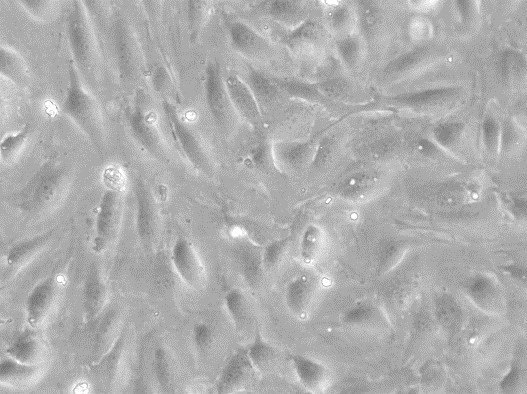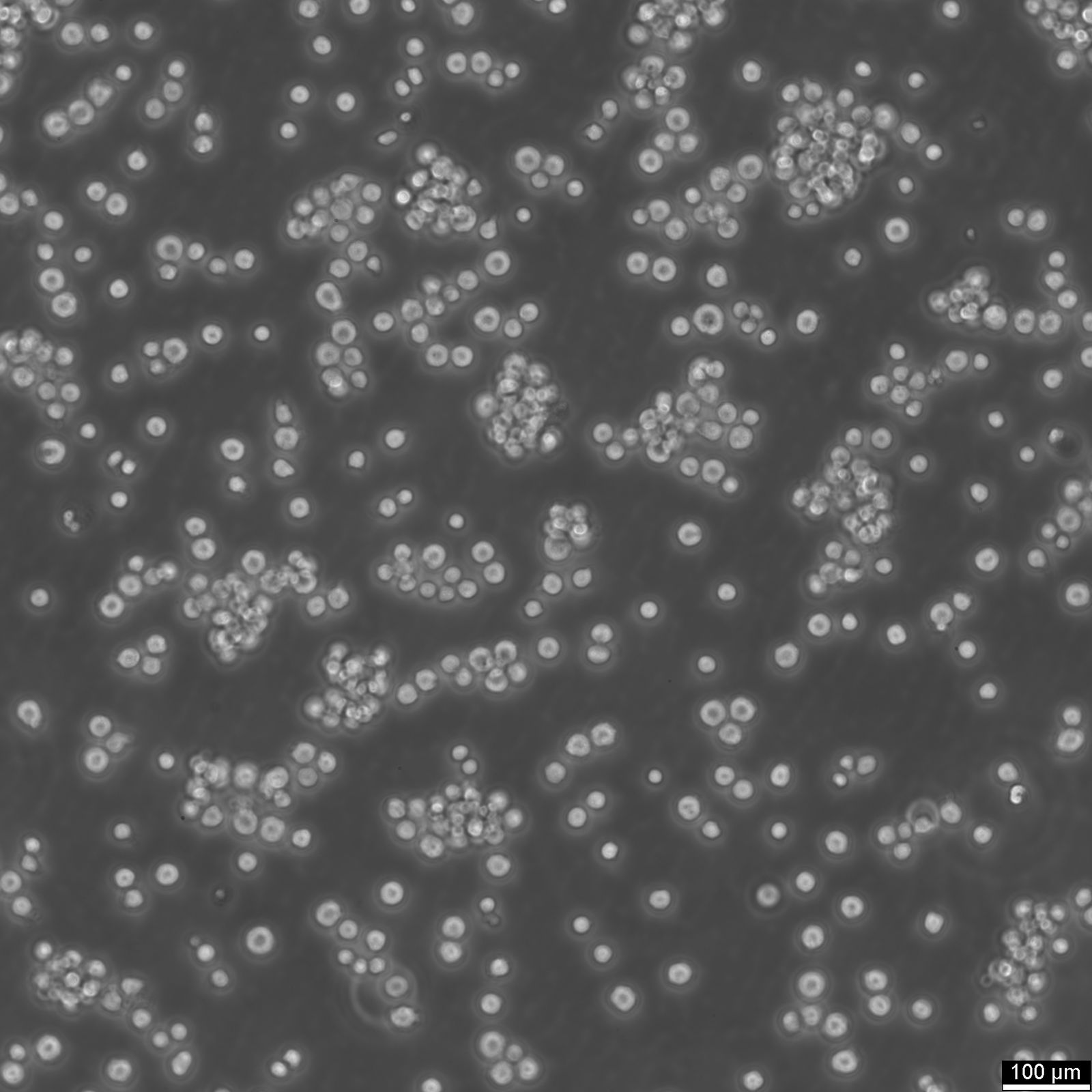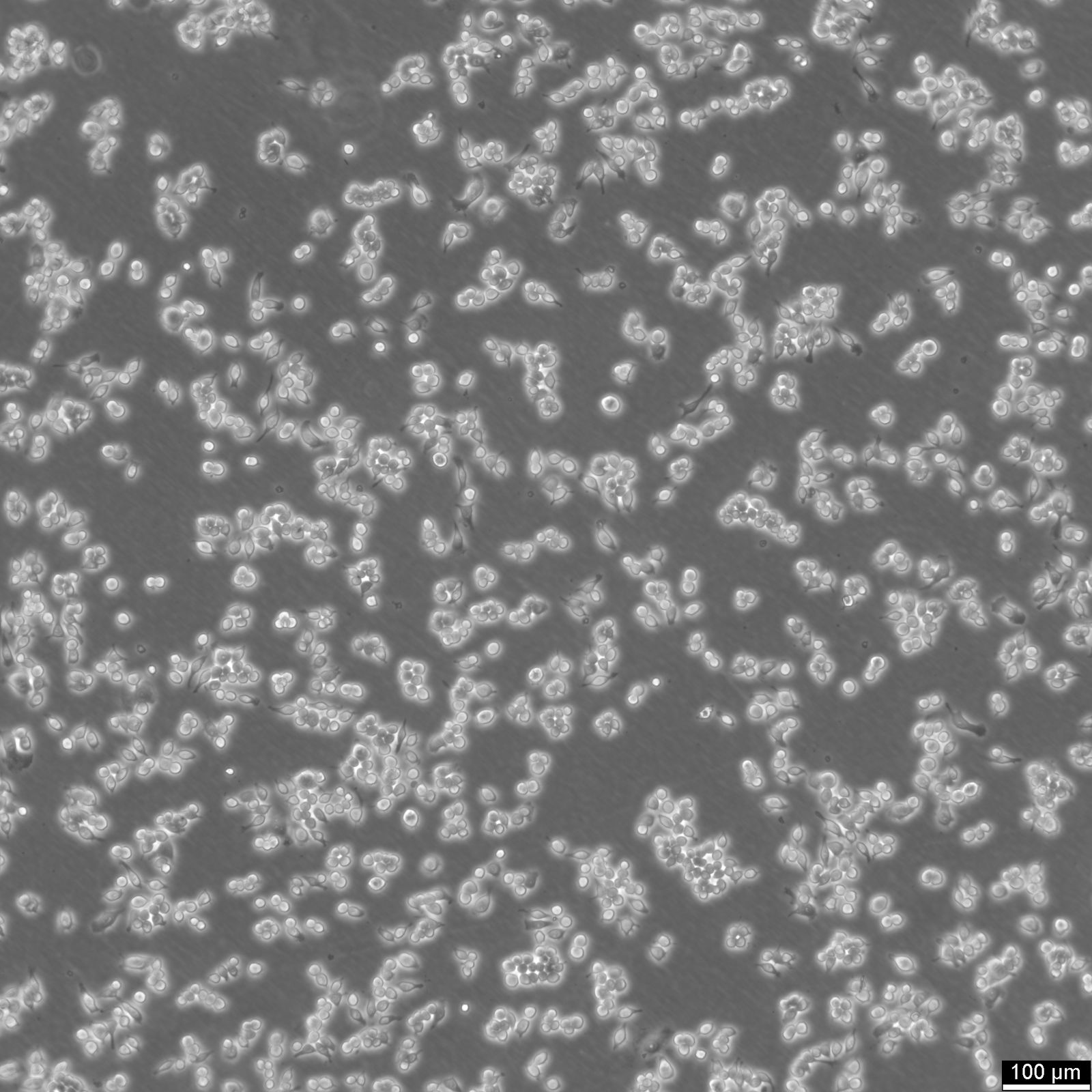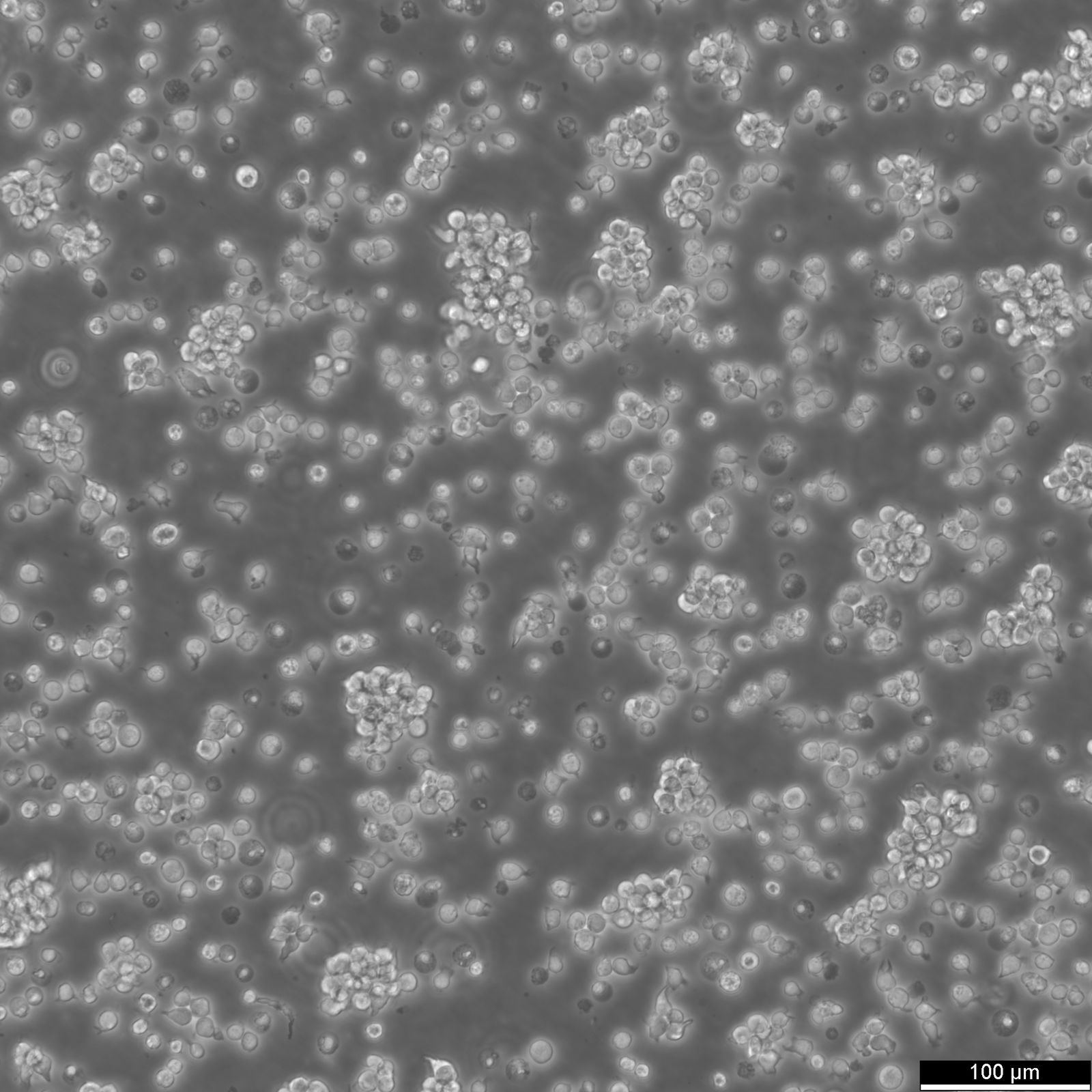
Jurkat E6.1 Cells
USUSD$395.00*
Products are shipped frozen on dry ice in cryotubes. Each cryotube typically contains 3 × 10⁶ cells for adherent lines or 5 × 10⁶ cells for suspension lines (refer to the batch CoA for details).
Overview of Jurkat E6.1 cells
| 說明 | Jurkat E6.1 cells, a derivative clone of the Jurkat cell line, which originates from the peripheral blood of a 14-year-old boy with acute T-cell leukemia, are a pivotal resource in the field of tumor immunology and leukemia research. These cells exhibit rapid proliferation and a pronounced responsiveness to stimuli, crucial for studying T cell biology, including T cell receptor (TCR) signaling, activation, proliferation, and apoptosis. Characterized by mutations such as the TEL-JAK2 fusion gene, Jurkat E6.1 cells provide insights into the leukemia phenotype and the molecular mechanisms underlying T-cell leukemia. Jurkat E6.1 cells are commonly used to investigate the intracellular signaling pathways that are activated upon TCR engagement, such as the NF-κB pathway, MAPK pathways, and calcium signaling, which are crucial for T cell activation and function. The cell line's responsiveness to phorbol esters and agents targeting the T3 antigen makes it an invaluable tool for exploring the intricacies of T-cell activation, including the induction of Interleukin-2 (IL-2) production. This feature, combined with their abnormal karyotype, underscores the utility of Jurkat E6.1 cells in research focused on the immune synapse architecture and the signaling pathways that govern T-cell proliferation and function. Jurkat E6.1 cells' utility extends to the study of apoptosis, offering a model to investigate the effects of various compounds, including alkaloids extract from sources such as Tribulus terrestris, on cell death pathways. This aspect is particularly relevant for identifying potential therapeutic agents and understanding their mechanisms of action in T-cell leukemia. In summary, Jurkat E6.1 cells, with their unique characteristics and versatility, continue to be a cornerstone in the study of T-cell activation, signaling, and apoptosis. |
|---|---|
| 生物體 | Human |
| 組織 | Blood |
| 疾病 | Acute T cell leukemia |
| 轉移部位 | T lymphocyte |
| 同義詞 | JurkatE6-1, Jurkat E6-1, Jurkat, Clone E6-1, Jurkat Clone E6-1, Jurkat (clone E6-1), JURKAT E-6.1, JURKAT E-61, Jurkat-E6, Jurkat E6, J.E6-1, E6-1 |
Properties
| 年齡 | 14 years |
|---|---|
| 性別 | Male |
| 形態學 | Round cells |
| 細胞類型 | Lymphoblast |
| 生長特性 | Suspension |
Specifications of the Jurkat clone E6 cell line
| 引用 | Jurkat E6.1 (Cytion catalog number 300223) |
|---|---|
| 生物安全等級 | 1 |
| NCBI_TaxID | 9606 |
| Cellosaurus 編號 | CVCL_0367 |
Genetic profile
| 抗原表達 | CD3 |
|---|---|
| 產品 | Interleukin-2 (interleukin 2, IL-2), interferon gamma |
| 核型分析 | Modal number = 46, range = 41 to 47, the karyotype is 46,xY,-2,-18, del(2)(p21p23), del(18)(p11.2) |
Handling Jurkat E6.1 cells
| 培養基 | RPMI 1640, w: 2.0 mM stable Glutamine, w: 2.0 g/L NaHCO3 (Cytion article number 820700a) |
|---|---|
| 營養補充品 | Supplement the medium with 10% FBS |
| 傳代培養 | Maintain cultures by periodically adding or replacing the medium. Initiate cultures with a density of 5 x 10⁵ cells/ml and keep the cell concentration within the range of 3 x 10⁵ to 1 x 10⁶ cells/ml for optimal growth. |
| 播種密度 | 1 x 10⁵ cells/ml |
| 流體更新 | Every 2 days |
| 解凍後的恢復 | Fast |
| 冷凍培養基 | As a cryopreservation medium, we use complete growth medium (including FBS) + 10% DMSO for adequate post-thaw viability, or CM-1 (Cytion catalog number 800100), which includes optimized osmoprotectants and metabolic stabilizers to enhance recovery and reduce cryo-induced stress. |
| 細胞解凍與培養 |
|
| 培養環境 | 37°C, 5% CO2, humidified atmosphere. |
| 運送條款 | Cryopreserved cell lines are shipped on dry ice in validated, insulated packaging with sufficient refrigerant to maintain approximately −78 °C throughout transit. On receipt, inspect the container immediately and transfer vials without delay to appropriate storage. |
| 儲存條件 | For long-term preservation, place vials in vapor-phase liquid nitrogen at about −150 to −196 °C. Storage at −80 °C is acceptable only as a short interim step before transfer to liquid nitrogen. |
Quality control
| 不孕症 | Mycoplasma contamination is excluded using both PCR-based assays and luminescence-based mycoplasma detection methods. To ensure there is no bacterial, fungal, or yeast contamination, cell cultures are subjected to daily visual inspections. |
|---|
分析證明書 (CoA)
| 批次編號 | 證書類型 | 日期 | 型號 |
|---|---|---|---|
| 300223-040625 | 分析證明書 | 21. Jul. 2025 | 300223 |
| 300223-200923 | 分析證明書 | 23. May. 2025 | 300223 |
-
Related products
Related products