THP-1 Cells
USUSD$395.00*
Products are shipped frozen on dry ice in cryotubes. Each cryotube typically contains 3 × 10⁶ cells for adherent lines or 5 × 10⁶ cells for suspension lines (refer to the batch CoA for details).
Essential facts about THP-1 cells
| 說明 | THP1 cells, a spontaneously immortalized monocyte-like cell line derived from the peripheral blood of a 1-year-old monocytic leukemia patient, serve as a critical model in immunological and cancer research. The THP-1 monocyte cell line, known for its ability to differentiate into mature macrophage and dendritic cells, is essential for studying the functions and properties of these immune cells in vitro, including adipose tissue macrophages and M2 mononuclear phagocytes. THP-1 differentiated macrophages are instrumental in exploring monocyte and macrophage functions, mechanisms, signalling pathways, including cytokine activation and immune modulation, and studying nutrient and drug transport. Further, THP-1 macrophages can be polarized into M1 or M2 macrophages, crucial for studies on immunity and inflammation, innate immunity, and inflammatory responses. In the context of metabolic and inflammatory diseases, THP-1 cells help explore cytokine profiles, including inflammatory cytokines, and their impact on conditions like human adipocyte apoptosis, illustrating the interplay between inflammation and metabolic health. Notably, the THP-1 cell line allows for comparative studies with other monocytic leukemia cells and cell lines like U937, facilitating a deeper understanding of monocyte and macrophage biology across different models. In summary, the THP-1 human monocytic leukemia cell line stands as a valuable tool for a myriad of research avenues, from investigating the intricate mechanisms of the immune system and its role in cancer to understanding the cellular and molecular underpinnings of immune modulation, cytokine activation, and cell proliferation. Its ability to mimic human macrophages and dendritic cells, combined with the ease of manipulation and fast growth rate, cements its status as a widely used cell line in biological and medical research, offering insights into the cellular basis of immunity and inflammation, the response of cancer cells, and the potential for therapeutic intervention. |
|---|---|
| 生物體 | Human |
| 組織 | The tissue of origin is peripheral blood |
| 疾病 | Leukemia |
| 應用 | THP1 cells are a multifacted model with applications in Immune response modeling, Monocyte/macrophage differentiation, Phagocytosis mechanisms, Inflammatory signaling pathways, Drug transport assays |
| 同義詞 | THP1, THP 1, THPI, O-THP-1, Tohoku Hospital Pediatrics-1 |
Specifications
| 年齡 | 1 year |
|---|---|
| 性別 | Male |
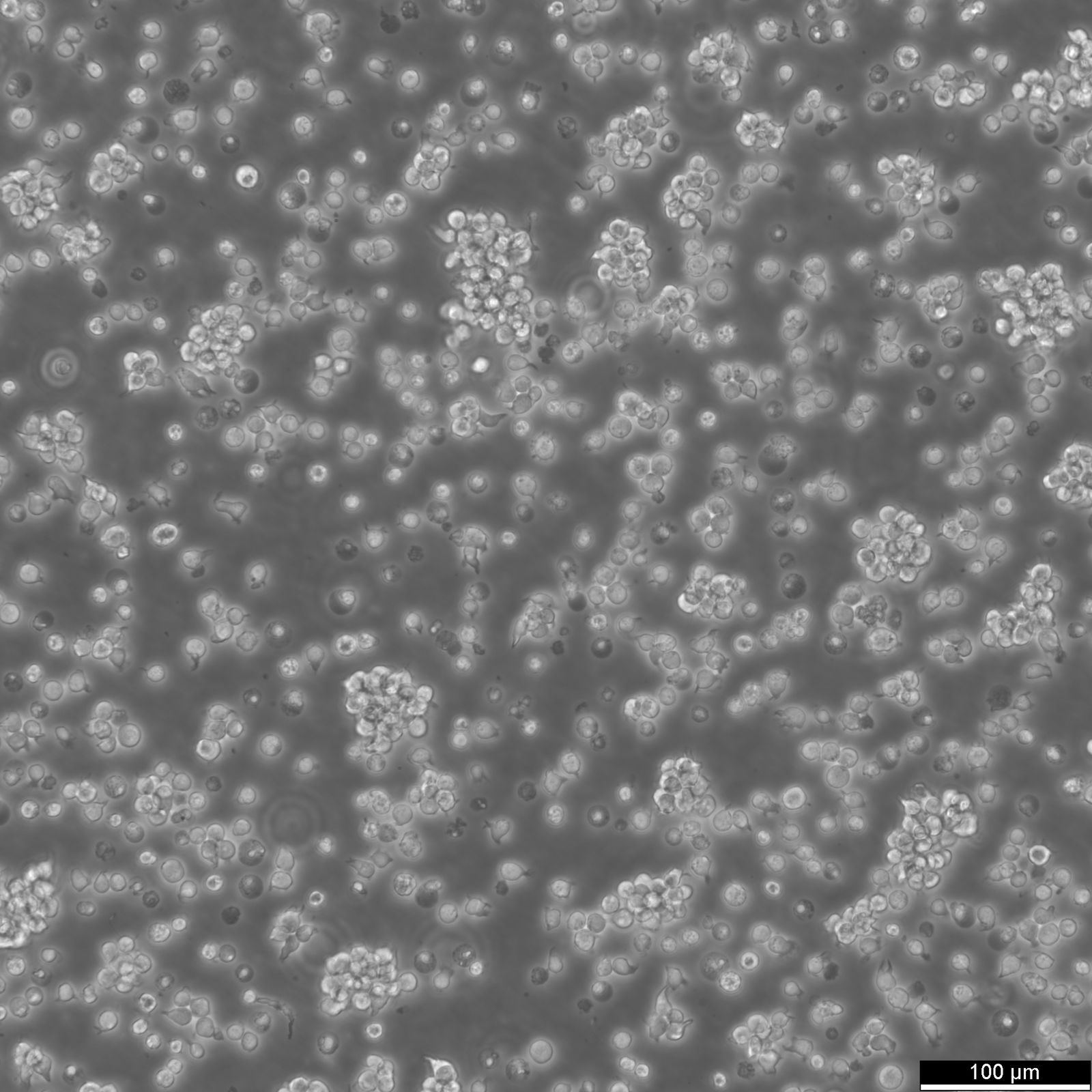
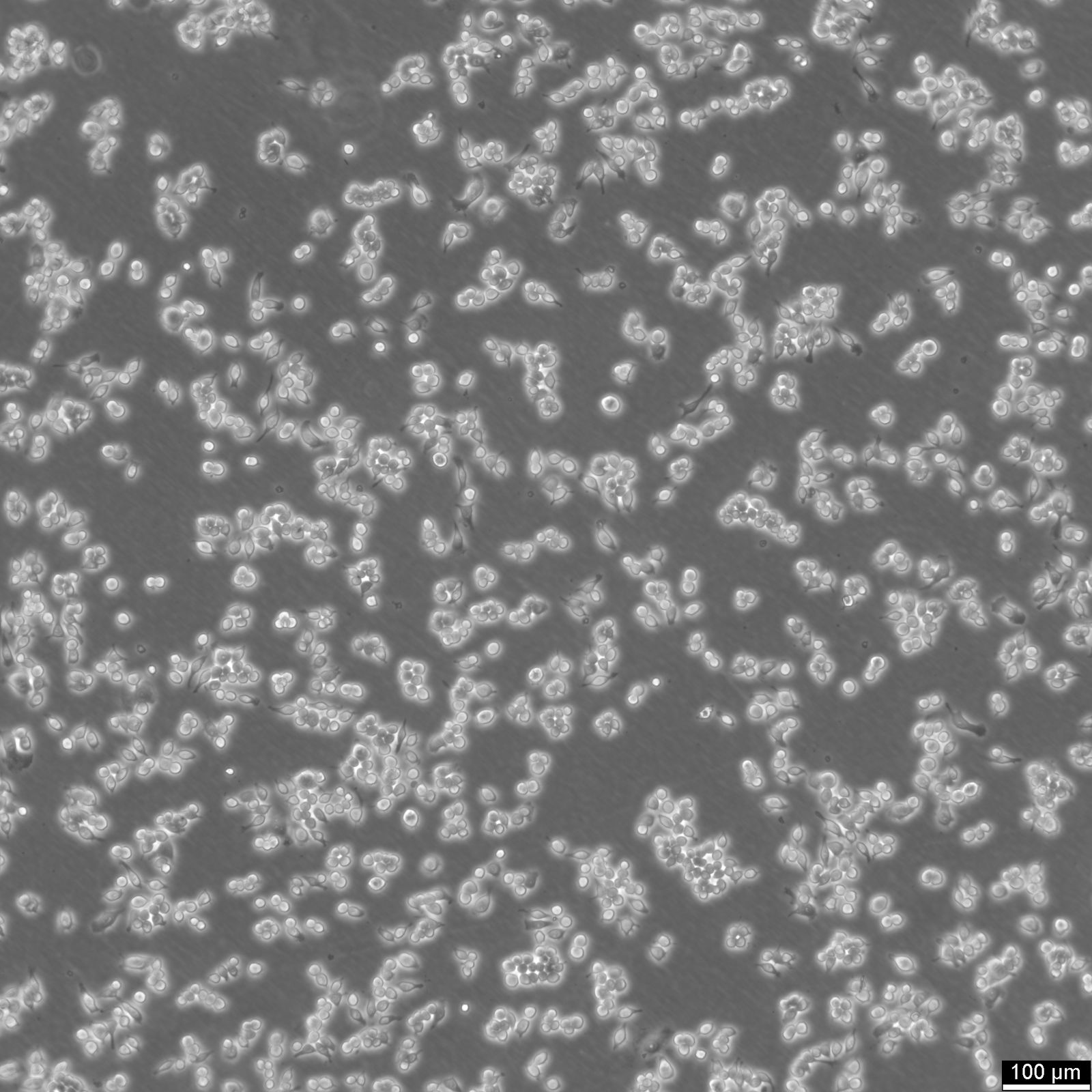
| 形態學 | Round cells |
| 細胞類型 | Monocyte |
| 生長特性 | The monocytic leukemia THP1 cell line grows in suspension and forms clumps due to cells dividing and attaching to the clusters they split from. |
Documentation
| 引用 | THP-1 (Cytion catalog number 300356) |
|---|---|
| 生物安全等級 | 1 |
| NCBI_TaxID | 9606 |
| Cellosaurus 編號 | CVCL_0006 |
Genetic profile of the THP1 cell line
| 受體的表達 | HLA haplotypes: HLA-A2, -A9, -B5, -DRw1, -DRw2Fc, C3b |
|---|---|
| 同工酶 | The human THP-1 cell line expresses low levels of CD4, CCR5, and CxCR4, making it relevant to HIV infection studies. However, they express low levels of CD14 and not CD80, CD86, CD11b, CD11c, Mertk, or CD1a, making them a poor model for primary monocytes regarding LPS responses. |
| 產品 | Lysozyme |
| 核型分析 | THP-1 cells are near-diploid and contain two related subclones with genetic aberrations. |
Handling
| 培養基 | RPMI 1640, w: 2.0 mM stable Glutamine, w: 2.0 g/L NaHCO3 (Cytion article number 820700a) |
|---|---|
| 營養補充品 | Supplement the medium with 10% heat-inactivated FBS |
| 倍增時間 | The population doubling time of human THP-1 cells ranges from 19 to 50 hours, with an average of around 35 hours. |
| 傳代培養 | Gently homogenize the cell suspension in the flask by pipetting up and down, then take a representative sample to determine the cell density per ml. Dilute the suspension to achieve a cell concentration of 1 x 10⁵ cells/ml with fresh culture medium, and aliquot the adjusted suspension into new flasks for further cultivation. |
| 播種密度 | 0.5 x 10⁶ cells/mL |
| 流體更新 | 2 to 3 times per week |
| 冷凍培養基 | As a cryopreservation medium, we use complete growth medium (including FBS) + 10% DMSO for adequate post-thaw viability, or CM-1 (Cytion catalog number 800100), which includes optimized osmoprotectants and metabolic stabilizers to enhance recovery and reduce cryo-induced stress. |
| 細胞解凍與培養 |
|
| 培養環境 | 37°C, 5% CO2, humidified atmosphere. |
| 運送條款 | Cryopreserved cell lines are shipped on dry ice in validated, insulated packaging with sufficient refrigerant to maintain approximately −78 °C throughout transit. On receipt, inspect the container immediately and transfer vials without delay to appropriate storage. |
| 儲存條件 | For long-term preservation, place vials in vapor-phase liquid nitrogen at about −150 to −196 °C. Storage at −80 °C is acceptable only as a short interim step before transfer to liquid nitrogen. |
Quality control
| 不孕症 | Mycoplasma contamination is excluded using both PCR-based assays and luminescence-based mycoplasma detection methods. To ensure there is no bacterial, fungal, or yeast contamination, cell cultures are subjected to daily visual inspections. |
|---|
分析證明書 (CoA)
| 批次編號 | 證書類型 | 日期 | 型號 |
|---|---|---|---|
| 300356-050424 | 分析證明書 | 23. May. 2025 | 300356 |
| 300356-211124 | 分析證明書 | 23. May. 2025 | 300356 |
| 300356-200625 | 分析證明書 | 18. Aug. 2025 | 300356 |
-
Related products
Related products