HK-CRISPR-mEGFP-Nup153 Cells
US$ 800,00*
Products are shipped frozen on dry ice in cryotubes. Each cryotube typically contains 3 × 10⁶ cells for adherent lines or 5 × 10⁶ cells for suspension lines (refer to the batch CoA for details).
Informações gerais
| Descrição | The HK-CRISPR-mEGFP-Nup153 cell line is a human cell model engineered to study nuclear pore complex (NPC) dynamics. Using CRISPR-Cas9, this cell line integrates a monomeric enhanced green fluorescent protein (mEGFP) tag into the Nup153 gene, a critical component of the NPC. This allows real-time visualization of NPC behavior in live cells. This cell line is useful for studying NPC assembly, disassembly, and their role in nucleocytoplasmic transport, mRNA export, and nuclear envelope integrity. The precise genome editing with CRISPR technology ensures reliable results, making this cell line valuable for understanding NPC functions in both normal and disease conditions. |
|---|---|
| Organismo | Human |
| Tecido | Endocervix |
| Doença | Adenocarcinoma |
Características
| Idade | 30 years |
|---|---|
| Gênero | Female |
| Etnia | African American |
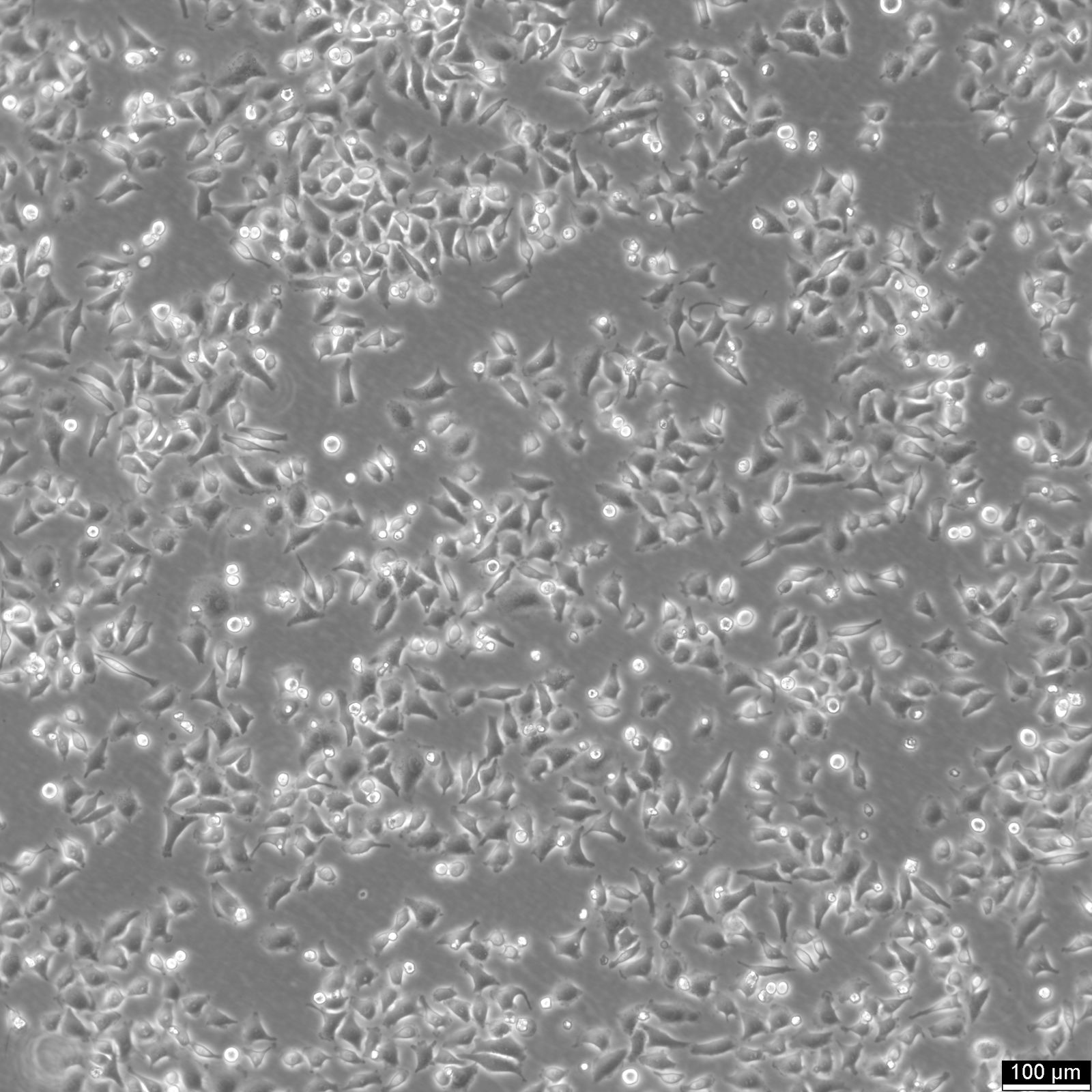
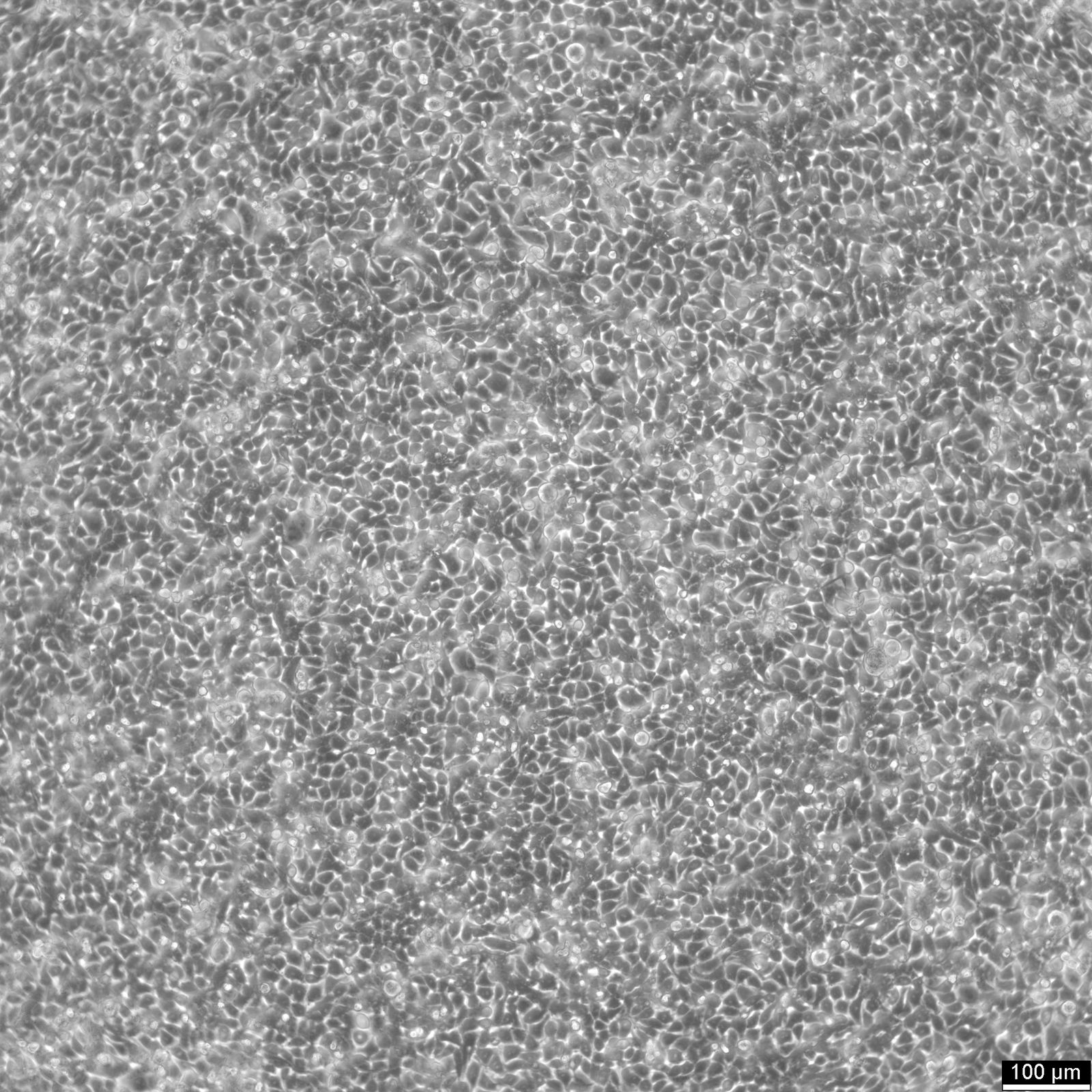
| Morfologia | Epithelial-like cells with mosaic stone shape |
| Propriedades de crescimento | Adherent |
Dados regulatórios
| Referência | HK-CRISPR-mEGFP-Nup153 (Cytion catalog number 300656) |
|---|---|
| Nível de biossegurança | 1 |
| NCBI_TaxID | 9606 |
| Depositante | The Ellenberg Lab (EMBL) |
| Situação em relação aos OGMs | GMO-S1: This HeLa Kyoto line contains a CRISPR-engineered mEGFP fusion at the Nup153 locus for nuclear pore complex imaging. This classification applies only within Germany and may differ elsewhere. |
Dados biomoleculares
| Expressão de proteínas | Nup153, mEGFP-tag |
|---|
Manuseio
| Meio de cultura | DMEM, w: 4.5 g/L Glucose, w: 4 mM L-Glutamine, w: 3.7 g/L NaHCO3, w: 1.0 mM Sodium pyruvate (Cytion article number 820300a) |
|---|---|
| Suplementos | Supplement the medium with 10% FBS |
| Reagente de dissociação | Accutase |
| Subcultura | Remove the old medium from the adherent cells and wash them with PBS that lacks calcium and magnesium. For T25 flasks, use 3-5 ml of PBS, and for T75 flasks, use 5-10 ml. Then, cover the cells completely with Accutase, using 1-2 ml for T25 flasks and 2.5 ml for T75 flasks. Let the cells incubate at room temperature for 8-10 minutes to detach them. After incubation, gently mix the cells with 10 ml of medium to resuspend them, then centrifuge at 300xg for 3 minutes. Discard the supernatant, resuspend the cells in fresh medium, and transfer them into new flasks that already contain fresh medium. |
| Meio de congelamento | As a cryopreservation medium, we use complete growth medium (including FBS) + 10% DMSO for adequate post-thaw viability, or CM-1 (Cytion catalog number 800100), which includes optimized osmoprotectants and metabolic stabilizers to enhance recovery and reduce cryo-induced stress. |
| Descongelamento e cultura de células |
|
| Atmosfera de incubação | 37°C, 5% CO2, humidified atmosphere. |
| Condições de envio | Cryopreserved cell lines are shipped on dry ice in validated, insulated packaging with sufficient refrigerant to maintain approximately −78 °C throughout transit. On receipt, inspect the container immediately and transfer vials without delay to appropriate storage. |
| Condições de armazenamento | For long-term preservation, place vials in vapor-phase liquid nitrogen at about −150 to −196 °C. Storage at −80 °C is acceptable only as a short interim step before transfer to liquid nitrogen. |
Controle de Qualidade e Análise Molecular
| Esterilidade | Mycoplasma contamination is excluded using both PCR-based assays and luminescence-based mycoplasma detection methods. To ensure there is no bacterial, fungal, or yeast contamination, cell cultures are subjected to daily visual inspections. |
|---|
Certificado de Análise (CoA)
| Número do lote | Tipo de certificado | Data | Número de catálogo |
|---|---|---|---|
| 300656-130524 | Certificado de Análise | 23. May. 2025 | 300656 |