
Células SiHa – Lançando luz sobre a pesquisa do câncer do colo do útero
As células SiHa são células de câncer cervical amplamente utilizadas na pesquisa biomédica. Elas são excelentes hospedeiras para transfecção e, portanto, adequadas para estudos de expressão gênica. Devido à sua origem humana e à sua relevância para o câncer cervical, essas células são empregadas principalmente em estudos de biologia do câncer, virologia e desenvolvimento de medicamentos.
- Meio de crescimento
- O meio mínimo essencial de Eagle (EMEM), contendo 10% de soro fetal bovino (FBS), 2 mM de L-glutamina, 2,2 g/L de NaHCO₃ e a solução salina balanceada de Earle (EBSS), é utilizado para o crescimento ideal das células SiHa. O meio é substituído de 2 a 3 vezes por semana.
- Tempo de duplicação
- O tempo de duplicação das células SiHa é de aproximadamente 17 horas.
- Tipo de crescimento
- A SiHa é uma linhagem celular aderente.
- Nível de biossegurança
- BSL-1
- Disponível na
- Cytion — Encomendar SiHa
Características gerais e origem das células SiHa
Compreender a origem e as características gerais de uma linhagem celular é fundamental, pois isso influencia seu uso em sua pesquisa. Nesta seção do artigo, você aprenderá sobre a origem da linhagem celular SiHa, suas características distintivas e muito mais: O que é a linhagem celular cancerosa SiHa? O que são as células SiHa HPV? Qual é a origem da linha celular SiHa? Qual é a morfologia da SiHa?
- A SiHa, linha celular de carcinoma cervical, foi derivada de fragmentos de uma biópsia uterina primária de uma mulher asiática (55 anos) com câncer de células escamosas [1].
- A linha celular SiHa apresenta um cariótipo hipertriploide. A maioria das células possui um número médio de cromossomos entre 69 e 72. No entanto, cerca de 24% das células apresentam um número modal de cromossomos igual a 71.
- As células SiHa são positivas para o papilomavírus humano tipo 16. Elas apresentam integração de cerca de 1 a 2 cópias do genoma do HPV por célula [2].
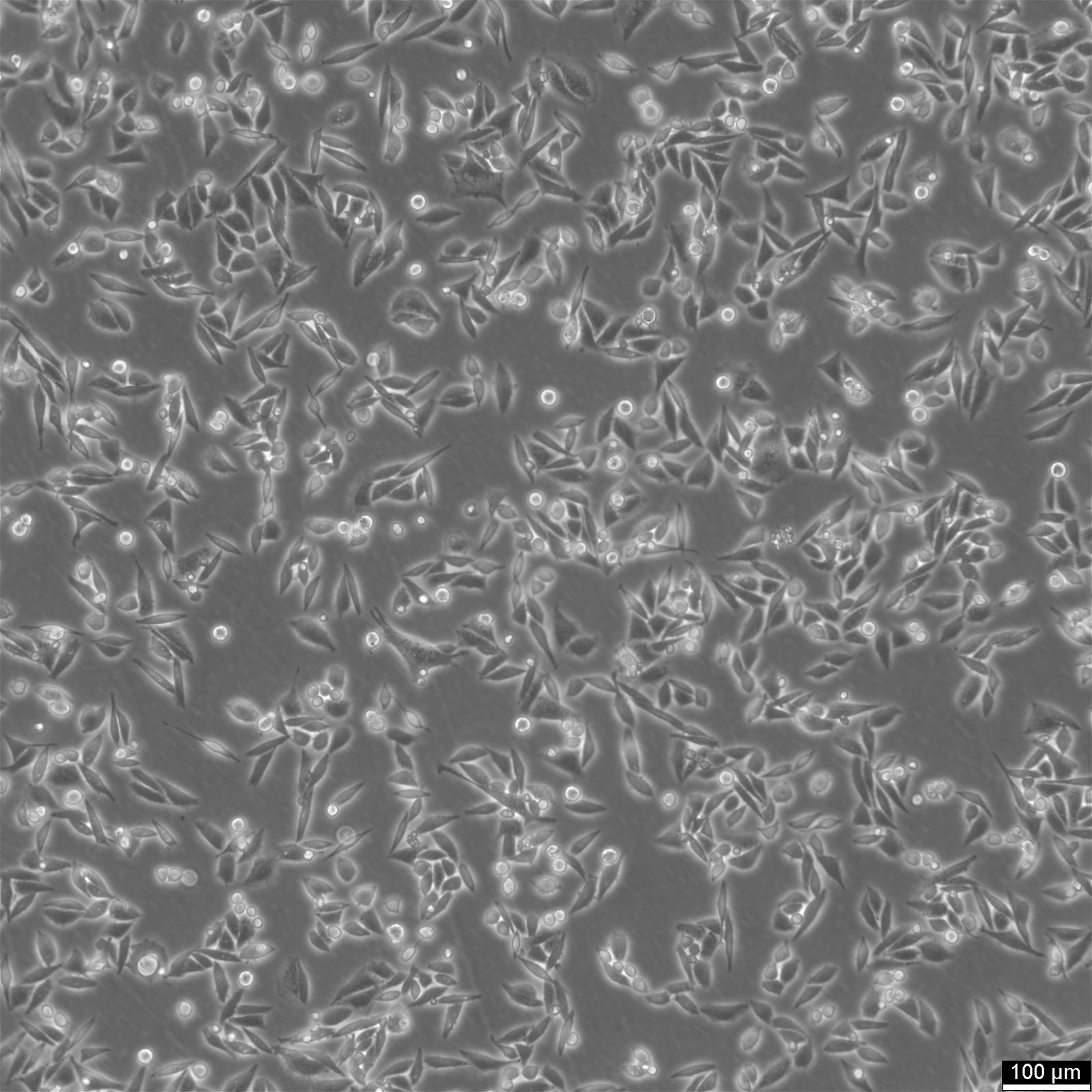
- Essas células de câncer cervical apresentam morfologia epitelial.
Linha celular SiHa: Informações sobre o cultivo
Manter uma cultura de linha celular não é fácil até que você conheça todos os pontos-chave para sua cultura. Você deve saber: Qual é o tempo de duplicação das células SiHa? Qual é o meio de cultura das células SiHa? Como se cultiva a linha celular SiHa?
Pontos-chave para a cultura de células SiHa
Tempo de duplicação:
O tempo de duplicação das células SiHa é de aproximadamente 17 horas.
Aderentes ou em suspensão:
A SiHa é uma linha celular aderente.
Proporção de subcultivo:
A proporção de subcultivo para as células SiHa é de 1:2 a 1:4. Para a passagem, as células aderentes são lavadas com PBS 1x. Adiciona-se a solução de Accutase e as células são incubadas por 8 a 10 minutos à temperatura ambiente. Em seguida, adiciona-se o meio de cultura e as células são centrifugadas. O sedimento celular é ressuspenso e as células são transferidas para um novo frasco para cultura.
Meio de crescimento:
O meio mínimo essencial de Eagle (EMEM), contendo 10% de FBS, 2 mM de L-glutamina, 2,2 g/L de NaHCO₃ e a Solução Salina Equilibrada de Earle (EBSS), é utilizado para o crescimento ideal das células SiHa. O meio é substituído de 2 a 3 vezes por semana.
Condições de crescimento:
As células SiHa são mantidas em uma incubadora umidificada a 37 °C com um suprimento de 5% de CO₂.
Armazenamento:
Os frascos congelados da linhagem celular SiHa de câncer cervical são armazenados a temperaturas inferiores a -150 °C em um freezer elétrico ou na fase de vapor de nitrogênio líquido para um período mais longo.
Processo de congelamento e meio:
O meio de congelamento CM-1 ou CM-ACF é utilizado para o congelamento das células SiHa. As células são congeladas por meio de um método de congelamento lento, que permite apenas uma redução de 1 °C por minuto, a fim de proteger a viabilidade das células.
Processo de descongelamento:
As células congeladas são mantidas por 40 a 60 segundos em um banho-maria a 37 °C até que reste apenas um pequeno pedaço de gelo. Em seguida, é adicionado meio de crescimento fresco, e as células são centrifugadas para remover os componentes do meio de congelamento. O sedimento celular é ressuspenso, e as células são transferidas para um frasco de cultura para crescimento.
Nível de biossegurança:
É necessário um laboratório de nível 1 de biossegurança para manusear e manter culturas de células SiHa.

Vantagens e desvantagens da linhagem celular SiHa
Assim como outras linhagens celulares de carcinoma humano, a SiHa também possui algumas características distintas associadas a certas vantagens e desvantagens. A seguir, discutimos algumas das mais significativas.
Vantagens da linha celular SiHa de câncer cervical
- Modelo de câncer cervical
- Derivada do carcinoma espinocelular do colo do útero.
- Utilizada para estudar os mecanismos, o crescimento e o desenvolvimento do câncer cervical.
- Expressa os genes p53+ e pRB+, relacionados ao reparo do DNA, à regulação do ciclo celular e à supressão tumoral.
- Potencial tumorigênico
- As células SiHa são tumorigênicas e podem induzir tumores epidermoides de grau III, pouco diferenciados, em camundongos nude.
- Utilizadas para pesquisa sobre câncer in vivo e testes de tratamentos anticâncer.
Desvantagens das células SiHa
- Taxa de proliferação
- As células SiHa proliferam rapidamente, levando ao crescimento excessivo.
- Exigem passagens frequentes, o que aumenta o risco de instabilidade genética, o que pode afetar o comportamento celular ao longo do tempo.
Research applications of SiHa cells
The SiHa cell line is extensively used in cervical cancer research. A few specified applications of this cell line are discussed here.
- Human papillomavirus (HPV) related studies: SiHa cells are HPV 16 positive thus, they are valuable entities for studying human papillomavirus infection, its molecular mechanisms, and its role in the development and progression of cervical cancer. Researchers also employ these cells to investigate viral replication, integration, and its impact on host cell processes. A study conducted in 2020 used the SiHa cell line to examine the role of HPV E6/E7 oncoproteins in cervical cancer development by targeting it with CRISPR technology. The findings revealed that the knockdown of E6/E7 genes caused SiHa cell growth inhibition and apoptosis. Therefore, these viral genes may serve as crucial drug targets for developing therapies against HPV-associated cervical cancer [3].
- Cancer biology: SiHa cells serve as an invaluable model for studying cervical cancer biology, including cancer development, progression, metastasis, and invasion. Researchers utilize these cells to explore the genetic mutations and underlying molecular pathways contributing to cervical cancer development and growth, such as, a study utilized SiHa cells and found that upregulated SEC61G (SEC61 translocon subunit gamma) encourages cervical cancer cell proliferation through activation of MAPK cascade [4].
- Drug screening and testing: SiHa is a widely used cervical cancer line to assess the efficacy of potential anti-cancer drugs specific to HPV-associated cervical cancer. Researchers explore the antiproliferative, apoptotic, and anti-metastatic potential of drugs using these cells. Such as a study carried out in 2019 that investigated the cytotoxic potential of Vatica diospyroides Symington Type SS fruit extracts on SiHa cervical cancer cell line [5].
SiHa cells for your research!
Research Publications Featuring SiHa Cells
Some significant and frequently cited research publications are featuring the SiHa cervical squamous carcinoma cell line.
This publication in OncoTargets and Therapy (2019) proposed that a natural compound aloe-emodin exerts HPV E6/E7 and glucose metabolism-associated apoptotic effects in SiHa cervical cancer cells.
This article was published in the Future Journal of Pharmaceutical Sciences in 2022. This study investigated the anti-tumor activities of Excoecaria agallocha (L.) plant leaf extract in the SiHa cervical cancer cell line.
This study published in the Journal of Sol-Gel Science and Technology (2022) proposed that the 1, 10-Phenanthroline molecule upon coupling with zinc sulfate nanoparticles, exerts significant antiproliferative effects in SiHa cells.
This research was published in the Oncology Reports in 2019. The study revealed that Astragaloside IV, a natural product, suppresses the migration and invasion of SiHa cells by modulating TGF‑β1‑mediated PI3K and MAPK signalling pathways.
This study in Biomedicine & Pharmacotherapy (2020) revealed that IFI16 (interferon-gamma inducible protein 16) regulates the PD-L1 gene via activating the STING-TBK1-NF-kB pathway to encourage SiHa cervical cancer cell growth.
Resources for SiHa Cell line: Protocols, Videos, and More
Here are some online resources featuring the SiHa cells.
- SiHa cell transfection: This research article contains a protocol for maintaining SiHa cervical cancer cells and for SiHa cell transfection.
The following link contains cell culture information for SiHa cells.
- SiHa cell line: This website contains much valuable data about the SiHa cell line. This includes information about growth media, culturing conditions, protocols for subculturing SiHa cells and handling its proliferative and cryopreserved cultures.
FAQs for SiHa Cervical Carcinoma Cells
SiHa cells are a human cancer cell line derived from cervical squamous cell carcinoma. They are extensively used in research for cervical carcinomas, particularly in studies related to human papillomavirus type 16 (HPV-16), known to play a crucial role in the pathogenesis of cervical cancer.
In SiHa cells, HPV-16 DNA is typically integrated into the host cell's chromosomes. Chromosomal integration sites of HPV can be critical in understanding the progression and treatment resistance of cervical carcinoma.
Yes, SiHa cells are a critical component of the cervical cancer cell panel utilized for the biological characterization of tumor cells, examining the effects of chemotherapeutics, and the development of new drugs for scientific research.
Absolutely. SiHa cells, which contain integrated HPV DNA, are invaluable for in situ hybridization and other molecular biology techniques to study the role of HPV in the development of cervical neoplasms and the potential enhancement of curcumin effects on cancer treatment.
SiHa cells are tumorigenic in immunodeficient mice, making them a suitable model for studying the pathogenicity of cervical carcinoma and the in vivo effects of potential therapeutics.
References for SiHa cells can be found in scientific literature across journals such as Cancer Research (Cancer Res), Biochemistry and Cell Biology, Journal of Cellular Physiology, and more. They provide detailed information on the use of SiHa cells in the context of cancer genome studies, phenotyping, and the examination of gene functions.
The genetic profile of SiHa cells, including the expression of several genes and the acquisition of CDV, contributes to the comprehensive understanding of cervical carcinoma's etiology and the development of targeted therapies.
SiHa cells are maintained in primary cell culture, adhering to specific growth conditions and medium requirements to preserve their characteristics and functionality for research purposes.
References
- Melzer, C., J. von der Ohe, and R. Hass, Concise review: crosstalk of mesenchymal stroma/stem-like cells with cancer cells provides therapeutic potential. Stem cells, 2018. 36(7): p. 951-968.
- Ostrowska, K.M., et al., Investigation of the influence of high-risk human papillomavirus on the biochemical composition of cervical cancer cells using vibrational spectroscopy. Analyst, 2010. 135(12): p. 3087-3093.
- Chen, Y., et al., In vitro and in vivo growth inhibition of human cervical cancer cells via human papillomavirus E6/E7 mRNAs’ cleavage by CRISPR/Cas13a system. Antiviral Research, 2020. 178: p. 104794.
- Fan, Y., et al., SEC61G promotes cervical cancer proliferation by activating MAPK signaling pathway. Disease Markers, 2022. 2022.
- Chothiphirat, A., et al., Anticancer potential of fruit extracts from Vatica diospyroides symington type SS and their effect on program cell death of cervical cancer cell lines. The Scientific World Journal, 2019. 2019.