
Publicado: 2023 | Última revisão: maio de 2026
Linha celular HCT116: um pilar na pesquisa do câncer colorretal
A linha celular HCT116 serve como um pilar fundamental na investigação do câncer colorretal, oferecendo insights inestimáveis sobre a patogênese da doença e possíveis vias terapêuticas. Reconhecida por sua utilidade na pesquisa sobre o câncer e em avaliações farmacológicas, a HCT116 facilita estudos decisivos sobre o comportamento tumoral e a eficácia dos medicamentos.
- Meio de crescimento
O meio McCoys 5a, suplementado com 3,0 g/L de L-glicose, 1,5 mM de L-glutamina, 3,0 g/L de NaHCO₃ e 10% de soro fetal bovino, é ideal para o cultivo das células HCT116. Recomenda-se renovar o meio de 1 a 2 vezes por semana. - Tempo de duplicação
O tempo de duplicação das células cancerosas HCT116 varia de 25 a 35 horas. - Tipo de crescimento
A linhagem celular de câncer de cólon HCT116 é aderente, com células que crescem em monocamadas. - Nível de biossegurança
BSL-1 - Disponível na
Cytion — Encomendar HCT116
- Origens e características fundamentais das células HCT116
- Perguntas frequentes sobre as células HCT116
- Manuseio das células HCT116
- Referências
- Vantagens da linhagem celular HCT116
- Aprimore suas descobertas com nossa linha celular HCT116 autenticada
- Aplicações de pesquisa da linha celular HCT116
- Células HCT116: Publicações de pesquisa
- Recursos para células HCT116
- Perguntas frequentes
Origens e características fundamentais das células HCT116
Compreender as origens e as características básicas das células HCT116, tais como suas características morfológicas, composição genética e dimensões celulares, é essencial para pesquisadores que iniciam estudos utilizando essa linha celular.
Proveniência e panorama genético: Originadas do cólon de um homem caucasiano de 48 anos diagnosticado com câncer colorretal, as células HCT116 se destacam por uma mutação no códon 13 (G13D) do gene KRAS, que faz parte da via de sinalização RAS/RAF/MEK/ERK. Essa mutação específica é fundamental na transformação oncogênica dessas células, ressaltando sua relevância na pesquisa sobre o câncer.
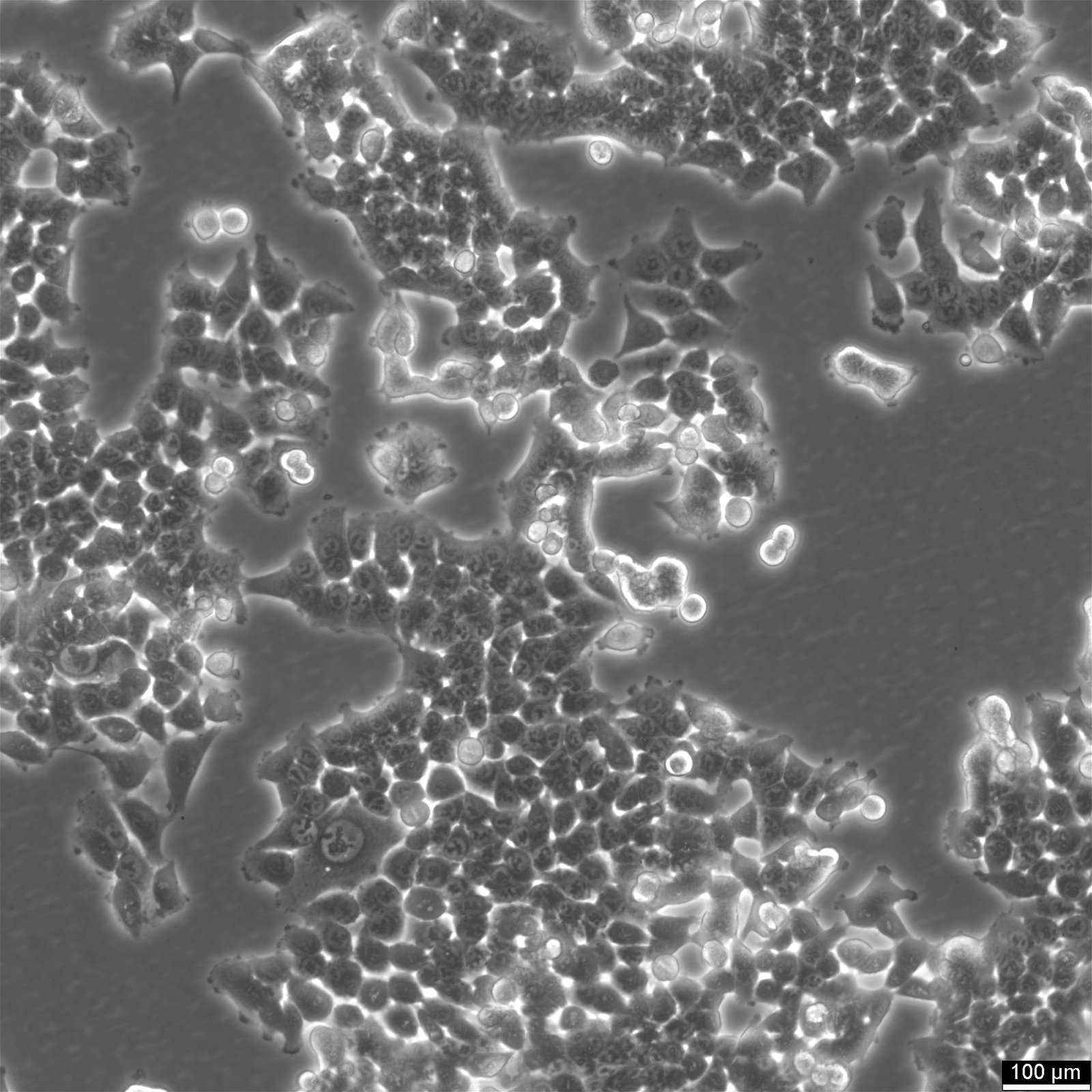
Morfologia e características de crescimento: Apresentando uma morfologia de tipo epitelial, as células HCT116 crescem tipicamente em culturas de monocamada, mas também podem formar esferóides com diâmetros de 150 a 400 µm. Essa adaptabilidade nos padrões de crescimento ressalta sua versatilidade em diversas configurações experimentais.
Perfil cromossômico: A composição cromossômica das células HCT116 é quase diploide, com aproximadamente 70% da população celular apresentando 45 cromossomos. Notavelmente, há uma amplificação recorrente nos braços longos dos cromossomos 8, 10, 16 e 17, enquanto o cromossomo Y está ausente, o que contribui para sua assinatura genômica única.
Análise comparativa: linhagens celulares HCT116 vs. HT29
Ao comparar a HCT116 com a HT29, outra linhagem celular de carcinoma colorretal humano, surgem diferenças distintas em seu potencial oncogênico e capacidades de diferenciação:
Agressividade oncogênica e diferenciação: as células HCT116 são caracterizadas por sua alta agressividade oncogênica e potencial de diferenciação limitado, o que as torna um modelo para o estudo de fenótipos tumorais agressivos. Em contrapartida, as células HT29 exibem a capacidade de se diferenciar em linhagens semelhantes a enterócitos e produtoras de mucina, fornecendo um modelo contrastante que imita diversos aspectos da biologia do câncer colorretal.
Essa compreensão comparativa das linhagens celulares HCT116 e HT29 enriquece o conjunto de ferramentas à disposição dos pesquisadores, permitindo investigações mais detalhadas sobre a natureza multifacetada do câncer colorretal.
Manuseio das células HCT116
Tempo de duplicação:
O tempo de duplicação das células cancerosas HCT116 varia de 25 a 35 horas.
Adesivas ou em suspensão:
A linhagem celular de câncer de cólon HCT116 é aderente, com as células crescendo em monocamadas.
Densidade de semeadura:
Recomenda-se uma densidade de semeadura de 2 x 10⁴ células/cm² para a cultura de células HCT116. Para a subcultura, as células devem ser desprendidas com solução de Accutase após uma lavagem com PBS 1x. Após a centrifugação, o sedimento celular é ressuspenso em meio de crescimento fresco e transferido para um novo frasco.
Meio de crescimento:
O meio McCoys 5a, suplementado com 3,0 g/L de L-glicose, 1,5 mM de L-glutamina, 3,0 g/L de NaHCO₃ e 10% de soro fetal bovino, é ideal para o cultivo de células HCT116. Recomenda-se renovar o meio 1 a 2 vezes por semana.
Condições de crescimento (temperatura, CO₂):
O cultivo ocorre em uma incubadora umidificada a 37 °C com uma atmosfera de 5% de CO₂.
Armazenamento:
As células HCT116 podem ser armazenadas a temperaturas abaixo de -150 °C, tanto na fase vapor quanto na fase líquida do nitrogênio líquido.
Processo de congelamento e meio:
Utilize o meio CM-1 ou CM-ACF para criopreservação. Recomenda-se um método de congelamento com taxa controlada, permitindo uma redução gradual da temperatura de 1 °C por minuto, o que ajuda a manter a viabilidade celular.
Processo de descongelamento:
Descongele as células HCT116 em banho-maria a 37 °C. Após adicionar o meio de crescimento, centrifugue para remover os resíduos do meio de congelamento. Resuspenda o sedimento celular em meio fresco e cultive em novos frascos.
Nível de biossegurança:
Nível 1

Vantagens da linha celular HCT116
Esta seção aborda a linha celular HCT116, destacando seu papel fundamental na pesquisa sobre o câncer, particularmente no estudo do câncer colorretal, e discutindo suas vantagens inerentes.
A linha celular HCT116 se destaca na pesquisa sobre o câncer devido a várias vantagens importantes:
Modelo de câncer colorretal: Ela serve como um modelo in vitro amplamente reconhecido para o câncer colorretal, o terceiro tipo de câncer mais comum no mundo. Sua capacidade de simular o câncer colorretal humano a torna inestimável para a compreensão da biologia do câncer e para o teste de estratégias terapêuticas.
Homogeneidade: Notavelmente, cerca de 70% das células HCT116 apresentam perfis genéticos consistentes, oferecendo uma população relativamente homogênea. Essa uniformidade é crucial para estudos focados na expressão gênica, nas vias de sinalização celular e na avaliação da eficácia de tratamentos medicamentosos, pois garante consistência e confiabilidade nos resultados experimentais.
Eficiência de transfecção: Uma das características distintivas das células HCT116 é sua alta receptividade à transfecção, especialmente com vetores virais. Essa característica é particularmente benéfica na pesquisa em terapia gênica, permitindo a introdução de material genético com eficiência e precisão, facilitando assim manipulações genéticas avançadas e estudos funcionais.
Advance your discoveries with our authenticated HCT116 cell line
Research applications of the HCT116 cell line
The HCT116 cell line has a wide range of applications in cancer research. Some prominent applications are:
Cancer biology
The HCT116 colon cancer cell line is used to study colon cancer progression and development. Moreover, it helps enlighten the underlying mechanisms and signaling pathways involved in cancer proliferation, migration, and invasion. A study used HCT116 cells to study genes involved in drug resistance development. Researchers overexpressed the MDR1 gene in colon cancer cells and observed the expression of NOX (NADPH oxide) isoforms and Nrf2. The study revealed that NOX2 and Nrf2 upregulation cause chemoresistance in cancer cells; thus, these genes can be targeted to overcome resistance development during cancer therapy [1]. Likewise, research conducted in 2021 reported that the NF-κB signaling pathway is involved in the regulation of colon cancer proliferation and migration. Thus, it can be targeted to develop new and effective therapeutics against colorectal carcinoma [2].
In the realm of oncology, understanding the intricate processes of cell cycle, proliferation and growth, and apoptosis is fundamental. These biological functions are pivotal in the study of human cell lines, particularly those derived from malignant cells such as human colon cancer cells and pancreatic cancer models. The HCT116 and SW620 cell lines, for instance, are instrumental in exploring the mechanisms underlying colon and pancreatic cancer, respectively. Through techniques like flow cytometry and clonogenic assays, researchers can elucidate the gene expression profiles and behavior of independent cells within tumors, shedding light on how cancer communicates within the extracellular matrix.
The Role of Apoptosis in Cancer Progression
Apoptosis, or programmed cell death, plays a critical role in maintaining cellular homeostasis and is a key area of study in cancer research. The distinction between unrelated apoptosis and apoptosis specifically induced within the context of cancer, such as colon cancer cell death, is crucial. This process is not just about the elimination of cells but involves a complex interplay of signals that can affect tumor growth and metastasis. By examining apoptosis and cell death in conjunction with metastasis suppressors and tumor suppressor activity, scientists can gain insights into the pathways that regulate cancer progression and metastatic potential.
Metastasis and Molecular Markers in Cancer
Metastasis remains one of the most formidable aspects of cancer, with hematogenous metastasis being a significant concern in the spread of malignant cells. The exploration of metastasis involves studying the movement and invasion capabilities of cancer cells, or cell locomotion, and how cells interact with their surroundings, including the extracellular matrix. Molecular markers like CD133 expression and the epidermal growth factor receptor are critical in identifying and understanding the behavior of positive colon carcinoma cells and other cancer types. The SIRT6 pathway, for example, has emerged as an area of interest due to its potential role in modulating tumor growth and metastatic colon cancer.
Toxicology/drug development
The HCT116 cell line is used as a screening model for new cancer drugs. Several studies have been conducted to assess the efficacy and toxicity of anticancer drugs, including natural products and chemically synthesized nanoparticles. As such, the research assessed the cytotoxicity of synthesized silver nanoparticles from the extracts of a herbal drug, Caesalpinia pulcherrima, in HCT116 cells [3]. In a study, researchers used the HCT116 cancer cell line to evaluate the anticancer potential of cocoa tea water extract. They found that cocoa tea extract reduces colon cancer proliferation and induces cell death [4]. Another study used HCT116 cancer cells and discovered that air potato, Dioscorea bulbifera, extracts exhibit pro-apoptotic activity in colorectal carcinoma cells via activation of the JNK signaling cascade and suppression of the ERK1/2 gene [5].
The effects of metformin on cancer cells, particularly in the context of colon and pancreatic cancer, exemplify how understanding the biological functions of cancer cells can lead to potential therapeutic strategies. Research into the clonogenic survival, or the ability to form clones, of cancer cells upon treatment with agents like metformin or targeting specific pathways such as the epidermal growth factor receptor can provide valuable insights into effective cancer treatments. Additionally, the use of HCT116 clones and HCT116 cell populations in these studies allows for a nuanced understanding of how cancer cells respond to different therapeutic interventions, paving the way for more personalized approaches to cancer treatment.
HCT116 cells: Research publications
This section will go over a few significant and most cited recent publications featuring the HCT116 cell line.
This study was published in the Journal of Photochemistry and Photobiology B: Biology (2017). Researchers used HCT116 colon cancer and A549 lung cancer cell lines to evaluate the cytotoxic effects of piper nigrum seed-mediated synthesized tin oxide nanoparticles.
This research in Cancer Letters (2018) proposes that lncRNA SNHG15 promotes colon cancer cell migration in colorectal cancer cell lines, including HCT116.
Overexpression of long non-coding RNA TUG1 promotes colon cancer progression
This paper was published in the Medical Science Monitor journal in 2016. The study found that oncogenic LncRNA TUG1 promotes the proliferation and migration of HCT116 colon cancer cells.
Drug resistance induces the upregulation of H2S-producing enzymes in HCT116 colon cancer cells
This research in the Biochemical Pharmacology journal (2018) proposes that drug resistance development upsurges the levels of H2S-producing enzymes in HCT116 colon cancer cells.
This research paper in the International Journal of Environmental Health Research (2023) proposes that Inula viscosa L. extract exerts an anticancer effect on HCT116 colorectal cancer cells via regulating microRNAs.
Resources for HCT116 cells
Below are a few resources on HCT116 cells.
- Transfecting HCT116: This video is a step-by-step guide for transfecting HCT116 cancer cells.
- Culturing HCT116 cell line: This video shows the subculturing protocol for the HCT116 colon cancer cell line.
- Subculturing the HCT116 cell line: This website contains a lot of useful information on the HCT116 culture medium. Moreover, it provides procedures for freezing, thawing, and subculturing cells.
References
- Waghela, B.N., F.U. Vaidya, and C. Pathak: Upregulation of NOX-2 and Nrf-2 promotes 5-fluorouracil resistance in human colon carcinoma (HCT-116) cells. Biochemistry (Moscow), 2021, 86, p. 262-274.
- Yang, M., et al., Astragalin inhibits the proliferation and migration of human colon cancer HCT116 cells by regulating the NF-κB signaling pathway. Frontiers in Pharmacology, 2021, 12: p. 639256.
- Deepika, S., C.I. Selvaraj, and S.M. Roopan, Screening bioactivities of Caesalpinia pulcherrima L. swartz and cytotoxicity of extract synthesized silver nanoparticles on the HCT116 cell line. Materials Science and Engineering, C, 2020, 106, p. 110279.
- Gao, X., et al., Cocoa tea (Camellia ptilophylla) induces mitochondria-dependent apoptosis in HCT116 cells via ROS generation and the PI3K/Akt signaling pathway. Food Research International, 2020, 129, p. 108854.
- Hidayat, A.F.A., et al., Dioscorea bulbifera induced apoptosis through inhibition of ERK 1/2 and activation of JNK signaling pathways in HCT116 human colorectal carcinoma cells. Biomedicine & Pharmacotherapy, 2018. 104: p. 806-816.