
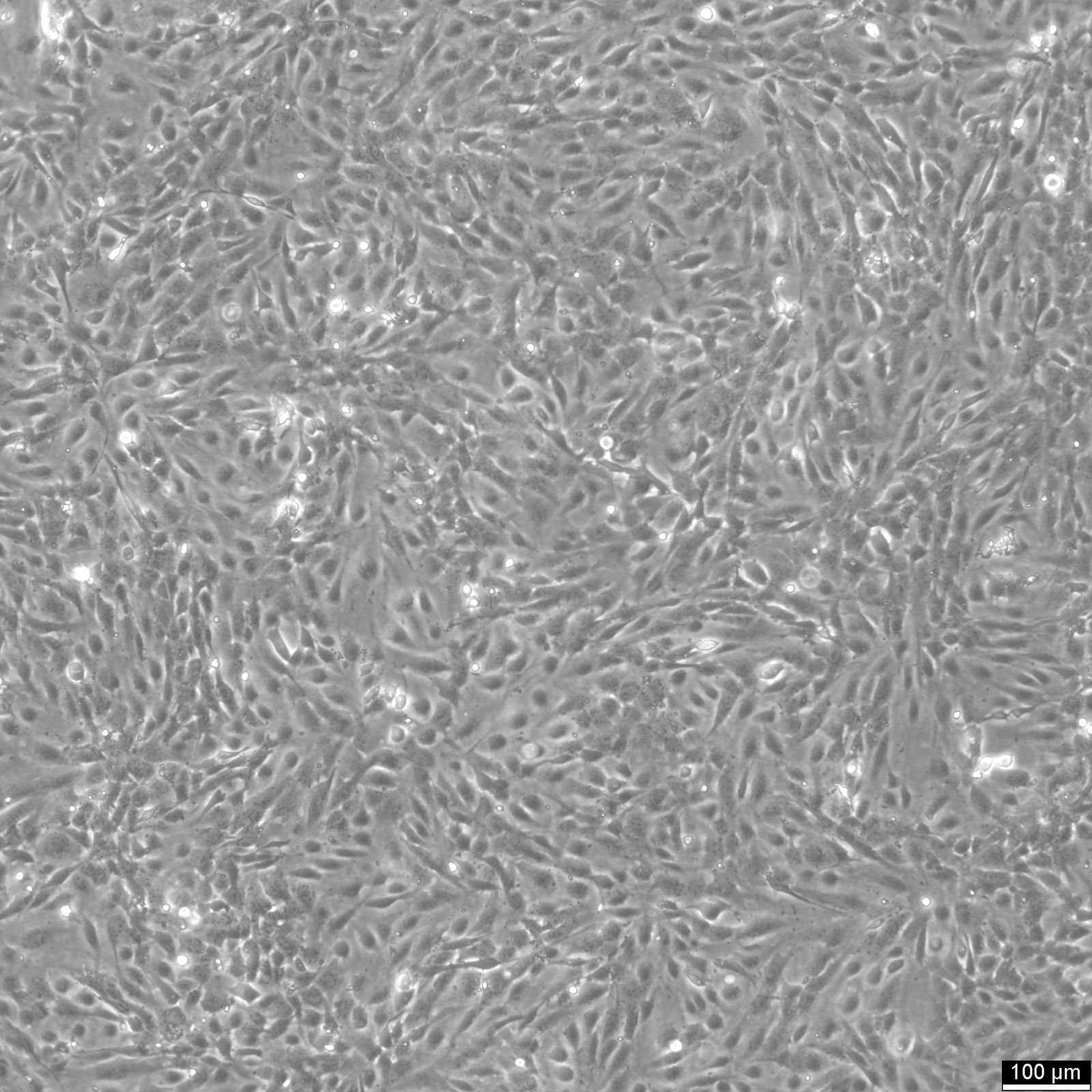
hCMEC/D3 Cells
USD$800.00*
Products are shipped frozen on dry ice in cryotubes. Each cryotube typically contains 3 × 10⁶ cells for adherent lines or 5 × 10⁶ cells for suspension lines (refer to the batch CoA for details).
General information
| Description | The HCMEC/D3 cell line represents an immortalized human cerebral microvascular endothelial cell line, extensively utilized in the study of the blood-brain barrier (BBB). This cell line was generated through the transduction of primary human cerebral microvascular endothelial cells with a lentiviral vector expressing human telomerase reverse transcriptase (hTERT), a crucial enzyme for maintaining telomere length and thereby promoting cellular longevity without transforming the cell phenotype. The introduction of hTERT helps these cells to bypass the replicative senescence that limits the lifespan of primary cells, allowing sustained propagation in culture. HCMEC/D3 cells retain key physiological and morphological characteristics of primary cerebral endothelial cells, making them a valuable model for in vitro studies of the BBB. These include the expression of tight junction proteins such as claudin-5, occludin, and zonula occludens-1, which are critical for maintaining barrier integrity. The cells also express various transporters and receptors typical of the cerebral endothelium, supporting their use in studies related to drug delivery and neurovascular disorders. The ability of HCMEC/D3 to form a tight monolayer with high electrical resistance underscores their suitability for BBB permeability assays. Research utilizing HCMEC/D3 cells has covered a wide range of applications, including the investigation of cerebral pathologies such as stroke, multiple sclerosis, and metastasis of cancer to the brain. Their compatibility with various molecular biology techniques also makes them an excellent tool for studying endothelial cell responses to inflammatory stimuli, shear stress, and neurotoxic substances. This cell line provides a robust, reproducible platform for dissecting the molecular events at the cerebral endothelial level, contributing valuable insights into the complexities of neurovascular health and disease. |
|---|---|
| Organism | Human |
| Tissue | Brain, temporal lobe, blood microvessel |
| Synonyms | HCMEC/D3, CMEC/D3, human Cortical Microvessels Endothelial Cells/D3 |
Characteristics
| Age | Adult |
|---|---|
| Gender | Female |
| Morphology | Endothelial |
| Cell type | Endothelial cell |
| Growth properties | Adherent |
Regulatory Data
| Citation | hCMEC/D3 (Cytion catalog number 305024) |
|---|---|
| Biosafety level | 1 |
| NCBI_TaxID | 9606 |
| CellosaurusAccession | CVCL_U985 |
| GMO Status | GMO-S1: This human microvascular endothelial cell line (hCMEC/D3) contains lentiviral constructs encoding SV40 T-Antigen or hTERT, supporting stable immortalization. The insert is integrated into primary endothelial cells. This classification applies only within Germany and may differ elsewhere. |
Biomolecular Data
| Viruses | Transformant: Simian virus 40 (SV40) |
|---|
Handling
| Culture Medium | EGM -2 MV Microvascular Endothelial Cell Growth Medium-2 BulletKit (from Lonza, Lonza catalog number CC-3202) |
|---|---|
| Supplements | Supplement the supplied EBM-2 Basal Medium as recommended by the manufacturer |
| Freeze medium | As a cryopreservation medium, we use 50% basal medium + 40% FBS + 10% DMSO, or CM-1 (Cytion catalog number 800100), which includes optimized osmoprotectants and metabolic stabilizers to enhance recovery and reduce cryo-induced stress. |
| Thawing and Culturing Cells |
|
| Incubation Atmosphere | 37°C, 5% CO2, humidified atmosphere. |
| Shipping Conditions | Cryopreserved cell lines are shipped on dry ice in validated, insulated packaging with sufficient refrigerant to maintain approximately −78 °C throughout transit. On receipt, inspect the container immediately and transfer vials without delay to appropriate storage. |
| Storage Conditions | For long-term preservation, place vials in vapor-phase liquid nitrogen at about −150 to −196 °C. Storage at −80 °C is acceptable only as a short interim step before transfer to liquid nitrogen. |
Quality Control & Molecular Analysis
| Sterility | Mycoplasma contamination is excluded using both PCR-based assays and luminescence-based mycoplasma detection methods. To ensure there is no bacterial, fungal, or yeast contamination, cell cultures are subjected to daily visual inspections. |
|---|
Certificate of Analysis (CoA)
| Lot Number | Certificate Type | Date | Catalog Number |
|---|---|---|---|
| 305024-300724 | Certificate of Analysis | 23. May. 2025 | 305024 |
| 305024-100325 | Certificate of Analysis | 23. May. 2025 | 305024 |