
Células Caco-2: una guía exhaustiva sobre las células Caco-2 en la investigación gastrointestinal
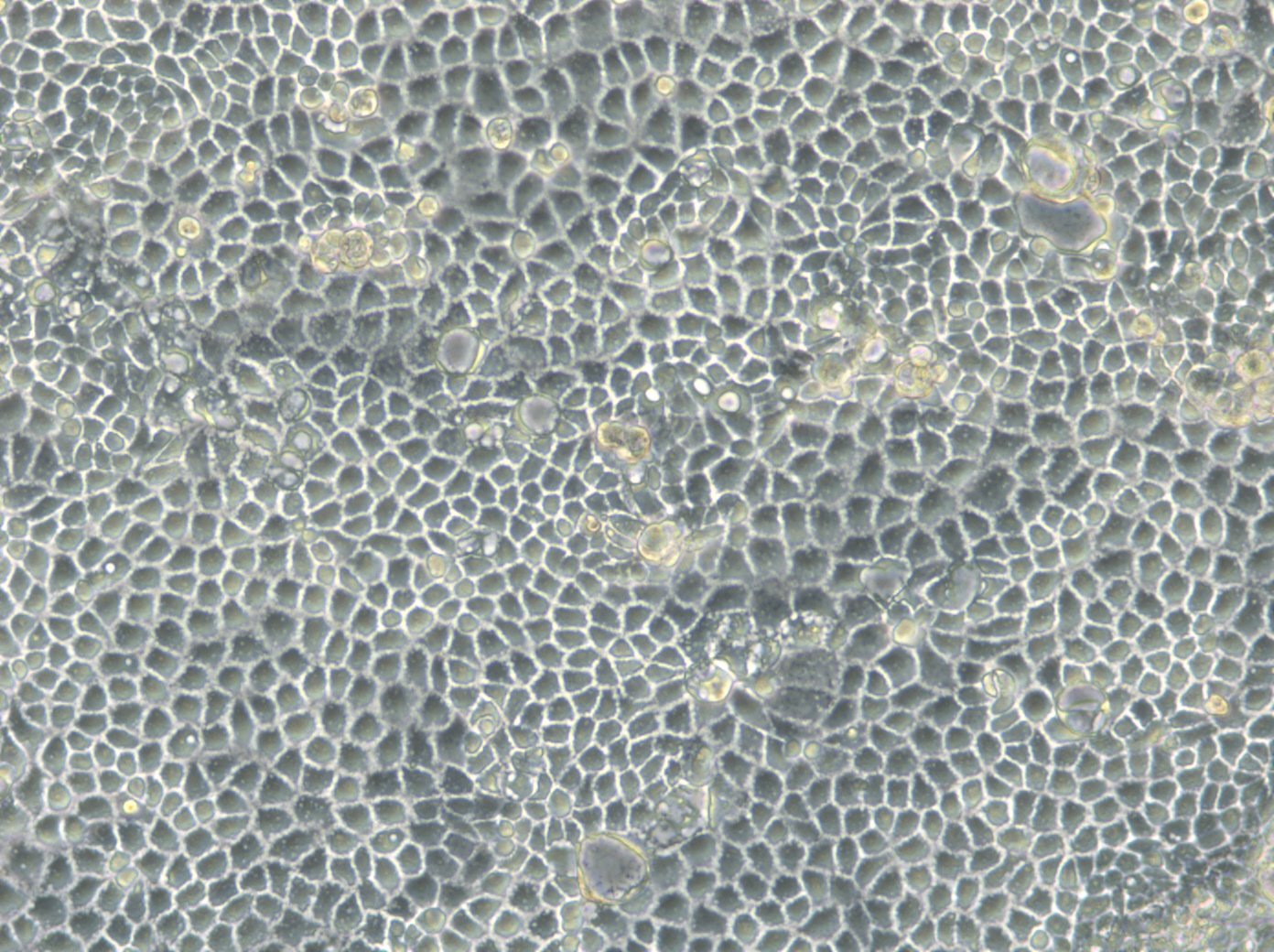
La línea celular Caco-2 de carcinoma de colon humano, establecida a partir de un carcinoma de colon humano, es un pilar fundamental en la investigación gastrointestinal, ampliamente reconocida por su gran parecido con los enterocitos normales, tanto en sus propiedades epiteliales como en su morfología. Derivadas del carcinoma de colon de un hombre caucásico de 72 años, estas células se han adoptado como modelo estándar de línea celular epitelial in vitro para el tracto gastrointestinal humano, específicamente la mucosa intestinal. Su utilidad radica en su capacidad para diferenciarse en una monocapa polarizada, dotada de borde en cepillo, que imita a los enterocitos absorbentes que recubren el intestino delgado, a pesar de la heterogeneidad inherente a la línea celular.
- Medio de crecimiento
- Ver página del producto
- Tiempo de duplicación
- Consulte la página del producto
- Tipo de crecimiento
- Adherente
- Nivel de bioseguridad
- BSL-1
- Disponible en
- Cytion — Pedir CaCo-2
Desde el punto de vista funcional, las células CaCo-2 constituyen un modelo sólido de la barrera epitelial intestinal, lo que nos permite comprender mejor los mecanismos de transporte celular a través de esta capa y sus interacciones con la matriz extracelular presente en el intestino nativo. Los investigadores recurren a estas células para obtener información fundamental sobre el transporte y el metabolismo de fármacos y nutrientes, áreas clave en los estudios farmacológicos y nutricionales. La capacidad de esta línea celular epitelial para exhibir características epiteliales bien diferenciadas, tales como el borde en cepillo, las uniones estrechas y la expresión de hidrolasas de microvellosidades y transportadores de nutrientes, subraya su importancia en la evaluación de la permeabilidad celular y en el esclarecimiento de las vías de transporte de fármacos.
Como sistema modelo, las células Caco-2 permiten simular los procesos de absorción y metabolismo de los fármacos que tienen lugar en las células de las vellosidades completamente diferenciadas del epitelio intestinal. Esto incluye evaluaciones rápidas de fármacos candidatos, la determinación de estrategias de formulación y la comprensión de los factores fisicoquímicos que afectan la difusión de los fármacos. Además, la línea celular Caco-2 es fundamental en las evaluaciones toxicológicas, ya que ayuda a pronosticar los posibles efectos de las sustancias en la barrera biológica crítica del tracto gastrointestinal. Su uso constante en toda la comunidad científica confirma que la línea celular Caco-2 es una herramienta indispensable en el ámbito de la investigación biomédica.
¿Qué hace que la línea celular Caco-2 sea única?
Polarización distintiva y formación del borde en cepillo
La línea celular Caco-2 se destaca por su capacidad para formar una monocapa polarizada cilíndricamente en cultivo. Esto se caracteriza por el desarrollo de microvellosidades secretoras de enzimas en el borde en cepillo del lado apical y el establecimiento de uniones estrechas uniformes entre las células adyacentes. Esta característica morfológica imita de cerca a los enterocitos absorbentes del intestino delgado, razón por la cual la línea celular Caco-2 es particularmente valiosa en estudios intestinales.
Formación de cúpulas y transporte de iones
Otro aspecto único de la línea celular Caco-2 es el flujo unidireccional de iones y agua a través de la monocapa polarizada al alcanzar la confluencia, lo que da lugar a la formación de cúpulas en los cultivos. Estas cúpulas son indicadores visuales de un transporte iónico efectivo y son un rasgo distintivo de las capas epiteliales funcionales y bien diferenciadas.
Expresión de marcadores de colonocitos
Las células Caco-2 expresan marcadores característicos de los colonocitos, las principales células epiteliales del colon. Esto las convierte en un modelo importante para investigar la fisiología y la patología del colon, incluyendo la absorción de fármacos y la carcinogénesis.
Efectos del crecimiento en pases tardíos
En pases tardíos, las células Caco-2 tienden a crecer en multicapas en lugar de mantener una monocapa. Este patrón de crecimiento puede afectar las mediciones de TEER, ya que la estructura multicapa puede alterar la resistencia eléctrica a través de la capa celular, lo que requiere una gestión cuidadosa de los pases para obtener resultados consistentes.
Heterogeneidad y subpoblaciones
El cultivo de células Caco-2 es intrínsecamente heterogéneo, ya que contiene subpoblaciones con diferentes morfologías y funciones. Esta heterogeneidad puede ser tanto un desafío como una ventaja, ya que puede reflejar la variabilidad que se encuentra en el tejido intestinal humano, pero también puede introducir variabilidad en los resultados experimentales.
Incorporar estos atributos únicos de la línea celular Caco-2 a nuestro conocimiento enriquece la perspectiva sobre cómo se pueden utilizar estas células en la investigación y las consideraciones cuidadosas que se deben tener en cuenta al usarlas para modelar la absorción y el transporte intestinal humano.

Applications of the Caco-2 Cell Line
Bioactive Food Components and Barrier Function
The Caco-2 cell line has been instrumental in exploring the interactions between the intestinal epithelium and various bioactive food components. This cell line offers an in-depth understanding of how microbiota and their metabolites, along with food digests, influence the intestinal epithelium's barrier function. Researchers utilize Caco-2 cells to monitor changes in permeability and the expression of tight junction proteins, thereby dissecting the epithelial transport mechanisms affected by dietary substances. These insights are crucial for determining the impact of food components on health and disease, providing valuable data for the design of functional foods.
A notable example from the literature involves the study of dietary polyphenols, which are abundant in fruits, vegetables, and other plant-based foods. Polyphenols are known for their antioxidant properties and potential health benefits. In one study, the effects of a specific polyphenol, resveratrol, were examined using the Caco-2 cell line. Resveratrol was found to enhance the integrity of the epithelial barrier by increasing the expression of tight junction proteins, leading to decreased permeability. This example underscores the value of the Caco-2 cell model in elucidating the mechanisms through which dietary components can modulate intestinal health, highlighting its pivotal role in nutritional research and the development of functional foods aimed at improving gut barrier function.
Analyzing Drug and Nutrient Transport Across the Intestinal Epithelium
Caco-2 cells indeed serve as a pivotal model system to differentiate the routes and methods by which substances traverse the intestinal barrier. These cells enable researchers to discern whether a compound's absorption occurs via paracellular or transcellular routes and to determine if the process is passive or requires energy-dependent carriers. This ability is crucial in pharmaceutical science for understanding the absorption and cellular transport of medication, which is vital for effective drug design, epithelial permeability studies, and exploring the potential of lipid nanoparticles in drug delivery systems for enhancing intestinal drug absorption.
A specific example from the literature that showcases the application of Caco-2 cells in studying transport mechanisms is a study where the transport of Quercetin and naringenin across human intestinal Caco-2 cells was investigated. The study aimed to understand the transcellular transport by Caco-2 cells, particularly how these compounds, which have potential health benefits, are absorbed in the intestine. This research contributes significantly to the pharmaceutical and nutritional fields by providing insights into how bioactive compounds in foods can influence health through absorption in the gastrointestinal tract.
Another study explored the experimental evaluation of the transport mechanisms of PoIFN-α in Caco-2 cells, focusing on the endocytosis pathways and intracellular trafficking within these cells. This research sheds light on the complex cellular processes involved in the uptake and transport of substances across the intestinal epithelium, further emphasizing the utility of Caco-2 cells in studying cellular transport mechanisms. These studies underscore the importance of Caco-2 cells in elucidating the mechanisms underlying intestinal drug absorption and the potential of lipid nanoparticles as carriers for improving drug delivery across the intestinal epithelium.Assessing Mucosal Toxicity
Investigating mucosal toxicity using the Caco-2 cell line provides a vital platform for assessing the safety profiles of potential pharmaceutical compounds and novel food ingredients with respect to the intestinal mucosa. This model system enables researchers to study the interaction of these substances with the intestinal lining, thereby predicting possible adverse effects within the human colon prior to clinical trials and consumption.
A notable study conducted with Caco-2 cells, alongside HT29-MTX cells, highlighted the model's effectiveness in evaluating cellular layer integrity and the potential toxic effects on the intestinal epithelium. By measuring transepithelial electrical resistance (TEER), the study demonstrated the Caco-2 model's utility in preclinical safety assessments, offering valuable insights that help in mitigating risks associated with new compounds and ingredients. This approach underscores the importance of the Caco-2 cell line in the early stages of drug development and food safety evaluation.
Transport and Bioavailability of Bioactive Compounds
The Caco-2 cell line is instrumental in assessing the transport mechanisms of bioactive compounds across the intestinal epithelial membrane. This model allows for the identification of compounds that possess the ideal physicochemical characteristics for passive diffusion, either through transcellular or paracellular pathways, in the intestinal epithelium. Moreover, Caco-2 cells enable the study of compound interactions during transport, which is crucial for pharmaceutical and supplement development.
A specific example illustrating the use of Caco-2 cells in this context is a study investigating the effect of curcumin on cholesterol absorption and cell proliferation in Caco-2 cells. The study revealed that curcumin could inhibit cell proliferation and reduce cholesterol absorption via specific signaling pathways, highlighting the potential of curcumin in preventing colorectal cancer and its utility in primary prevention strategies. This example underscores the Caco-2 cell line's role in understanding how different formulations impact intestinal cholesterol transport and the cellular mechanisms involved.
Another study explored the trans-epithelial transport of olive seed-derived cholesterol-lowering bioactive peptides using differentiated Caco-2 cells. This research demonstrated the peptides' ability to modulate intracellular cholesterol metabolism, highlighting the potential of food-derived bioactive peptides in managing cholesterol levels and the importance of Caco-2 cells in evaluating their intestinal transport and metabolic stability.
Investigating Intestinal Efflux Systems
The Caco-2 cell line is instrumental in understanding the function and molecular details of intestinal epithelium efflux systems, such as P-glycoprotein, crucial for drug development. This model aids in identifying how drug candidates interact with efflux transporters, impacting drug absorption and efficacy, and optimizing formulations for better therapeutic outcomes. A study detailed in the Journal of Pharmacy and Pharmacology explores this application, showcasing Caco-2's role in evaluating drug permeability in line with FDA guidelines.

Advantages of the Caco-2 Cell Line
While it is challenging to list all the potential benefits of the Caco-2 cell line, here are some of its advantages:
- Fast Differentiation: Caco-2 cells differentiate rapidly to express mature small intestinal enterocytes' morphological and functional properties.
- High TEER Values: The polarized Caco-2 cell layer exhibits TEER (transepithelial electrical resistance) values that are four times higher than those of HT29 monolayers, making them a valuable tool for studying epithelial barrier function.
- Cholesterol Transport: The Caco-2 cell line is an excellent model for studying how cholesterol moves through the body and the expression of cholesterol transporters.
- Expression of Receptors and Enzymes: Caco-2 cells express most receptors, transporters, and drug-metabolizing enzymes found in normal epithelium, such as aminopeptidase, esterase, and sulfatase.
- Lack of P-450 Enzyme Activity: Notably, the Caco-2 cell line does not exhibit P-450 metabolizing enzyme activity, which is useful when studying drug metabolism pathways that do not involve this enzyme family.

Limitations of the Caco-2 Cell Model
While the Caco-2 cell model is a valuable tool for investigating intestinal epithelial features, it has several limitations when compared to normal intestinal epithelium:
- Multiple Cell Types: Normal human epithelium contains more than one cell type, not only enterocytes, whereas the Caco-2 cell line only contains enterocytes.
- Absence of Mucus and Unstirred Water Layer: When using the Caco-2 cell line, mucus and the unstirred water layer near the epithelium is absent.
- Non-Cellular Parameters: Several non-cellular parameters, such as bile acids and phospholipids, will affect the absorption of a particular compound in cells. In vivo, compound solubility in the mucus layer plays a role in absorption, and the unstirred water layer near the epithelium will significantly impact uptake.
Unlocking Research Potential: The Essential Caco-2 Cell Line
Related Cell Lines to Caco-2 Cells
All cell lines mentioned below are used as in vitro models of the intestinal epithelial barrier and have diverse characteristics and applications in research.
| Cell Line | Source | Characteristics and Applications |
|---|---|---|
| HCT-8 | Human ileocecal adenocarcinoma cells | Similar to Caco-2 cells and used in toxicological and cancer research |
| IEC 6 | Rat small intestine epithelial cells | Typical in vitro model of the intestinal epithelial barrier and essential for digestion, nutrition absorption, and defense against microbial infections |
| HT29 | Epithelial-like cells isolated from a primary colon tumor of a 44-year-old female patient with colon adenocarcinoma | Useful for studies in oncology and toxicity and may serve as a transfection host |
| HT29-MTXE12 | Mucous-secreting cell line derived from HT29 cells | Forms tight junctions and produces mucus, similar to gastric cells and Caco-2 cells |
| HT29-MTX | HT29 subclones differentiated into mature goblets with methotrexate | Useful for studying the differentiation and maturation of goblet cells in the colon |
Handling and Culturing Caco-2 Cells
Culturing Caco-2 cells requires meticulous attention to the original cell line's properties and the maintenance of epithelial cell monolayers. Ensuring proper intestinal permeability models and studying the intestinal mucosa's features and mechanisms demand a standardized approach across different laboratories. While Caco-2 cells are invaluable in vivo models, researchers must acknowledge the difference from the vivo situation and adapt their methodologies accordingly, particularly when considering the relevance to human health.
Protocol for the subculturing of Caco-2 cells:
- Remove the culture media and wash the adhering cells with phosphate-buffered saline (PBS) without calcium and magnesium ions (3-5 ml PBS for T25 and 5-10 ml for T75 cell culture flasks).
- Completely cover the cell sheet with Accutase (1-2 ml per T25, 2.5 ml per T75 cell culture flask) and leave it at room temperature for 8-10 minutes.
- Reconstitute the cells in fresh media (10 ml), centrifuge for 3 minutes at 300 g, and carefully transfer the cells to new flasks.
- For recovery from the freezing procedure, allow the cells at a density of 5 x 10⁴ cells/cm2 to stick to the plate for at least 24 hours after thawing.
- The doubling time for Caco-2 cells is 60-70 hours, and the recommended split ratio is 1:2 to 1:3. 90 percent monolayer confluence is reached at 1 x 10⁴ cells/cm2 after four days.
- Replace the medium for confluent cultures every two to three days or less frequently if they are not sub-cultured.
Conclusion
In conclusion, while Caco-2 cells are invaluable in vitro models for studying intestinal absorption and barrier function, they do not represent enteroendocrine cells or other specialized cell types found in vivo. Despite their origins from colorectal adenocarcinoma, Caco-2 cells have been widely adopted in intestinal absorption studies and serve as essential cellular model systems for understanding drug transport mechanisms. Researchers utilize various tools such as tissue culture inserts and measurements of transepithelial resistance (TEER) to study transepithelial transport of drugs and food components. However, it's essential to acknowledge the limitations of Caco-2 cells, including their inability to fully replicate the brush border layer and interactions with other cell types such as epithelium and fibroblasts. Incorporating Caco-2 cells into research protocols requires careful consideration of their advantages and disadvantages and adherence to general protocols for culturing and experimentation.