
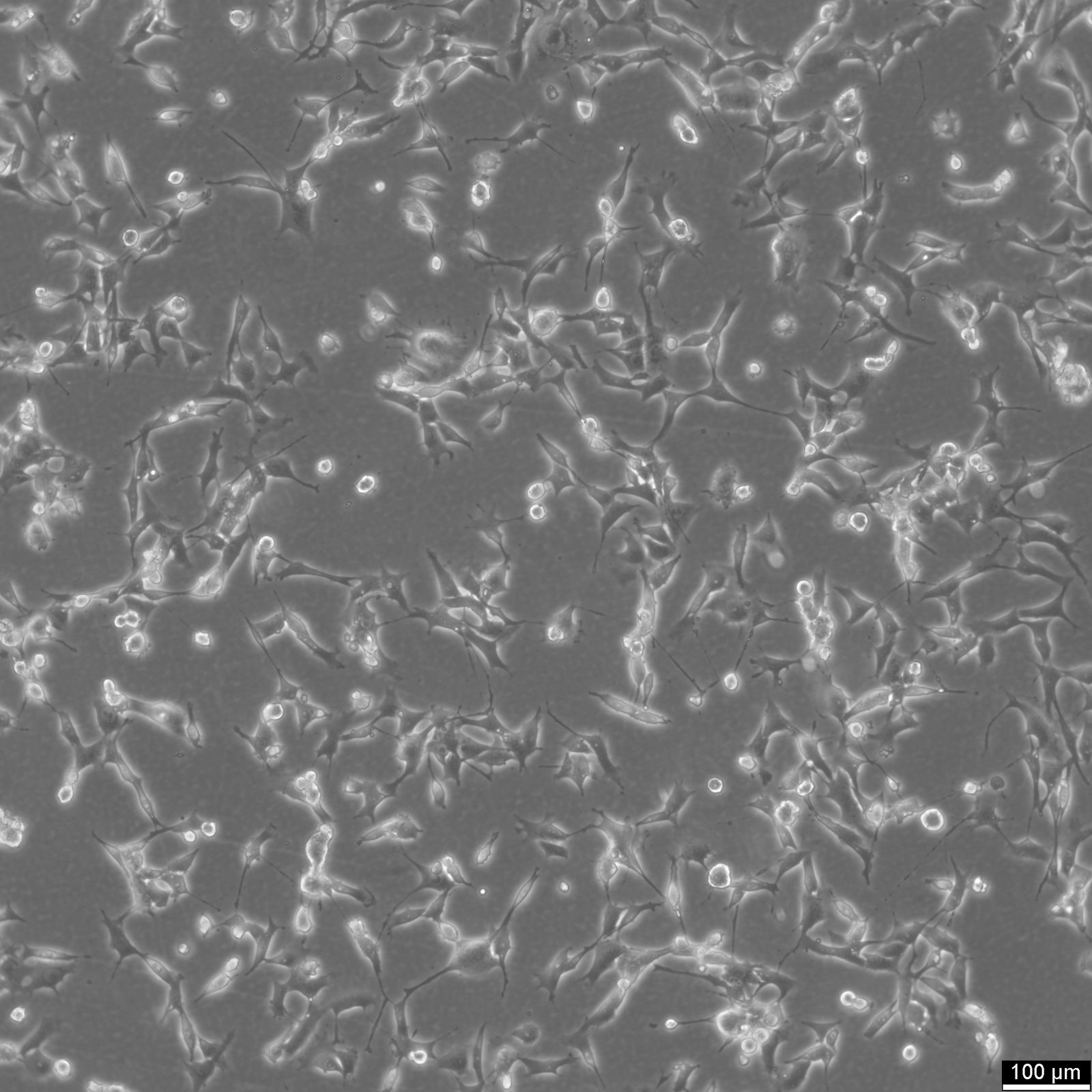
TC-1 Cells
USD$550.00*
Products are shipped frozen on dry ice in cryotubes. Each cryotube typically contains 3 × 10⁶ cells for adherent lines or 5 × 10⁶ cells for suspension lines (refer to the batch CoA for details).
General information
| Description | TC-1 is a murine lung epithelial cell line transformed with human papillomavirus type 16 (HPV16) E6 and E7 oncogenes, along with an activated H-ras oncogene. The cell line was developed from primary lung epithelial cells of C57BL/6 mice using a dual retroviral transduction strategy. Initially, a retroviral vector derived from Moloney murine leukemia virus (MoMLV), such as pLXSN-16E6E7, was used to deliver the E6 and E7 oncogenes. In this vector, the genes are expressed from the viral 5′ LTR promoter, and a neomycin resistance gene (NeoR) under the control of an internal SV40 promoter enabled selection with G418. Stable expression of E6 and E7 results in inactivation of p53 and Rb tumor suppressor pathways, driving cell immortalization. Following initial selection, a second MoMLV-based retroviral vector encoding an activated H-ras (G12V) gene was introduced to complete transformation. This vector carried a different selectable marker, typically a hygromycin resistance gene (hph), driven by an internal promoter such as SV40 or PGK. Cells that survived sequential selection with G418 and hygromycin demonstrated stable integration of all three oncogenes, resulting in fully transformed and immortalized TC-1 cells. In functional studies, TC-1 cells exhibit strong expression of MHC class I molecules, making them highly immunogenic and widely utilized for evaluating experimental vaccines and immunotherapies targeting HPV-associated malignancies. They have been instrumental in preclinical vaccine studies, particularly those aimed at eliciting CD8+ T-cell responses against HPV16 E7. Additionally, sublines with downregulated MHC class I expression have been developed to mimic immune escape mechanisms, providing further insights into the interplay between tumor cells and host immunity. These properties make TC-1 a robust and versatile model for immuno-oncology and HPV vaccine development. |
|---|---|
| Organism | Mouse |
Characteristics
| Gender | Unspecified |
|---|---|
| Ethnicity | Unspecified |
| Morphology | Epithelial-like |
| Cell type | Ephitelial |
| Growth properties | Adherent |
Regulatory Data
| Citation | TC-1 (Cytion catalog number 305388) |
|---|---|
| Biosafety level | 1 |
| NCBI_TaxID | 10090 |
| CellosaurusAccession | CVCL_4699 |
| GMO Status | GMO-S1: This murine lung epithelial cell line (TC-1) contains the HPV16 E6/E7 oncogenes delivered via retroviral vector pLXSN16E6E7 together with HRAS oncogenic sequences, supporting strong transformation. The inserts are stably integrated. This classification applies only within Germany and may differ elsewhere. |
Biomolecular Data
Handling
| Culture Medium | DMEM, w: 4.5 g/L Glucose, w: 4 mM L-Glutamine, w: 3.7 g/L NaHCO3, w: 1.0 mM Sodium pyruvate (Cytion article number 820300a) |
|---|---|
| Supplements | Supplement the medium with 10% FBS |
| Dissociation Reagent | Accutase |
| Doubling time | 18.2 hours |
| Freeze medium | As a cryopreservation medium, we use complete growth medium (including FBS) + 10% DMSO for adequate post-thaw viability, or CM-1 (Cytion catalog number 800100), which includes optimized osmoprotectants and metabolic stabilizers to enhance recovery and reduce cryo-induced stress. |
| Thawing and Culturing Cells |
|
| Incubation Atmosphere | 37°C, 5% CO2, humidified atmosphere. |
| Shipping Conditions | Cryopreserved cell lines are shipped on dry ice in validated, insulated packaging with sufficient refrigerant to maintain approximately −78 °C throughout transit. On receipt, inspect the container immediately and transfer vials without delay to appropriate storage. |
| Storage Conditions | For long-term preservation, place vials in vapor-phase liquid nitrogen at about −150 to −196 °C. Storage at −80 °C is acceptable only as a short interim step before transfer to liquid nitrogen. |
Quality Control & Molecular Analysis
| Sterility | Mycoplasma contamination is excluded using both PCR-based assays and luminescence-based mycoplasma detection methods. To ensure there is no bacterial, fungal, or yeast contamination, cell cultures are subjected to daily visual inspections. |
|---|
Certificate of Analysis (CoA)
| Lot Number | Certificate Type | Date | Catalog Number |
|---|---|---|---|
| 305388-260325 | Certificate of Analysis | 18. Aug. 2025 | 305388 |
| 305388-090725 | Certificate of Analysis | 18. Aug. 2025 | 305388 |