
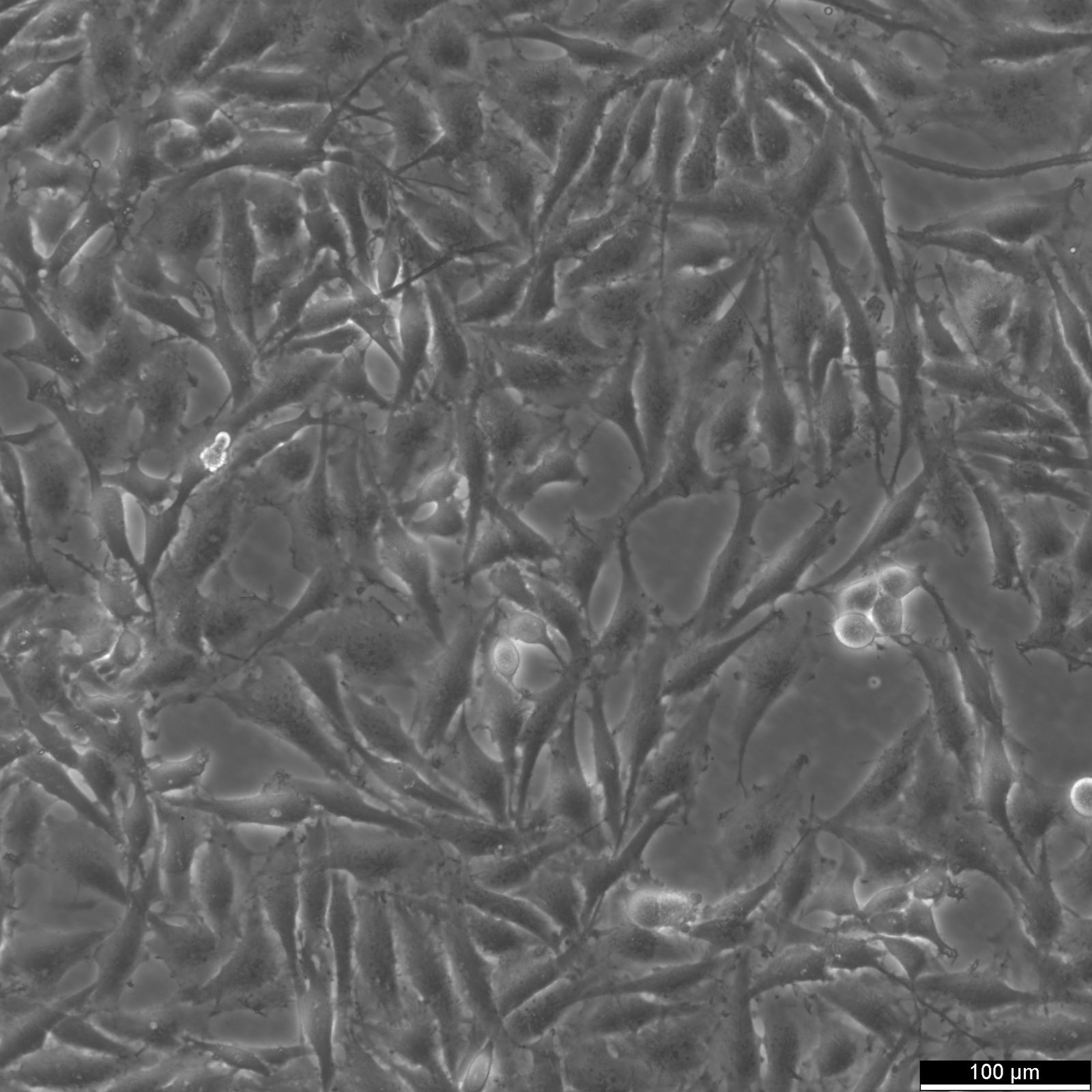
SNB-19 Cells
USD$395.00*
Products are shipped frozen on dry ice in cryotubes. Each cryotube typically contains 3 × 10⁶ cells for adherent lines or 5 × 10⁶ cells for suspension lines (refer to the batch CoA for details).
General information
| Description | The SNB-19 cell line is a human glioblastoma multiforme (GBM) model derived from a high-grade glioma tumor. It is one of the widely studied glioma cell lines and is used for exploring the biology of aggressive brain tumors, especially glioblastoma. SNB-19 cells exhibit epithelial morphology and are adherent in culture. They have been extensively used in studies of tumor proliferation, invasion, and response to therapy, particularly for investigating glioblastoma's resistance mechanisms to conventional treatments. Genomic profiling of SNB-19 cells has revealed important genetic alterations commonly associated with GBM, including mutations in tumor suppressor genes and oncogenes such as TP53, EGFR, and PTEN. These cells also demonstrate chromosomal abnormalities, including amplification of oncogenic drivers and deletions in tumor suppressor loci. The genetic landscape of SNB-19 provides an important model for studying the molecular pathways driving GBM pathogenesis and for identifying potential targets for therapy. SNB-19 has been used extensively to evaluate the efficacy of novel chemotherapeutics and targeted agents. The cell line is also employed in assays studying glioblastoma's invasive and migratory properties, as it effectively mimics the highly invasive nature of GBM in vitro. Moreover, proteomic analyses of SNB-19 have contributed to understanding protein-level dysregulations and their correlation with genetic alterations in glioblastoma. These characteristics make SNB-19 an essential tool in translational research focused on glioblastoma. |
|---|---|
| Organism | Human |
| Tissue | Brain, parietal lobe |
| Disease | Astrocytoma |
| Synonyms | SNB.19, SNB19, Surgical Neurology Branch-19 |
Characteristics
| Age | 75 years |
|---|---|
| Gender | Male |
| Ethnicity | Caucasian |
| Morphology | Fibroblast-like |
| Cell type | Fibroblast |
| Growth properties | Adherent, monolayer |
Regulatory Data
| Citation | SNB-19 (Cytion catalog number 305492) |
|---|---|
| Biosafety level | 1 |
| NCBI_TaxID | 9606 |
| CellosaurusAccession | CVCL_0535 |
Biomolecular Data
| Mutational profile | Mutation: PTEN, Simple, p.Glu242Valfs*15 (c.723_724dupTG), Homozygous; Mutation: TERT, Simple, c.1-124C>T (c.228C>T) (C228T), Unspecified; Mutation: TP53, Simple, p.Arg273His (c.818G>A), Homozygous |
|---|
Handling
| Culture Medium | DMEM, w: 4.5 g/L Glucose, w: 4 mM L-Glutamine, w: 3.7 g/L NaHCO3, w: 1.0 mM Sodium pyruvate (Cytion article number 820300a) |
|---|---|
| Supplements | Supplement the medium with 10% FBS |
| Doubling time | 24 hours |
| Seeding density | 1-4 x 10⁴ cells/cm2 |
| Fluid renewal | 2 to 3 times per week |
| Freeze medium | As a cryopreservation medium, we use complete growth medium (including FBS) + 10% DMSO for adequate post-thaw viability, or CM-1 (Cytion catalog number 800100), which includes optimized osmoprotectants and metabolic stabilizers to enhance recovery and reduce cryo-induced stress. |
| Thawing and Culturing Cells |
|
| Incubation Atmosphere | 37°C, 5% CO2, humidified atmosphere. |
| Shipping Conditions | Cryopreserved cell lines are shipped on dry ice in validated, insulated packaging with sufficient refrigerant to maintain approximately −78 °C throughout transit. On receipt, inspect the container immediately and transfer vials without delay to appropriate storage. |
| Storage Conditions | For long-term preservation, place vials in vapor-phase liquid nitrogen at about −150 to −196 °C. Storage at −80 °C is acceptable only as a short interim step before transfer to liquid nitrogen. |
Quality Control & Molecular Analysis
| Sterility | Mycoplasma contamination is excluded using both PCR-based assays and luminescence-based mycoplasma detection methods. To ensure there is no bacterial, fungal, or yeast contamination, cell cultures are subjected to daily visual inspections. |
|---|
Certificate of Analysis (CoA)
| Lot Number | Certificate Type | Date | Catalog Number |
|---|---|---|---|
| 305492-190126 | Certificate of Analysis | 02. Mar. 2026 | 305492 |
| 305492-170325 | Certificate of Analysis | 23. May. 2025 | 305492 |