
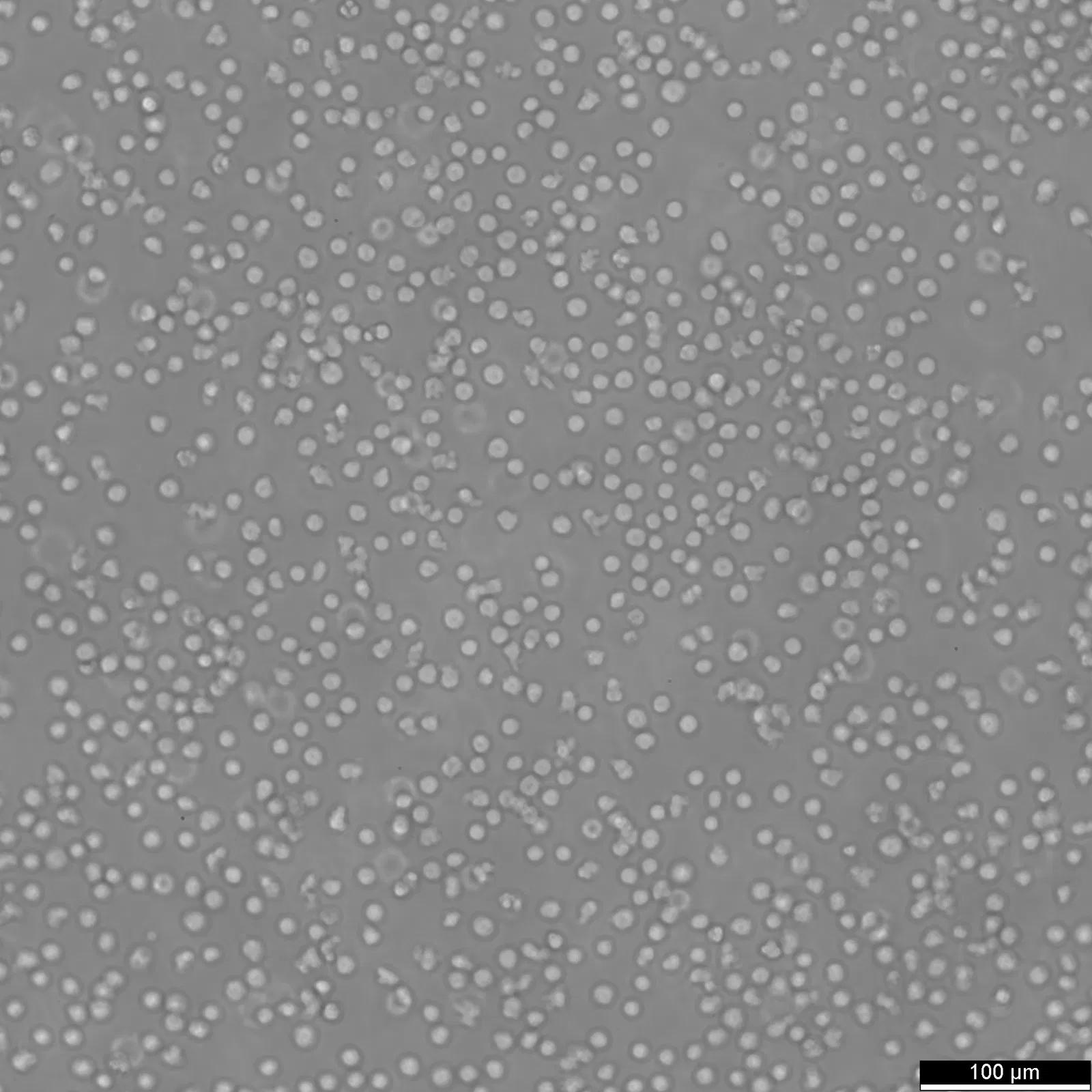
MINO Cells
USD$395.00*
Products are shipped frozen on dry ice in cryotubes. Each cryotube typically contains 3 × 10⁶ cells for adherent lines or 5 × 10⁶ cells for suspension lines (refer to the batch CoA for details).
General information
| Description | The MINO cell line is a human-derived model of mantle cell lymphoma (MCL), a rare and aggressive subtype of B-cell non-Hodgkin lymphoma. This cell line was established from a 64-year-old female patient with advanced MCL. It is characterized by overexpression of cyclin D1 due to the chromosomal translocation t(11;14)(q13;q32), a hallmark of MCL. MINO cells exhibit a CD5+CD20+CD23− immunophenotype, consistent with MCL diagnosis, and show additional genetic alterations, including hyperdiploidy and a TP53 mutation at codon 147 (valine to glycine), which may contribute to its pathogenesis. MINO cells grow as single cells or in small clumps and demonstrate features typical of MCL, such as high levels of phosphorylated retinoblastoma protein (pRB) and expression of anti-apoptotic proteins like Bcl-2 and Bcl-xL. These cells have been used to study the molecular mechanisms underlying MCL progression and resistance to therapy. In particular, studies have shown that cyclin D1 plays a role in promoting cell cycle progression and evasion of apoptosis by interacting with pro-apoptotic proteins like Bax, favoring lymphoma cell survival. The MINO cell line is a valuable tool for preclinical research, including drug testing and genetic studies. It has been employed in evaluating targeted therapies that inhibit cyclin D1 activity or disrupt pathways critical to MCL survival, such as the PI3K/Akt and Bcl-2 pathways. This cell line continues to contribute to understanding MCL biology and improving therapeutic strategies for this challenging disease. |
|---|---|
| Organism | Human |
| Tissue | Peripheral blood |
| Disease | Mantle cell lymphoma |
| Synonyms | Mino |
Characteristics
| Age | 68 years |
|---|---|
| Gender | Male |
| Ethnicity | Caucasian |
| Morphology | Lymphoblast-like |
| Cell type | Lymphoblast |
| Growth properties | Suspension |
Regulatory Data
| Citation | MINO (Cytion catalog number 305513) |
|---|---|
| Biosafety level | 1 |
| NCBI_TaxID | 9606 |
| CellosaurusAccession | CVCL_1872 |
Biomolecular Data
| Mutational profile | Mutation: CDKN2A, p.Glu88Lys (c.262G>A), homozygous; Mutation: NRAS, p.Gly13Asp (c.38G>A), heterozygous; Mutation: p.Val147Gly (c.440T>G), homozygous |
|---|
Handling
| Culture Medium | RPMI 1640, w: 2.0 mM stable Glutamine, w: 2.0 g/L NaHCO3 (Cytion article number 820700a) |
|---|---|
| Supplements | Supplement the medium with 10% heat-inactivated FBS |
| Seeding density | 1 x 10⁶ cells/mL |
| Freeze medium | As a cryopreservation medium, we use complete growth medium (including FBS) + 10% DMSO for adequate post-thaw viability, or CM-1 (Cytion catalog number 800100), which includes optimized osmoprotectants and metabolic stabilizers to enhance recovery and reduce cryo-induced stress. |
| Thawing and Culturing Cells |
|
| Incubation Atmosphere | 37°C, 5% CO2, humidified atmosphere. |
| Shipping Conditions | Cryopreserved cell lines are shipped on dry ice in validated, insulated packaging with sufficient refrigerant to maintain approximately −78 °C throughout transit. On receipt, inspect the container immediately and transfer vials without delay to appropriate storage. |
| Storage Conditions | For long-term preservation, place vials in vapor-phase liquid nitrogen at about −150 to −196 °C. Storage at −80 °C is acceptable only as a short interim step before transfer to liquid nitrogen. |
Quality Control & Molecular Analysis
| Sterility | Mycoplasma contamination is excluded using both PCR-based assays and luminescence-based mycoplasma detection methods. To ensure there is no bacterial, fungal, or yeast contamination, cell cultures are subjected to daily visual inspections. |
|---|
Certificate of Analysis (CoA)
| Lot Number | Certificate Type | Date | Catalog Number |
|---|---|---|---|
| 305513-270125 | Certificate of Analysis | 23. May. 2025 | 305513 |