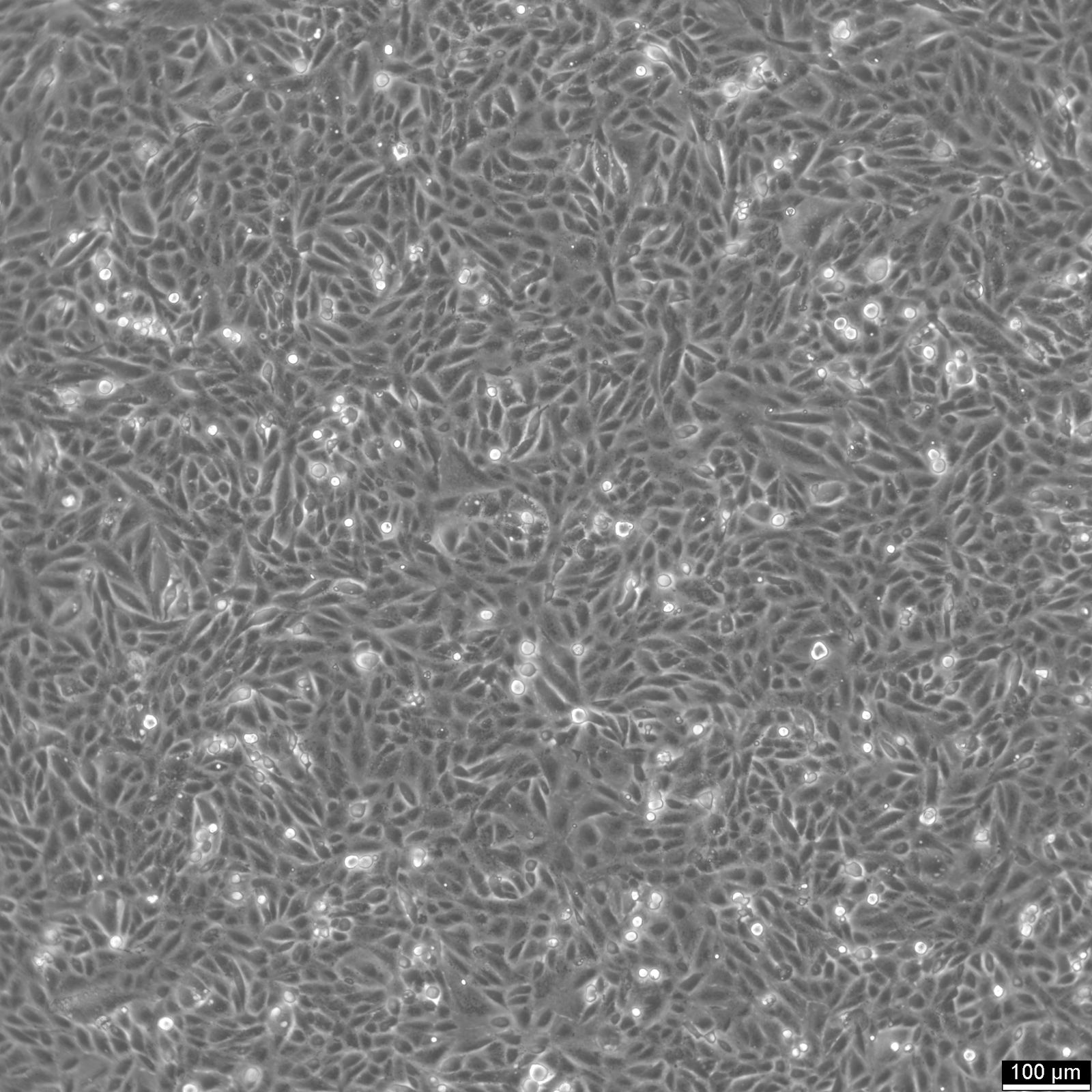
SNU-423 Cells
CAD$759.00*
Products are shipped frozen on dry ice in cryotubes. Each cryotube typically contains 3 × 10⁶ cells for adherent lines or 5 × 10⁶ cells for suspension lines (refer to the batch CoA for details).
General information
| Description | The SNU-423 cell line is a human hepatocellular carcinoma (HCC) model established from a Korean adult patient. It is one of eight HCC cell lines derived from primary liver tumors and characterized for their morphological, genetic, and virological properties. SNU-423 displays substrate adherence and maintains many of the histological features of the original tumor, consistent with hepatocyte-derived epithelial morphology. It exhibits aneuploidy and has a modal chromosome number indicative of chromosomal instability, which is common in HCC-derived lines. At the molecular level, SNU-423 is notable for integration of hepatitis B virus (HBV) DNA within its genome, a characteristic shared by all lines in its cohort, reflecting the high prevalence of HBV-associated liver cancer in Eastern Asia. While some cell lines in the series express HBV transcripts such as HBVx, specific transcript expression in SNU-423 was not reported. Additionally, SNU-423 does not express alpha-fetoprotein (AFP) at either the RNA or protein level, aligning it with a subset of HCCs that lack AFP secretion. It has been used in pharmacogenomic screens such as the LIMORE (Liver Cancer Model Repository), where it contributes to understanding gene-drug associations in liver cancer, including drug response variability potentially linked to HBV status or distinct oncogenic alterations. |
|---|---|
| Organism | Human |
| Tissue | Liver |
| Disease | Adult hepatocellular carcinoma |
| Synonyms | SNU423, NCI-SNU-423 |
Characteristics
| Age | 40 years |
|---|---|
| Gender | Male |
| Ethnicity | Korean |
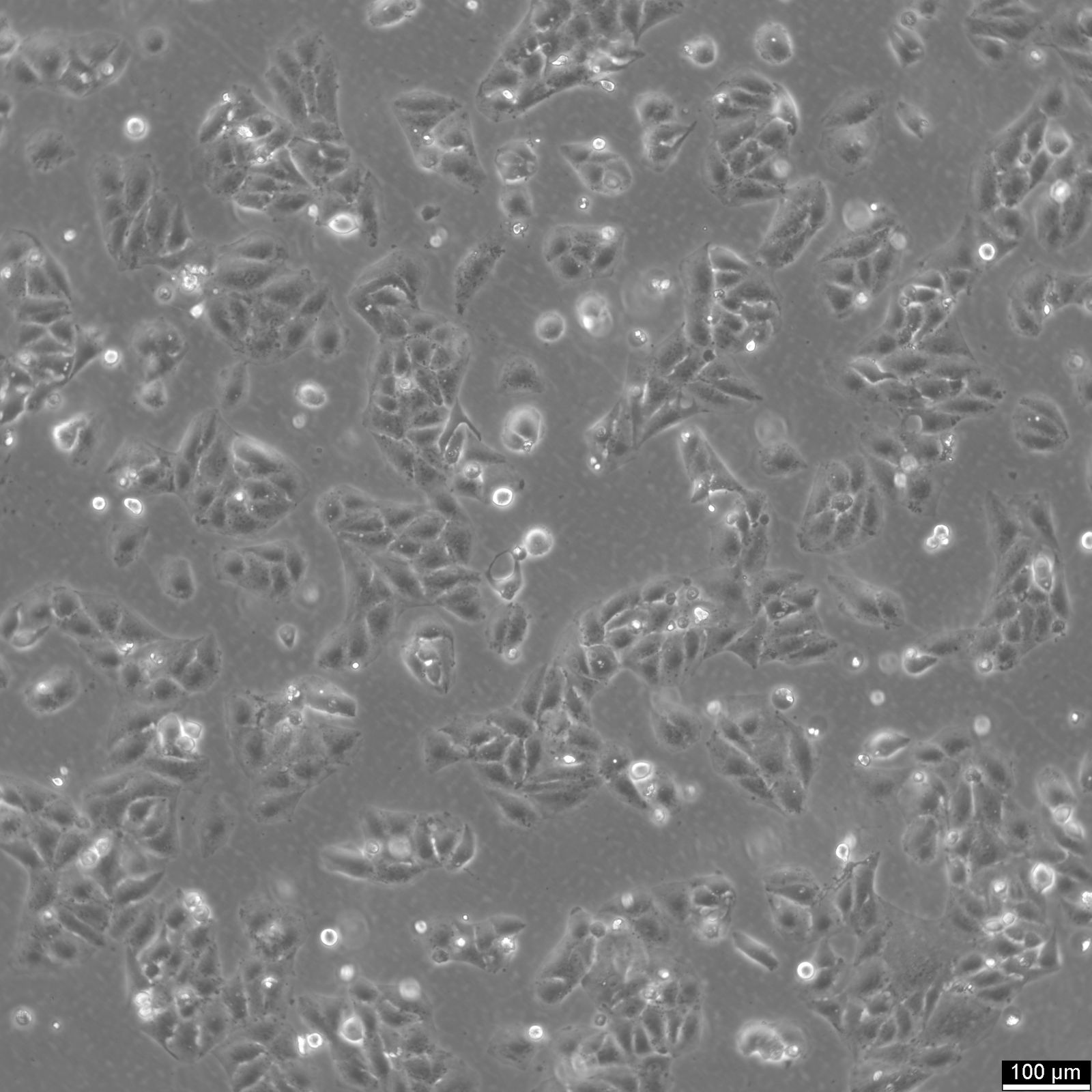
| Morphology | Epithelial-like |
| Growth properties | Adherent |
Regulatory Data
| Citation | SNU-423 (Cytion catalog number 305874) |
|---|---|
| Biosafety level | 2 |
| NCBI_TaxID | 9606 |
| CellosaurusAccession | CVCL_0366 |
Biomolecular Data
| Antigen expression | Blood Type B; Rh + |
|---|---|
| Mutational profile | Mutation: TERT, Simple, c.1-124C>T (c.228C>T) (C228T), Unspecified, Note=In promoter. Mutation, TP53, Simple, c.376-2A>G, Unspecified, Note=Splice acceptor mutation |
| Karyotype | Aneuploid; modal number = 79 |
Handling
| Culture Medium | RPMI 1640, w: 2.0 mM stable Glutamine, w: 2.0 g/L NaHCO3 (Cytion article number 820700a) |
|---|---|
| Supplements | Supplement the medium with 10% heat-inactivated FBS |
| Dissociation Reagent | Accutase |
| Doubling time | 72 hours |
| Fluid renewal | 2 to 3 times per week |
| Freeze medium | As a cryopreservation medium, we use complete growth medium (including FBS) + 10% DMSO for adequate post-thaw viability, or CM-1 (Cytion catalog number 800100), which includes optimized osmoprotectants and metabolic stabilizers to enhance recovery and reduce cryo-induced stress. |
| Thawing and Culturing Cells |
|
| Incubation Atmosphere | 37°C, 5% CO2, humidified atmosphere. |
| Shipping Conditions | Cryopreserved cell lines are shipped on dry ice in validated, insulated packaging with sufficient refrigerant to maintain approximately −78 °C throughout transit. On receipt, inspect the container immediately and transfer vials without delay to appropriate storage. |
| Storage Conditions | For long-term preservation, place vials in vapor-phase liquid nitrogen at about −150 to −196 °C. Storage at −80 °C is acceptable only as a short interim step before transfer to liquid nitrogen. |
Quality Control & Molecular Analysis
| Sterility | Mycoplasma contamination is excluded using both PCR-based assays and luminescence-based mycoplasma detection methods. To ensure there is no bacterial, fungal, or yeast contamination, cell cultures are subjected to daily visual inspections. |
|---|
Certificate of Analysis (CoA)
| Lot Number | Certificate Type | Date | Catalog Number |
|---|---|---|---|
| 305874-301025 | Certificate of Analysis | 05. Dec. 2025 | 305874 |
-
Related products
Related products
SNU-601 CellsOrganism Human Tissue Stomach Disease Gastric signet ring cell adenocarcinoma CAD$759.00*