
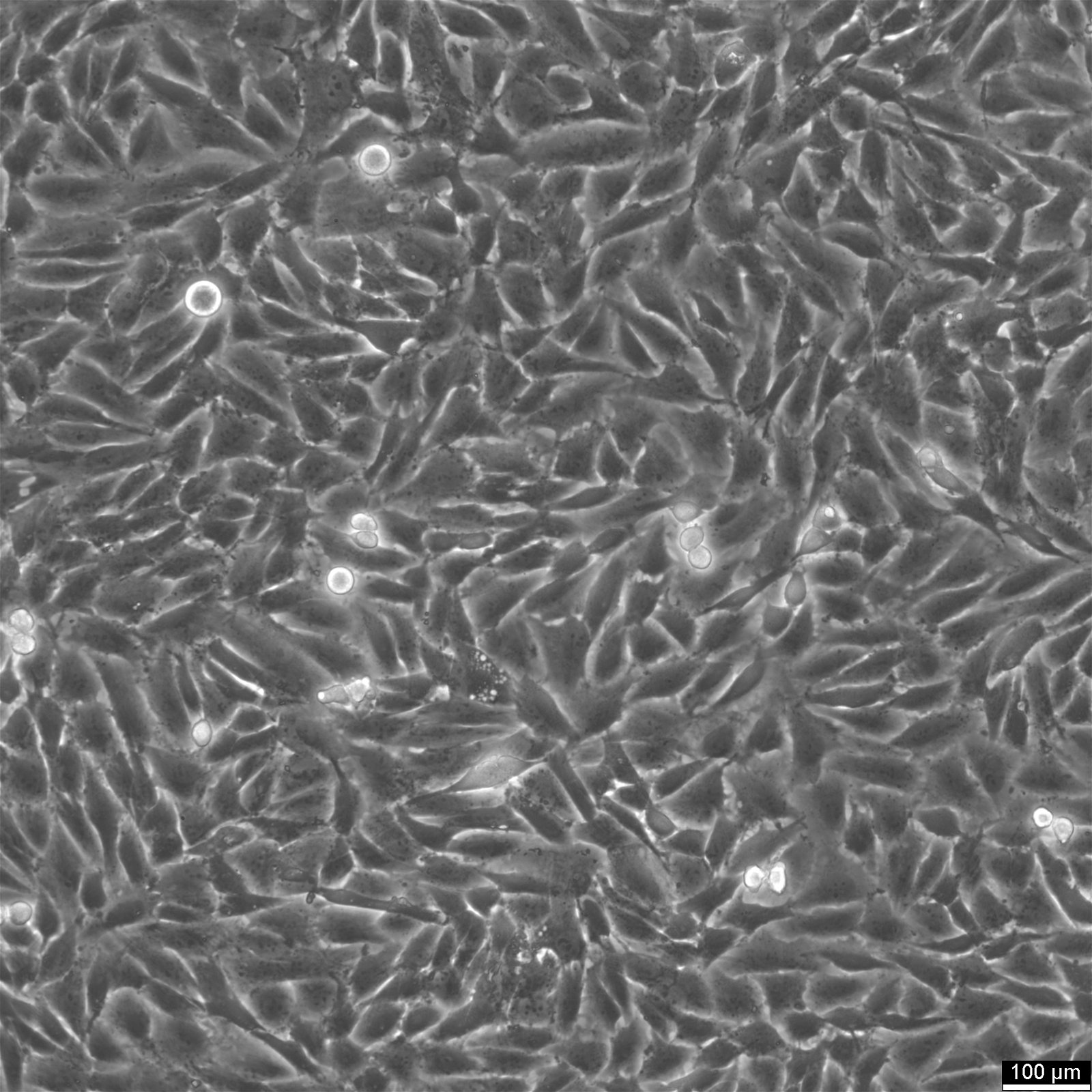
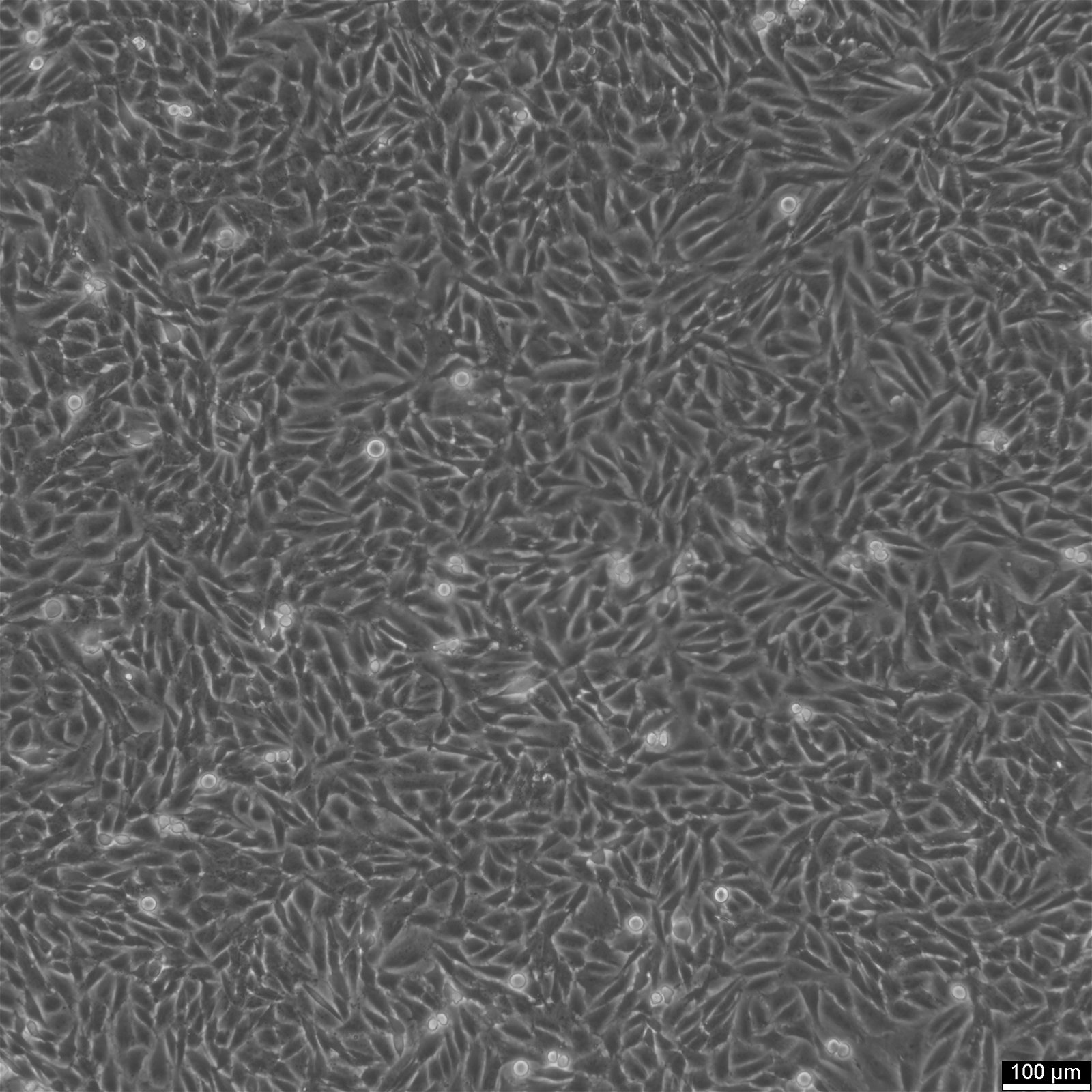
LN229 Cells
US$ 395,00*
Products are shipped frozen on dry ice in cryotubes. Each cryotube typically contains 3 × 10⁶ cells for adherent lines or 5 × 10⁶ cells for suspension lines (refer to the batch CoA for details).
Informações gerais
| Descrição | LN229 is a human glioblastoma cell line derived from a 60-year-old White female patient with glioblastoma multiforme (GBM), specifically from the right frontal parieto-occipital cortex. Glioblastoma is one of the most aggressive and lethal forms of brain cancer, and LN229 cells are extensively used in research to understand the disease's molecular underpinnings and to develop potential therapeutic strategies. The cells display an epithelial-like morphology and exhibit adherent growth properties, which makes them ideal for in vitro studies. Given their high tumorigenic potential, they readily form tumors when injected into nude mice, making them a robust model for cancer research. One of the critical characteristics of LN229 cells is the presence of a mutated p53 gene (TP53), with a specific CCT (Pro) to CTT (Leu) mutation at codon 98. This mutation contributes significantly to the cell line's aggressive behavior and resistance to apoptosis. Additionally, LN229 cells have a wild-type PTEN gene, but they exhibit homozygous deletions in the p16 and p14ARF tumor suppressor genes, which are vital regulators of the cell cycle and apoptosis. These genetic alterations make LN229 a valuable model for studying the impact of these mutations on tumor biology and therapeutic resistance. LN229 cells are particularly useful in apoptosis studies. They undergo apoptosis upon stimulation with Fas ligand, with cell death occurring within 16 hours. Interestingly, while Bcl-2 expression can protect LN229 cells from Fas ligand-induced apoptosis, it only offers limited protection against apoptosis induced by puromycin, a protein synthesis inhibitor. This selective resistance pattern makes LN229 cells a critical model for understanding the molecular mechanisms of apoptosis in glioblastoma and for testing potential apoptosis-modulating therapies. As with all in vitro research models, LN229 cells are not suitable for therapeutic or in vivo applications. |
|---|---|
| Organismo | Human |
| Tecido | Brain, right frontal parieto-occipital cortex |
| Doença | Glioblastoma |
| Sinônimos | LN 229, LN229, LNT-229 |
Características
| Idade | 60 years |
|---|---|
| Gênero | Female |
| Etnia | European |
| Morfologia | Epithelial |
| Propriedades de crescimento | Adherent |
Dados regulatórios
| Referência | LN229 (Cytion catalog number 305043) |
|---|---|
| Nível de biossegurança | 1 |
| NCBI_TaxID | 9606 |
| Número de acesso do Cellosaurus | CVCL_0393 |
Dados biomoleculares
Manuseio
| Meio de cultura | DMEM, w: 4.5 g/L Glucose, w: 4 mM L-Glutamine, w: 3.7 g/L NaHCO3, w: 1.0 mM Sodium pyruvate (Cytion article number 820300a) |
|---|---|
| Suplementos | Supplement the medium with 10% FBS |
| Reagente de dissociação | Accutase |
| Tempo de duplicação | 31 hours |
| Subcultura | Remove the old medium from the adherent cells and wash them with PBS that lacks calcium and magnesium. For T25 flasks, use 3-5 ml of PBS, and for T75 flasks, use 5-10 ml. Then, cover the cells completely with Accutase, using 1-2 ml for T25 flasks and 2.5 ml for T75 flasks. Let the cells incubate at room temperature for 8-10 minutes to detach them. After incubation, gently mix the cells with 10 ml of medium to resuspend them, then centrifuge at 300xg for 3 minutes. Discard the supernatant, resuspend the cells in fresh medium, and transfer them into new flasks that already contain fresh medium. |
| Renovação de fluidos | 2 to 3 times per week |
| Meio de congelamento | As a cryopreservation medium, we use complete growth medium (including FBS) + 10% DMSO for adequate post-thaw viability, or CM-1 (Cytion catalog number 800100), which includes optimized osmoprotectants and metabolic stabilizers to enhance recovery and reduce cryo-induced stress. |
| Descongelamento e cultura de células |
|
| Atmosfera de incubação | 37°C, 5% CO2, humidified atmosphere. |
| Condições de envio | Cryopreserved cell lines are shipped on dry ice in validated, insulated packaging with sufficient refrigerant to maintain approximately −78 °C throughout transit. On receipt, inspect the container immediately and transfer vials without delay to appropriate storage. |
| Condições de armazenamento | For long-term preservation, place vials in vapor-phase liquid nitrogen at about −150 to −196 °C. Storage at −80 °C is acceptable only as a short interim step before transfer to liquid nitrogen. |
Controle de Qualidade e Análise Molecular
| Esterilidade | Mycoplasma contamination is excluded using both PCR-based assays and luminescence-based mycoplasma detection methods. To ensure there is no bacterial, fungal, or yeast contamination, cell cultures are subjected to daily visual inspections. |
|---|
Certificado de Análise (CoA)
| Número do lote | Tipo de certificado | Data | Número de catálogo |
|---|---|---|---|
| 305043-010823 | Certificado de Análise | 23. May. 2025 | 305043 |
| 305043-130226 | Certificado de Análise | 13. Mar. 2026 | 305043 |