
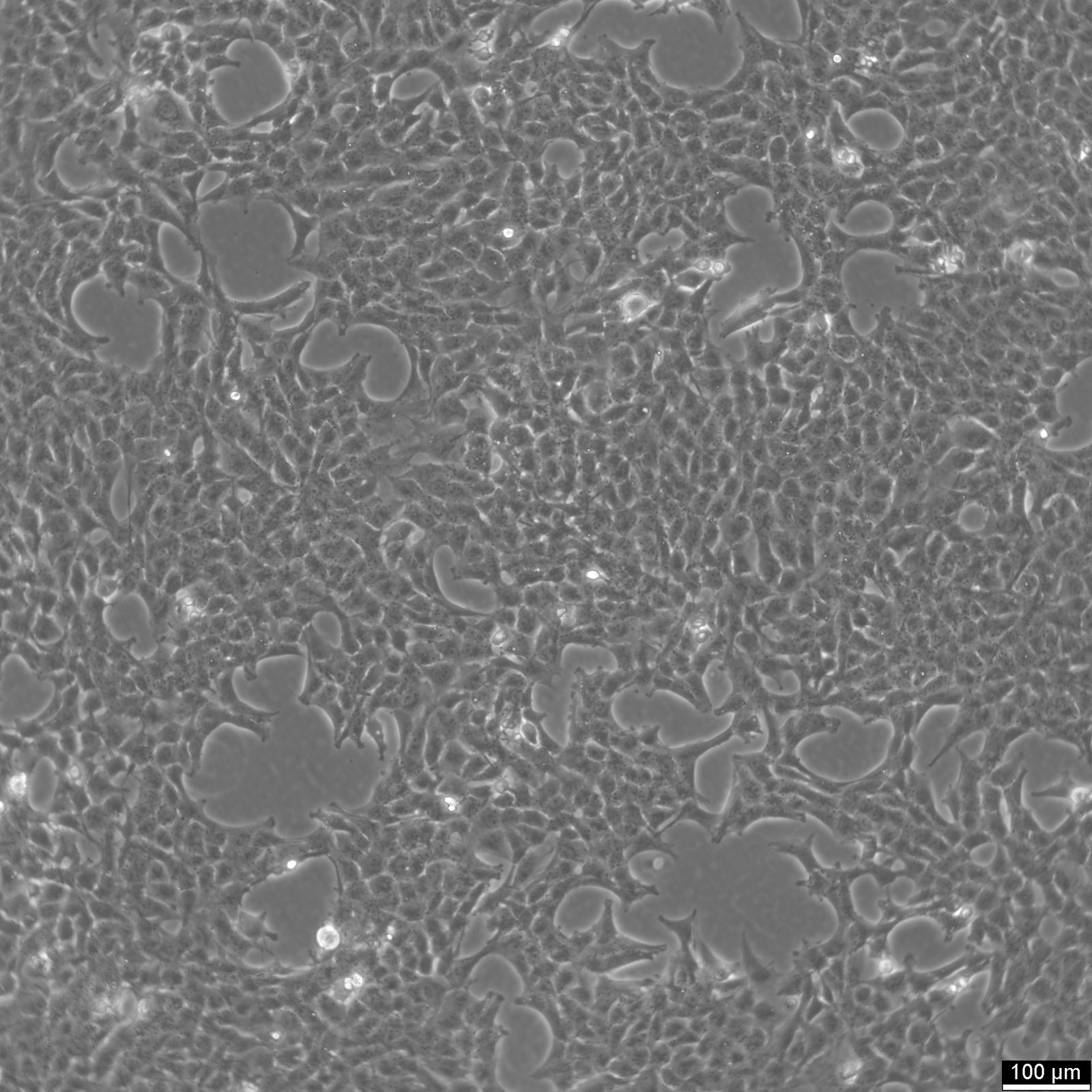
SN12C Cells
1 104,00 CAD$*
Products are shipped frozen on dry ice in cryotubes. Each cryotube typically contains 3 × 10⁶ cells for adherent lines or 5 × 10⁶ cells for suspension lines (refer to the batch CoA for details).
Renseignements généraux
| Description | The SN12C cell line is a human renal cell carcinoma (RCC) model derived from a primary tumor of a 43-year-old male patient. This cell line has been widely used in cancer research, particularly for investigating the biology and therapeutic targeting of RCC. SN12C cells are adherent in culture and exhibit properties consistent with epithelial morphology. The cell line is also part of the NCI-60 panel, making it extensively characterized in terms of its genomic, transcriptomic, and proteomic profiles. SN12C cells have been employed in studies exploring tumor progression and metastasis. When implanted orthotopically in the renal subcapsule of nude mice, SN12C cells form primary tumors and have been shown to produce lung metastases. These metastases have been used to derive variant cell lines with enhanced metastatic potential, making SN12C a valuable model for studying the genetic and phenotypic factors driving metastasis. The cell line has also been analyzed for mutations in key oncogenes and tumor suppressors, revealing its distinct genetic alterations, including potential oncogenic drivers of RCC. SN12C has been utilized to evaluate responses to chemotherapy and targeted therapies, contributing to the understanding of RCC's drug resistance mechanisms. Its inclusion in the NCI-60 panel has enabled high-throughput drug screening and molecular profiling, aiding the identification of compounds with selective activity against RCC. These attributes make SN12C an indispensable tool for advancing both basic and translational RCC research. |
|---|---|
| Organisme | Human |
| Tissu | Kidney |
| Maladie | Renal cell carcinoma |
| Synonymes | SN-12C, SN12 C |
Caractéristiques
| Âge | Unspecified |
|---|---|
| Genre | Male |
| Origine ethnique | Caucasian |
| Morphologie | Epithelial-like |
| Type de cellule | Renal cell |
| Propriétés de croissance | Adherent, monolayer |
Données réglementaires
| Référence | SN12C (Cytion catalog number 305629) |
|---|---|
| Niveau de biosécurité | 1 |
| NCBI_Numéro d'identification fiscale | 9606 |
| Cellosaurus - Numéro d'enregistrement | CVCL_1705 |
Données biomoléculaires
| Profil mutationnel | Mutation: TP53, Simple, p.Glu336Ter (c.1006G>T), Homozygous |
|---|
Manipulation
| Milieu de culture | DMEM, w: 4.5 g/L Glucose, w: 4 mM L-Glutamine, w: 3.7 g/L NaHCO3, w: 1.0 mM Sodium pyruvate (Cytion article number 820300a) |
|---|---|
| Suppléments | Supplement the medium with 10% FBS |
| Temps de doublement | 26-30 hours |
| Milieu de congélation | As a cryopreservation medium, we use complete growth medium (including FBS) + 10% DMSO for adequate post-thaw viability, or CM-1 (Cytion catalog number 800100), which includes optimized osmoprotectants and metabolic stabilizers to enhance recovery and reduce cryo-induced stress. |
| Décongélation et culture des cellules |
|
| Atmosphère d'incubation | 37°C, 5% CO2, humidified atmosphere. |
| Conditions d'expédition | Cryopreserved cell lines are shipped on dry ice in validated, insulated packaging with sufficient refrigerant to maintain approximately −78 °C throughout transit. On receipt, inspect the container immediately and transfer vials without delay to appropriate storage. |
| Conditions d'entreposage | For long-term preservation, place vials in vapor-phase liquid nitrogen at about −150 to −196 °C. Storage at −80 °C is acceptable only as a short interim step before transfer to liquid nitrogen. |
Contrôle de la qualité et analyse moléculaire
| Stérilité | Mycoplasma contamination is excluded using both PCR-based assays and luminescence-based mycoplasma detection methods. To ensure there is no bacterial, fungal, or yeast contamination, cell cultures are subjected to daily visual inspections. |
|---|
Certificat d'analyse (CoA)
| Numéro de lot | Type de certificat | Date | Numéro de catalogue |
|---|---|---|---|
| 305629-170325 | Certificat d'analyse | 23. May. 2025 | 305629 |
| 305629-300126 | Certificat d'analyse | 05. Mar. 2026 | 305629 |