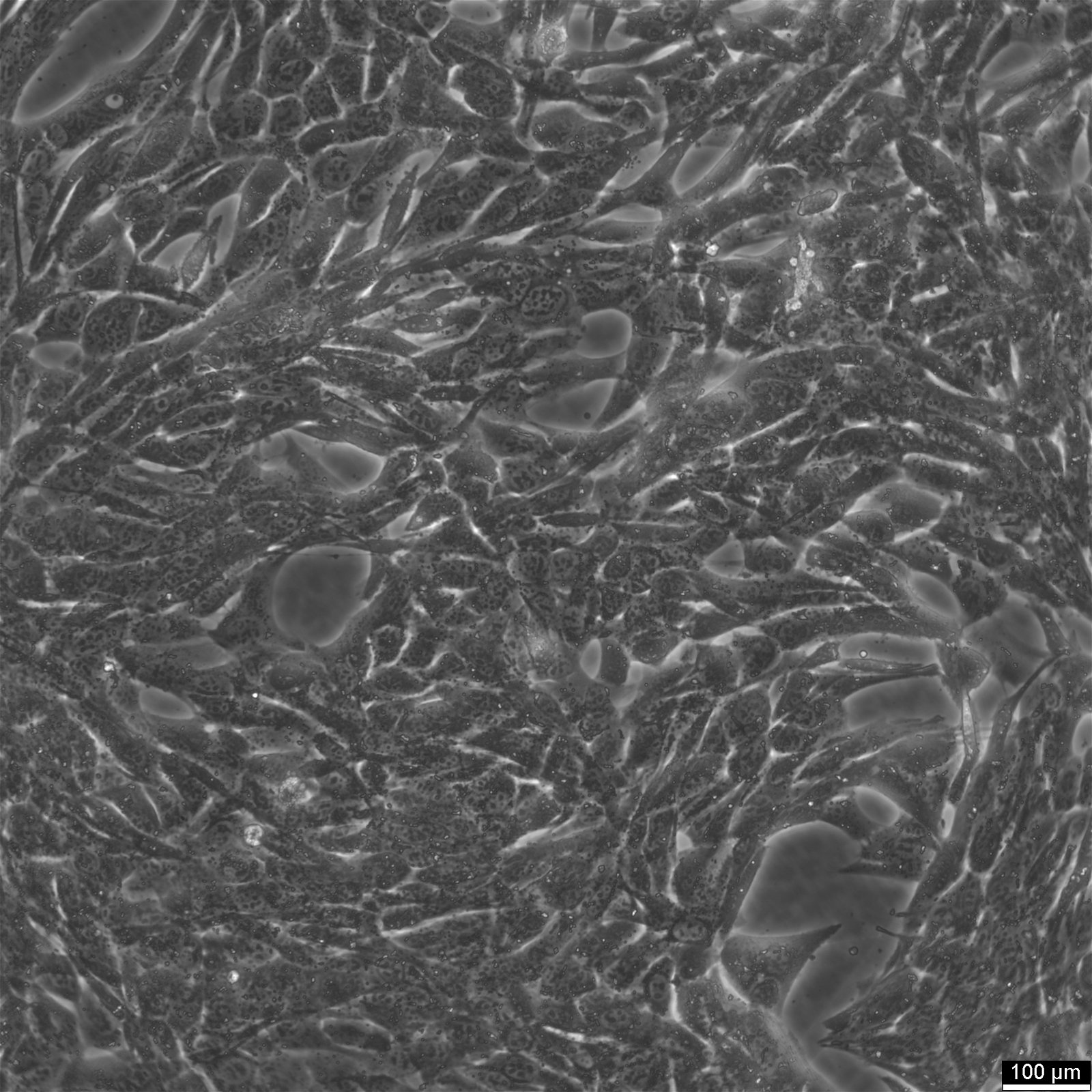
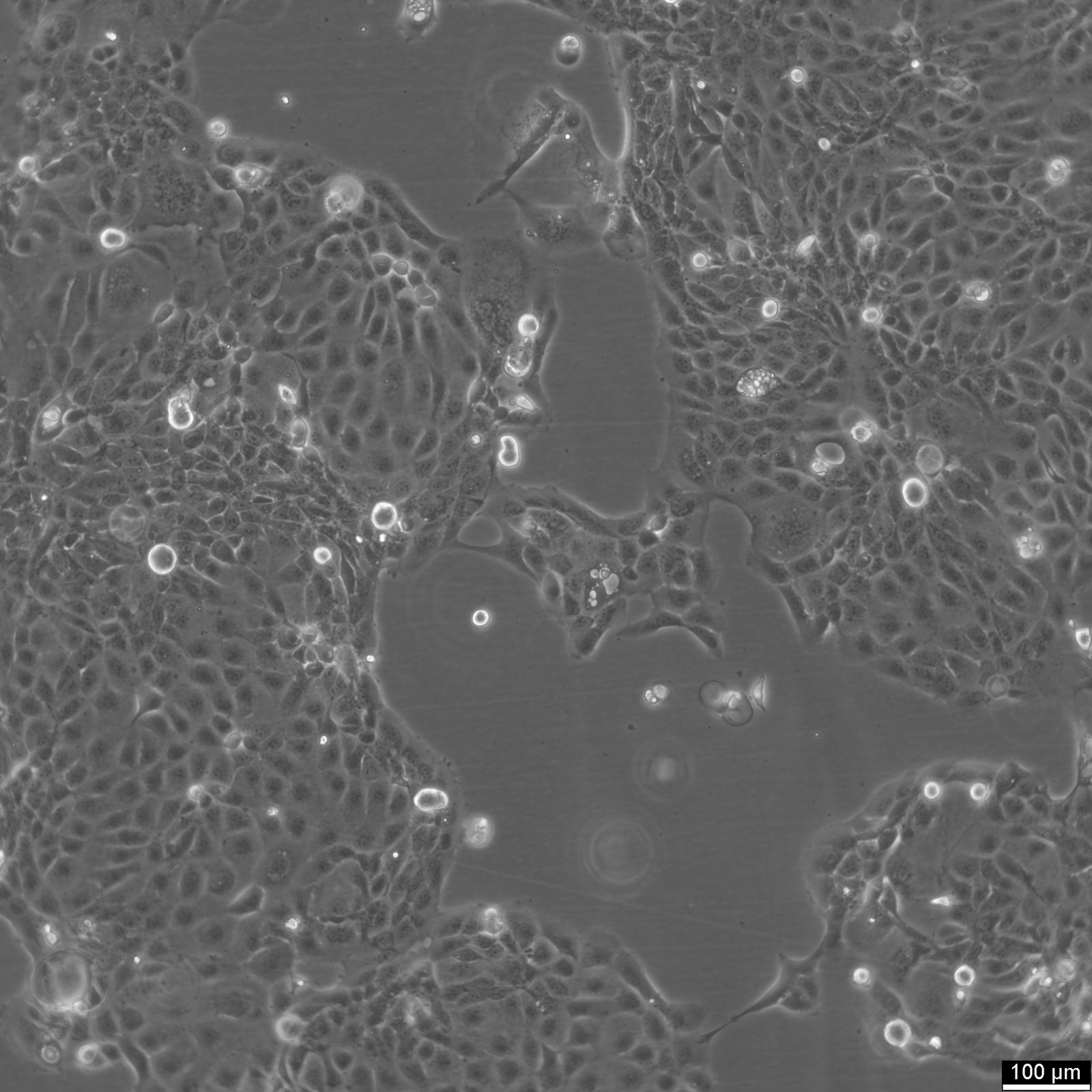
Panc 03.27 Cells
CAD$759.00*
Products are shipped frozen on dry ice in cryotubes. Each cryotube typically contains 3 × 10⁶ cells for adherent lines or 5 × 10⁶ cells for suspension lines (refer to the batch CoA for details).
General information
| Description | Panc 03.27 (PL11) is a human pancreatic adenocarcinoma cell line derived from a primary tumor. This cell line is a valuable resource for studying the molecular and genetic alterations characteristic of pancreatic cancer, a disease with notoriously poor prognosis and limited treatment options. Panc 03.27 is particularly utilized in research focused on genomic instability, allelic loss, and tumor suppressor gene alterations. This cell line is characterized by significant chromosomal abnormalities, including regions of allelic loss and homozygous deletions, as revealed through high-resolution SNP arrays. Such deletions frequently implicate loci associated with tumor suppressor genes, providing insight into the genetic mechanisms driving pancreatic tumorigenesis. Panc 03.27 has been instrumental in understanding the impact of chromosomal instability patterns on the progression and heterogeneity of pancreatic cancers, highlighting genomic ""holes"" or regions prone to homozygous deletions. Panc 03.27 is used in preclinical research to evaluate novel therapeutic approaches, including those targeting genetic vulnerabilities specific to pancreatic cancer. Its genomic profile makes it a key model for studies of somatic mutations, gene loss, and tumor progression, helping to identify potential biomarkers and treatment targets. The cell line’s ability to provide consistent and reproducible results ensures its ongoing importance in pancreatic cancer research and drug development. |
|---|---|
| Organism | Human |
| Tissue | Pancreas |
| Disease | Adenocarcinoma |
| Synonyms | Panc 3.27, Panc-03.27, PANC-03-27, Panc_03_27, Panc-3_27, PANC3.27, Panc3.27, Panc3_27, Panc-327, PANC 327, Panc327, PANC0327, Panc0327, PL11, PL-11 |
Characteristics
| Age | 65 years |
|---|---|
| Gender | Female |
| Ethnicity | Caucasian |
| Morphology | Epithelial-like |
| Cell type | Ephitelial |
| Growth properties | Adherent |
Regulatory Data
| Citation | Panc 03.27 (Cytion catalog number 305381) |
|---|---|
| Biosafety level | 1 |
| NCBI_TaxID | 9606 |
| CellosaurusAccession | CVCL_1635 |
Biomolecular Data
| Antigen expression | MHC class I +; MHC class II -; Blood type A; Rh+ |
|---|---|
| Oncogenes | KRAS mutant (G12V) |
| Mutational profile | Mutation: KRAS, Simple, p.Gly12Val (c.35G>T), Heterozygous; Mutation: TP53, Simple, c.375+5G>T, Homozygous |
Handling
| Dissociation Reagent | Accutase |
|---|---|
| Subculturing | Remove the old medium from the adherent cells and wash them with PBS that lacks calcium and magnesium. For T25 flasks, use 3-5 ml of PBS, and for T75 flasks, use 5-10 ml. Then, cover the cells completely with Accutase, using 1-2 ml for T25 flasks and 2.5 ml for T75 flasks. Let the cells incubate at room temperature for 8-10 minutes to detach them. After incubation, gently mix the cells with 10 ml of medium to resuspend them, then centrifuge at 300xg for 3 minutes. Discard the supernatant, resuspend the cells in fresh medium, and transfer them into new flasks that already contain fresh medium. |
| Fluid renewal | 2 to 3 times per week |
| Freeze medium | As a cryopreservation medium, we use complete growth medium (including FBS) + 10% DMSO for adequate post-thaw viability, or CM-1 (Cytion catalog number 800100), which includes optimized osmoprotectants and metabolic stabilizers to enhance recovery and reduce cryo-induced stress. |
| Thawing and Culturing Cells |
|
| Incubation Atmosphere | 37°C, 5% CO2, humidified atmosphere. |
| Shipping Conditions | Cryopreserved cell lines are shipped on dry ice in validated, insulated packaging with sufficient refrigerant to maintain approximately −78 °C throughout transit. On receipt, inspect the container immediately and transfer vials without delay to appropriate storage. |
| Storage Conditions | For long-term preservation, place vials in vapor-phase liquid nitrogen at about −150 to −196 °C. Storage at −80 °C is acceptable only as a short interim step before transfer to liquid nitrogen. |
Quality Control & Molecular Analysis
| Sterility | Mycoplasma contamination is excluded using both PCR-based assays and luminescence-based mycoplasma detection methods. To ensure there is no bacterial, fungal, or yeast contamination, cell cultures are subjected to daily visual inspections. |
|---|
-
Related products
Related products
Panc02 CellsOrganism Mouse Tissue Pancreas Disease Mouse pancreatic ductal adenocarcinoma CAD$1,104.00*Panc 10.05 CellsOrganism Human Tissue Pancreas Disease Pancreatic ductal adenocarcinoma CAD$621.00*