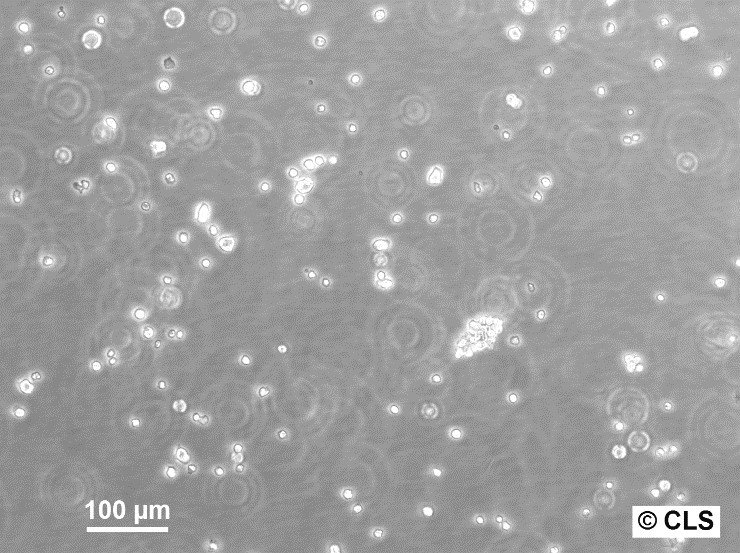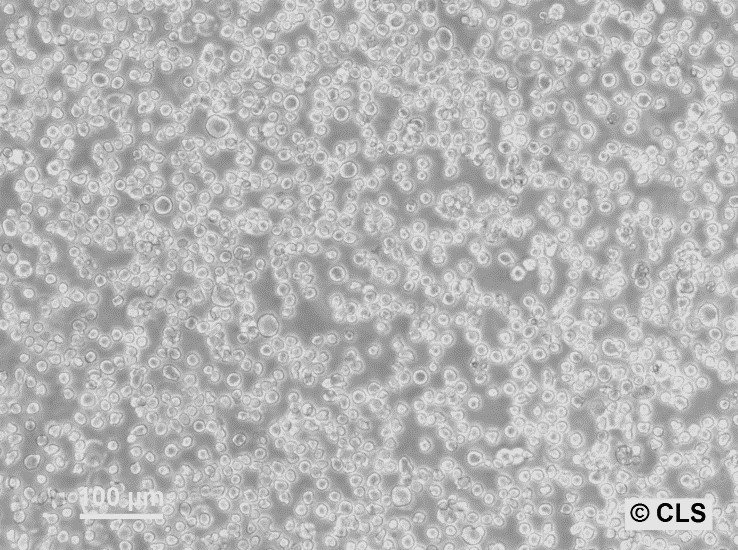
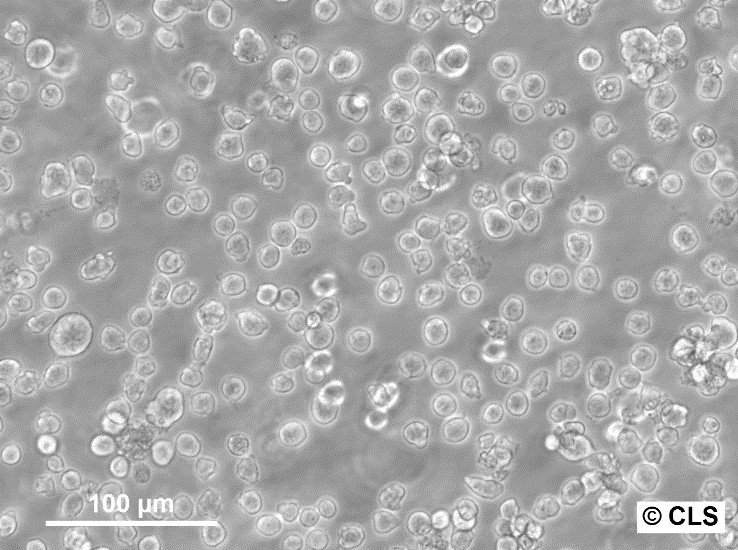
WEHI-3B Cells
CAD$545.10*
Products are shipped frozen on dry ice in cryotubes. Each cryotube typically contains 3 × 10⁶ cells for adherent lines or 5 × 10⁶ cells for suspension lines (refer to the batch CoA for details).
General information
| Description | The WEHI-3B cell line is a murine leukemia cell line that is extensively utilized as a model for studying myelomonocytic differentiation and the pathophysiology of leukemia. Originally derived from BALB/c mice, these cells exhibit characteristics of myeloid progenitor cells and have been instrumental in the research of hematopoietic differentiation and regulation. The WEHI-3B line is particularly important for studies related to the influence of growth factors on leukemic cells and has been used to evaluate the hematopoietic activity of various substances including colony-stimulating factors. This cell line is not only significant for its use in leukemia research but also serves as a tool in the study of macrophage and granulocyte function, thanks to its ability to differentiate into these cell types under certain experimental conditions. Studies using WEHI-3B cells have contributed to a better understanding of the molecular pathways involved in cell differentiation and the impact of genetic alterations on leukemia progression. Furthermore, the WEHI-3B cell line is used in testing the biological activity of monocytic colony-stimulating factor (M-CSF) and granulocyte-macrophage colony-stimulating factor (GM-CSF), highlighting its versatility and utility in hematological research contexts. |
|---|---|
| Organism | Mouse |
| Tissue | Peripheral blood |
| Disease | Leukemia |
| Synonyms | WEHI-3b, Wehi-3B, WEHI 3B, WEHI3B |
Characteristics
| Breed/Subspecies | BALB/c |
|---|---|
| Cell type | Myelomonocyte |
| Growth properties | Suspension |
Regulatory Data
| Citation | WEHI-3B (Cytion catalog number 400376) |
|---|---|
| Biosafety level | 2 |
| NCBI_TaxID | 10090 |
| CellosaurusAccession | CVCL_2239 |
Biomolecular Data
| Receptors expressed | Immunoglobulin (Fc), complement (C3) |
|---|---|
| Viruses | Ectromelia virus (mousepox) negative |
| Products | Lysozyme, granulocyte colony stimulating activity (G-CSA), interleukin-3 (interleukin 3, IL-3) |
Handling
| Culture Medium | RPMI 1640, w: 2.0 mM stable Glutamine, w: 2.0 g/L NaHCO3 (Cytion article number 820700a) |
|---|---|
| Supplements | Supplement the medium with 10% FBS |
| Subculturing | Cultures can be maintained by addition or replacement of fresh medium. Start cultures at 5 x 10⁵ cells/ml and maintain between 3 x 10⁵ and 1x10⁶ cells/ml. Adherent cells can be recovered by scraping. |
| Seeding density | 1 x 10⁵ cells/ml |
| Fluid renewal | 2 to 3 times per week |
| Post-Thaw Recovery | After thawing, allow the cells to recover from the freezing process for at least 24 hours. |
| Freeze medium | As a cryopreservation medium, we use complete growth medium (including FBS) + 10% DMSO for adequate post-thaw viability, or CM-1 (Cytion catalog number 800100), which includes optimized osmoprotectants and metabolic stabilizers to enhance recovery and reduce cryo-induced stress. |
| Thawing and Culturing Cells |
|
| Incubation Atmosphere | 37°C, 5% CO2, humidified atmosphere. |
| Shipping Conditions | Cryopreserved cell lines are shipped on dry ice in validated, insulated packaging with sufficient refrigerant to maintain approximately −78 °C throughout transit. On receipt, inspect the container immediately and transfer vials without delay to appropriate storage. |
| Storage Conditions | For long-term preservation, place vials in vapor-phase liquid nitrogen at about −150 to −196 °C. Storage at −80 °C is acceptable only as a short interim step before transfer to liquid nitrogen. |
Quality Control & Molecular Analysis
| Sterility | Mycoplasma contamination is excluded using both PCR-based assays and luminescence-based mycoplasma detection methods. To ensure there is no bacterial, fungal, or yeast contamination, cell cultures are subjected to daily visual inspections. |
|---|
-
Related products
Related products