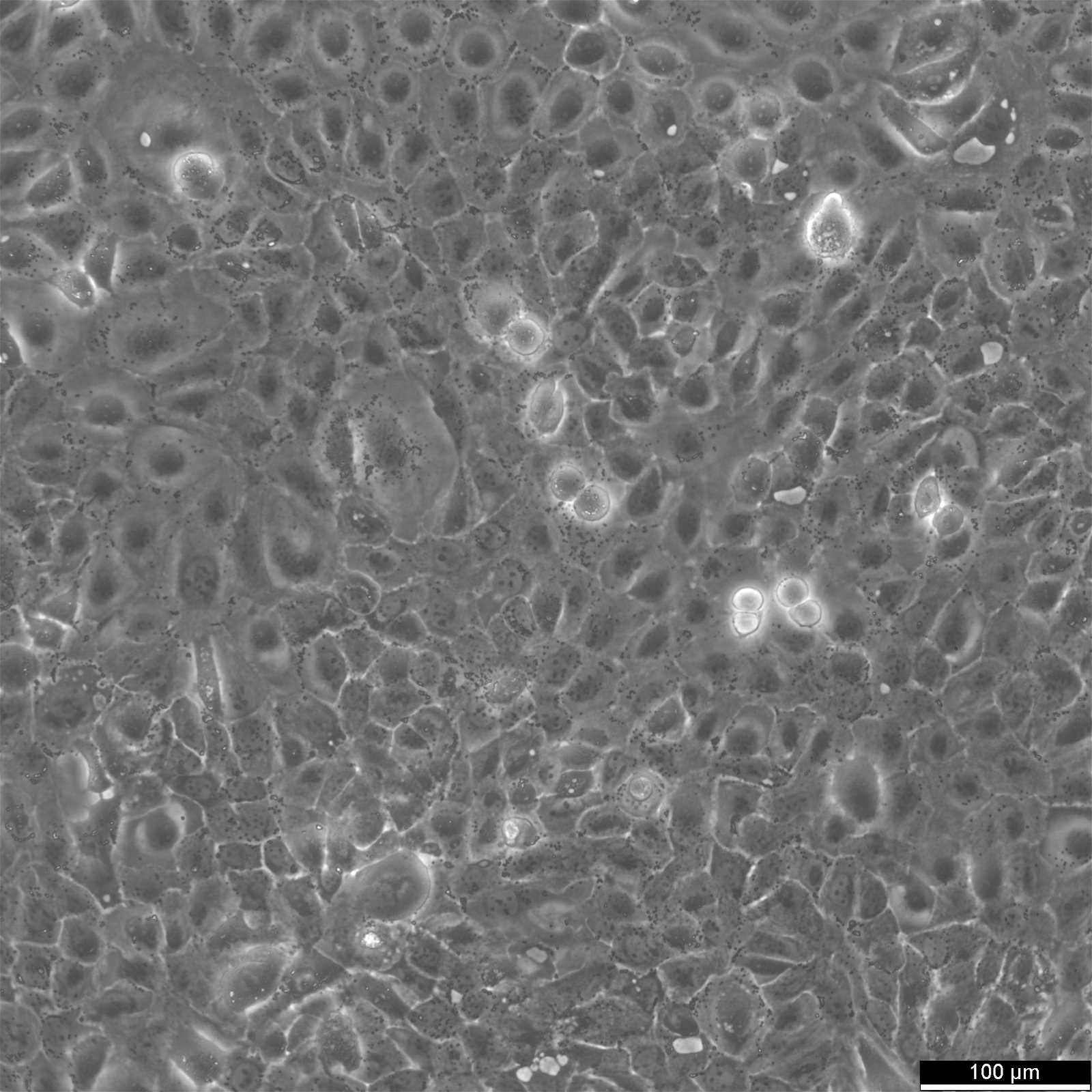
SCC-7 Cells
CAD$759.00*
Products are shipped frozen on dry ice in cryotubes. Each cryotube typically contains 3 × 10⁶ cells for adherent lines or 5 × 10⁶ cells for suspension lines (refer to the batch CoA for details).
General information
| Description | The SCC-7 (or SCC-VII) cell line is a murine squamous cell carcinoma model derived from the spontaneous tumor of a C3H mouse. It has been widely utilized in cancer research, particularly for studies involving tumor radiation responses, chemotherapy, and hypoxia-related resistance mechanisms. SCC-7 is known for its adaptability in syngeneic C3H mice, where it forms solid tumors upon subcutaneous inoculation. This characteristic makes it a suitable preclinical model for evaluating therapeutic interventions and understanding the cellular responses to treatment. Studies on SCC-7 tumors have demonstrated their heterogeneity in sensitivity to chemotherapeutic agents. For instance, in experiments evaluating the cytotoxic effects of CCNU (1-(2-chloroethyl)-3-cyclohexyl-1-nitrosourea), SCC-7 showed enhanced sensitivity when treated in combination with the hypoxic radiosensitizer misonidazole. The addition of misonidazole increased the cytotoxic effects of CCNU, potentially due to the enhancement of DNA crosslinking or inhibition of DNA repair mechanisms under hypoxic conditions. Importantly, the enhancement ratio for SCC-7 was reported to be approximately 1.7 to 1.8, indicating a significant increase in tumor cell killing. SCC-7 tumors are often used to explore the impact of hypoxia on treatment resistance. These tumors display characteristics of hypoxic regions, which mimic the clinical challenge of oxygen deprivation within solid tumors. The tumor's clonogenic potential is also assessed through survival assays, which determine the fraction of viable cells post-treatment, providing critical insights into treatment efficacy. SCC-7 serves as a robust preclinical model for squamous cell carcinoma research. Its use in radiation biology, hypoxia studies, and chemotherapeutic evaluation has contributed significantly to understanding tumor responses to therapy and developing strategies to overcome treatment resistance. |
|---|---|
| Organism | Mouse |
| Tissue | Abdominal wall |
| Disease | squamous cell carcinoma |
| Synonyms | SCC-7, SCCVII/St, SCCVII, SCC VII |
Characteristics
| Breed/Subspecies | C3H |
|---|---|
| Age | Unspecified |
| Gender | Unspecified |
| Morphology | Epithelial-like |
| Growth properties | Adherent |
Regulatory Data
| Citation | SCC-7 (Cytion catalog number 305622) |
|---|---|
| Biosafety level | 1 |
| NCBI_TaxID | 10090 |
| CellosaurusAccession | CVCL_V412 |
Biomolecular Data
Handling
| Culture Medium | RPMI 1640, w: 2.0 mM stable Glutamine, w: 2.0 g/L NaHCO3 (Cytion article number 820700a) |
|---|---|
| Supplements | Supplement the medium with 10% FBS |
| Dissociation Reagent | Accutase |
| Seeding density | 1 to 3 x 10⁴ cells/cm2 |
| Fluid renewal | 2 to 3 times per week |
| Freeze medium | As a cryopreservation medium, we use complete growth medium (including FBS) + 10% DMSO for adequate post-thaw viability, or CM-1 (Cytion catalog number 800100), which includes optimized osmoprotectants and metabolic stabilizers to enhance recovery and reduce cryo-induced stress. |
| Thawing and Culturing Cells |
|
| Incubation Atmosphere | 37°C, 5% CO2, humidified atmosphere. |
| Shipping Conditions | Cryopreserved cell lines are shipped on dry ice in validated, insulated packaging with sufficient refrigerant to maintain approximately −78 °C throughout transit. On receipt, inspect the container immediately and transfer vials without delay to appropriate storage. |
| Storage Conditions | For long-term preservation, place vials in vapor-phase liquid nitrogen at about −150 to −196 °C. Storage at −80 °C is acceptable only as a short interim step before transfer to liquid nitrogen. |
Quality Control & Molecular Analysis
| Sterility | Mycoplasma contamination is excluded using both PCR-based assays and luminescence-based mycoplasma detection methods. To ensure there is no bacterial, fungal, or yeast contamination, cell cultures are subjected to daily visual inspections. |
|---|
Certificate of Analysis (CoA)
| Lot Number | Certificate Type | Date | Catalog Number |
|---|---|---|---|
| 305622-160326 | Certificate of Analysis | 13. Apr. 2026 | 305622 |
-
Related products
Related products