
RWPE-1 Cells
CAD$621.00*
Products are shipped frozen on dry ice in cryotubes. Each cryotube typically contains 3 × 10⁶ cells for adherent lines or 5 × 10⁶ cells for suspension lines (refer to the batch CoA for details).
Essential facts about RWPE-1 cells
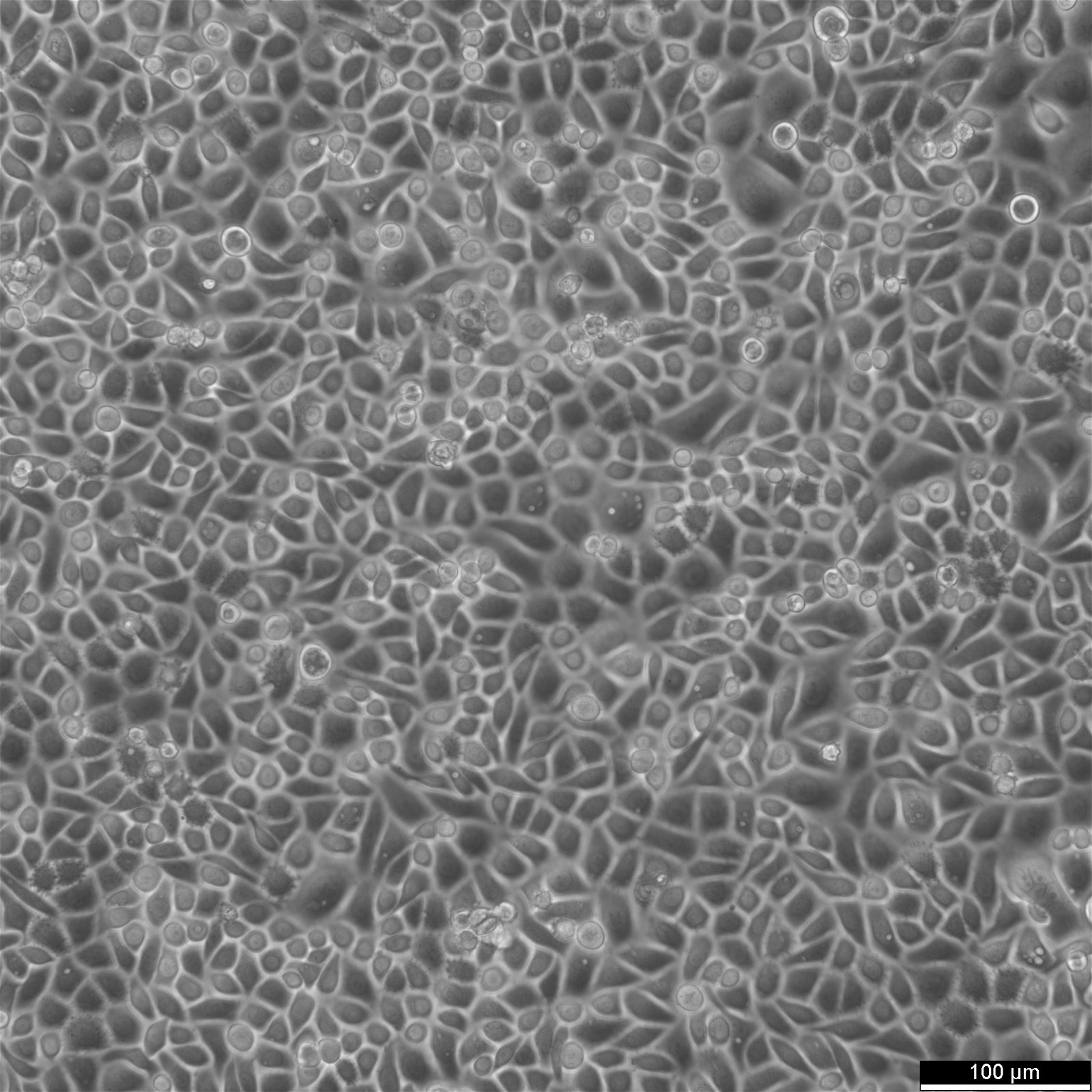
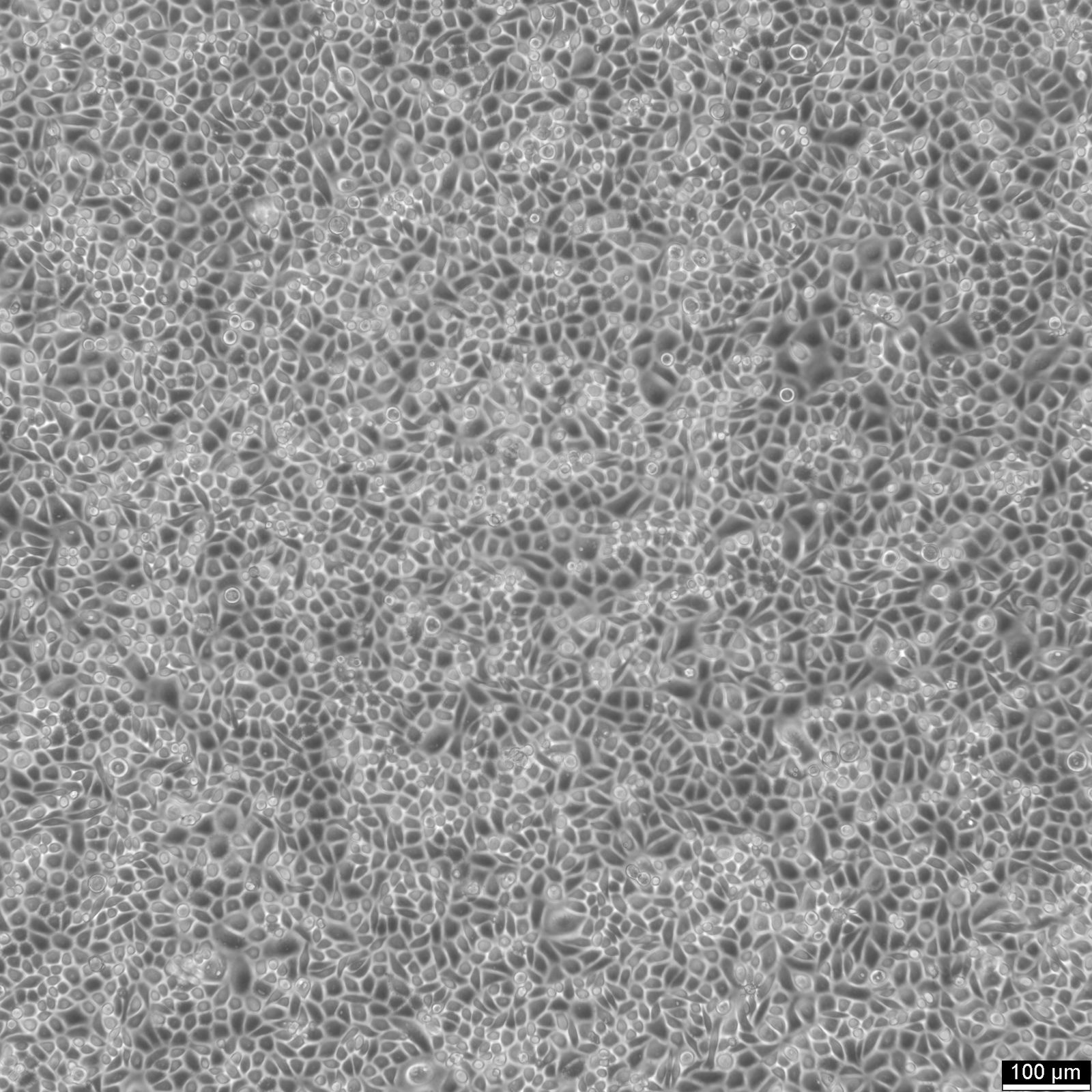
| Description | The RWPE-1 cell line, derived from the prostate epithelium of a 54-year-old Caucasian male with no evidence of prostate cancer, is a valuable resource in biomedical research, particularly for studies on prostate biology and cancer. These epithelial cells, characterized by their adherence growth properties and typical epithelial morphology, were immortalized using a replication-deficient retrovirus that carries the E7 gene from human papillomavirus 18 (HPV-18), which inactivates the retinoblastoma protein and promotes cellular immortalization. RWPE-1 cells, originating from a normal human prostate, are utilized in prostate cancer research, though their androgen receptor expression is relatively modest, especially when compared to tumorigenic prostate cancer-derived cell lines. The epithelial cell line RWPE-1 expresses cytokeratins 8 and 18, which confirm their epithelial lineage. While RWPE-1 cells do express tumor suppressors such as p53 and pRB, reflecting their non-tumorigenic nature, the expression of prostate-specific markers like Kallikrein 3 (KLK3) or PSA is generally low or absent under standard culture conditions. In 3D cultures, such as those formed in Matrigel, human cells RWPE-1 can organize into acinar structures reminiscent of normal prostate architecture. When it comes to the secretion of PSA (Prostate-Specific Antigen) in response to androgen stimulation, RWPE-1 cells show a less pronounced reaction compared to prostate cancer cell lines. Therefore, while RWPE-1 cells offer a valuable model for understanding the baseline properties of normal prostate epithelial cells. RWPE-1's non-tumorigenic nature serves as a model for studying the transition to tumorigenic transformation and the dynamics of cancer cells, including metastatic prostate cancer cells and prostate carcinogenesis. The inclusion of factors like EGF and growth hormone in culture conditions can further elucidate the pathways involved in prostatic hyperplasia and the progression towards prostate cancer. In summary, RWPE-1 cells facilitate a comprehensive understanding of prostate cancer, from its initiation in prostatic cell lines to its manifestation in prostate cancer patients. |
|---|---|
| Organism | Human |
| Tissue | Prostate |
| Synonyms | RWPE1 |
Details
| Age | 54 years |
|---|---|
| Gender | Male |
| Ethnicity | Caucasian |
| Morphology | Epithelial |
| Cell type | Epithelial cell of prostate |
| Growth properties | Adherent |
Documentation about RWPE-1 epithelial cells
| Citation | RWPE-1 (Cytion catalog number 305217) |
|---|---|
| Biosafety level | RWPE-1 is classified as Biosafety Level 1 or 2 (BSL-1/2) in Germany, depending on the type of work conducted. The cell line originates from human prostate epithelial cells transfected with a single copy of HPV-18 and is negative for Hepatitis B, Hepatitis C, and HIV. Viral particle release is unlikely, as HPV-18 requires differentiated epithelial cells for replication, and a single genome copy does not typically lead to particle formation. Such release is only theoretically possible in 3D cultures (e.g., organotypic or raft cultures) but is excluded in monolayer cultures. Due to the presence of the full HPV-18 genome, RWPE-1 is categorized as a Risk Group 2 organism for genetic engineering purposes. |
| NCBI_TaxID | 9606 |
| CellosaurusAccession | CVCL_3791 |
Genotype
| Karyotype | RWPE-1 cells have a diploid chromosomal ploidy, and show chromosomal variations such as 45, X,-Y, and 51, XY. |
|---|
Handling
| Culture Medium | K-SFM (We do not supply this product; please consider other suppliers. Please let us know if you need further assistance) |
|---|---|
| Supplements | Supplement the medium with 0.05 mg/mL BPE, 5 ng/mL EGF. The medium should not be entirely filtered. Add BPE and EGF to 10 mL, and after sterile filtering, incorporate this mixture into the medium. |
| Dissociation Reagent | Accutase |
| Subculturing | Remove the old medium from the adherent cells and wash them with PBS that lacks calcium and magnesium. For T25 flasks, use 3-5 ml of PBS, and for T75 flasks, use 5-10 ml. Then, cover the cells completely with Accutase, using 1-2 ml for T25 flasks and 2.5 ml for T75 flasks. Let the cells incubate at room temperature for 8-10 minutes to detach them. After incubation, gently mix the cells with 10 ml of medium to resuspend them, then centrifuge at 300xg for 3 minutes. Discard the supernatant, resuspend the cells in fresh medium, and transfer them into new flasks that already contain fresh medium. |
| Freeze medium | As a cryopreservation medium, we use complete growth medium (including FBS) + 10% DMSO for adequate post-thaw viability, or CM-1 (Cytion catalog number 800100), which includes optimized osmoprotectants and metabolic stabilizers to enhance recovery and reduce cryo-induced stress. |
| Thawing and Culturing Cells |
|
| Incubation Atmosphere | 37°C, 5% CO2, humidified atmosphere. |
| Shipping Conditions | Cryopreserved cell lines are shipped on dry ice in validated, insulated packaging with sufficient refrigerant to maintain approximately −78 °C throughout transit. On receipt, inspect the container immediately and transfer vials without delay to appropriate storage. |
| Storage Conditions | For long-term preservation, place vials in vapor-phase liquid nitrogen at about −150 to −196 °C. Storage at −80 °C is acceptable only as a short interim step before transfer to liquid nitrogen. |
Quality verification of RWPE-1 prostate cell lines
| Sterility | Mycoplasma contamination is excluded using both PCR-based assays and luminescence-based mycoplasma detection methods. To ensure there is no bacterial, fungal, or yeast contamination, cell cultures are subjected to daily visual inspections. |
|---|
Certificate of Analysis (CoA)
| Lot Number | Certificate Type | Date | Catalog Number |
|---|---|---|---|
| 305217-021025 | Certificate of Analysis | 05. Dec. 2025 | 305217 |
| 305217-310124 | Certificate of Analysis | 23. May. 2025 | 305217 |