
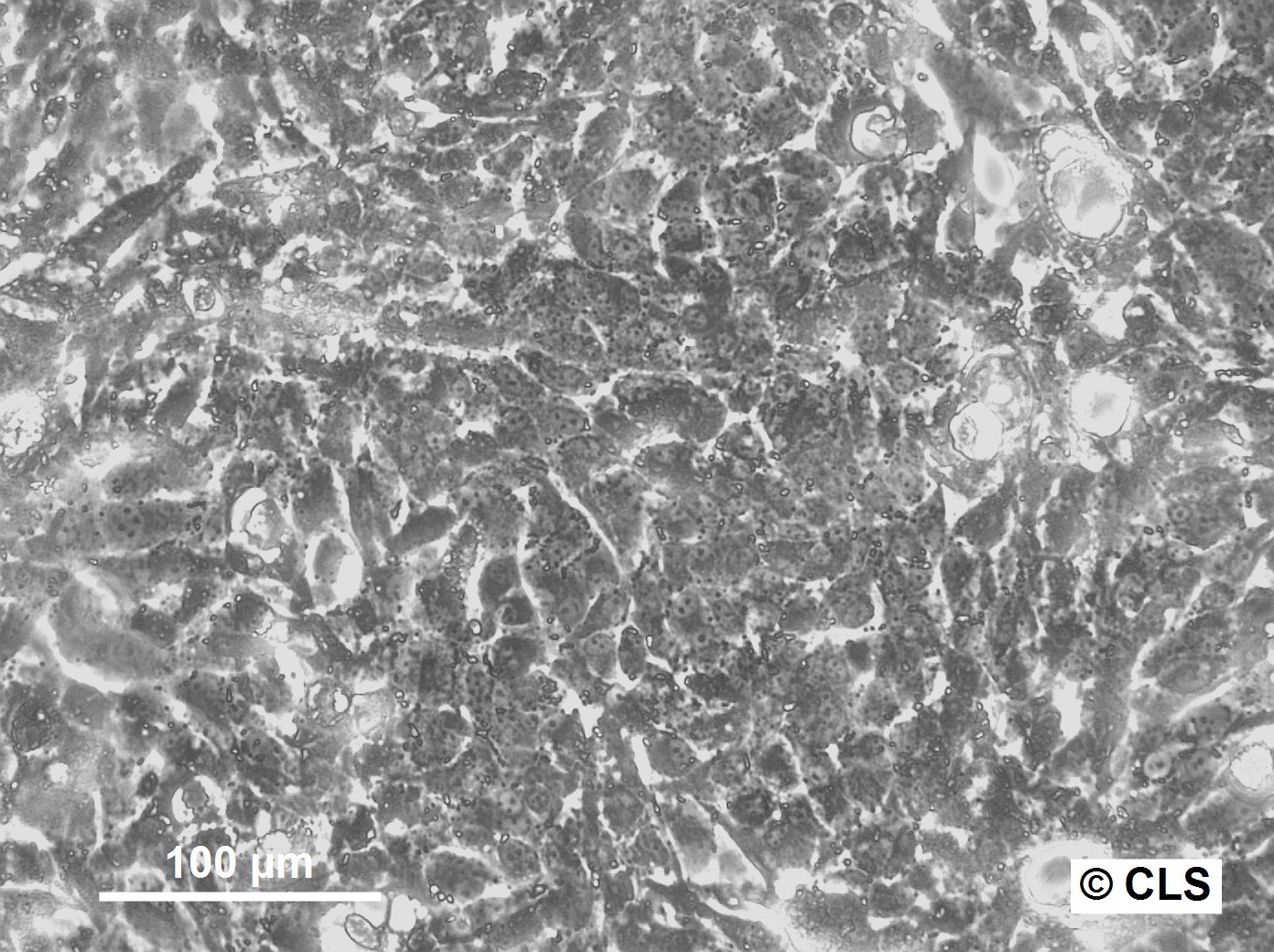
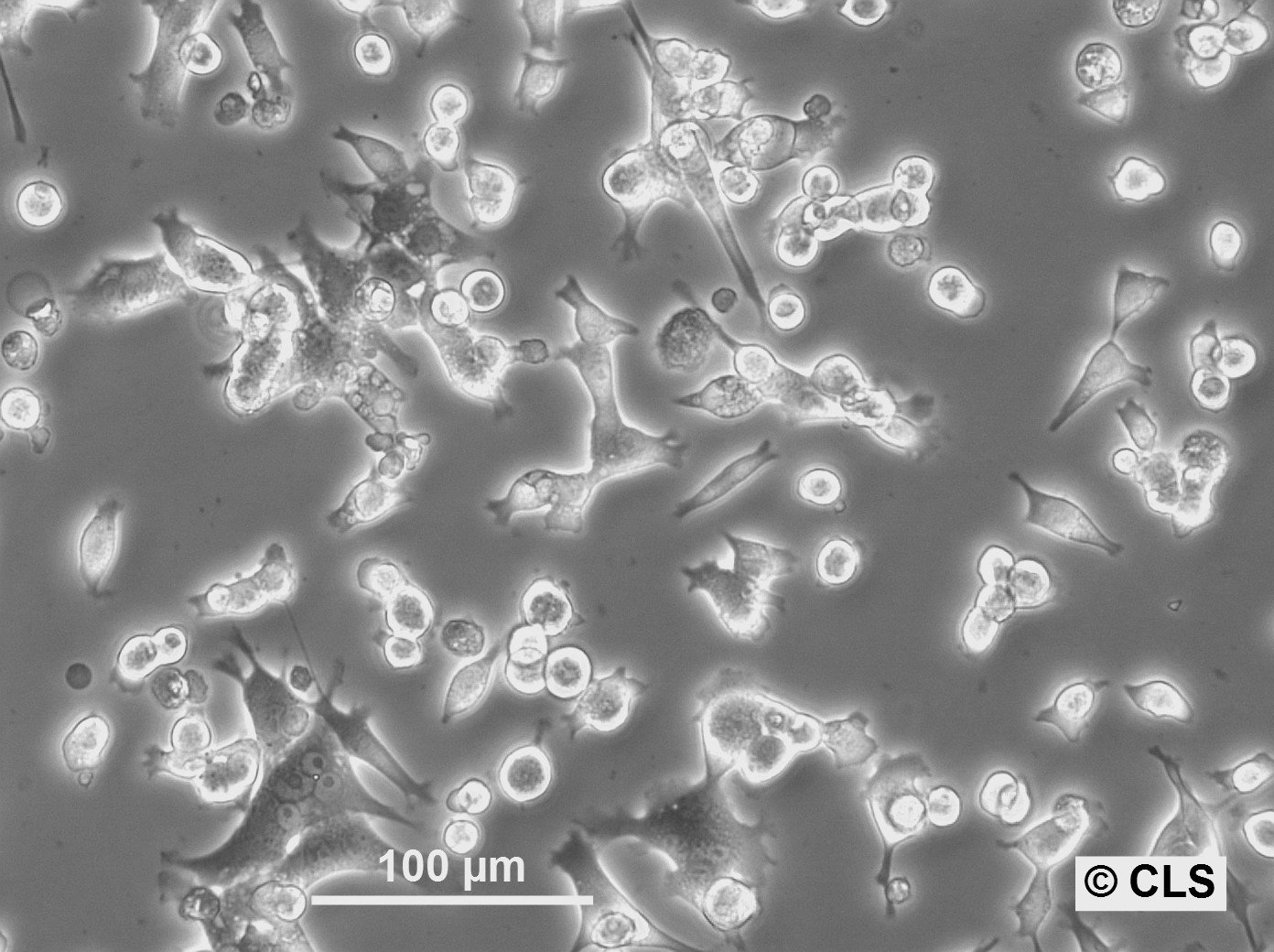
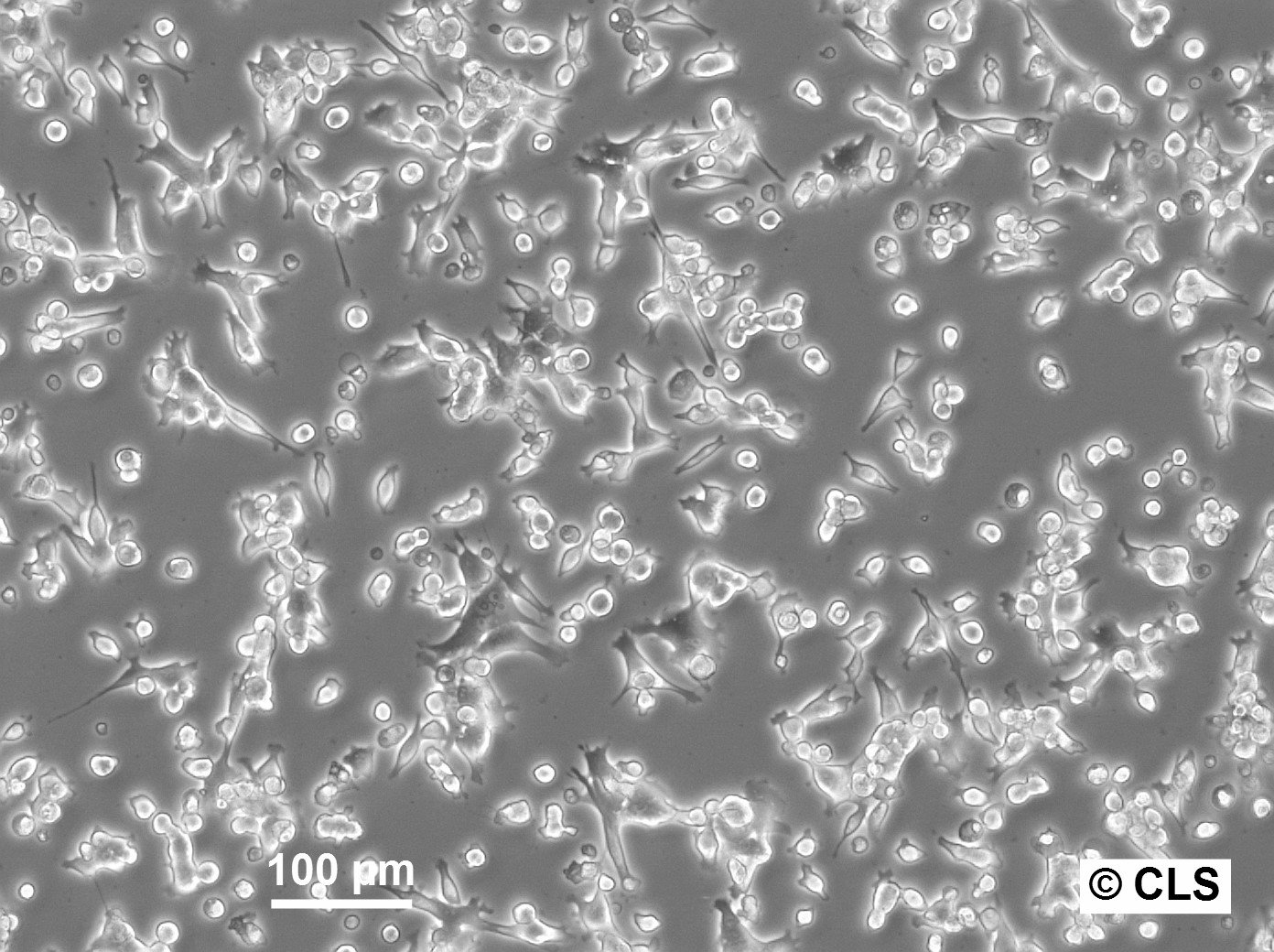
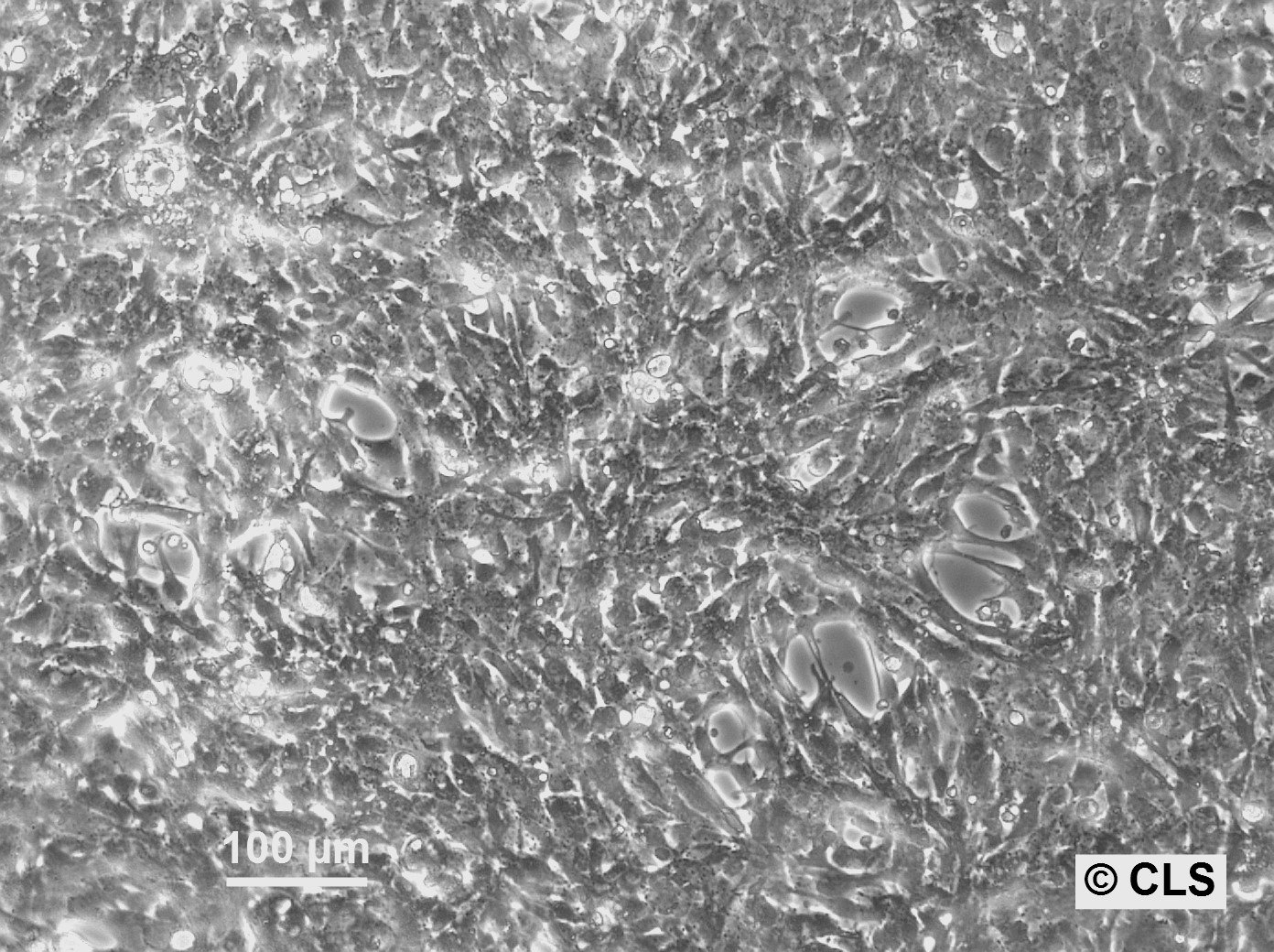
Hep-56.1B Cells
CAD$897.00*
Products are shipped frozen on dry ice in cryotubes. Each cryotube typically contains 3 × 10⁶ cells for adherent lines or 5 × 10⁶ cells for suspension lines (refer to the batch CoA for details).
General information
| Description | The Hep-70.4 hepatoma cell line is derived from a mouse liver tumor, specifically from the C57BL/6J mouse strain. This cell line is notable for its mutations in the p53 gene, which were identified at different passages during in vitro propagation. At passage number 8, a weak additional signal was detected in the single-strand conformation polymorphism (SSCP) analysis, indicating the presence of a p53 mutation. By passage number 38, two distinct p53 point mutations were identified: a G:C to C:G transversion at codon 135 and a C:G to G:C transversion at codon 138 of exon 5. These mutations led to amino acid changes from alanine to proline and cysteine to tryptophan, respectively. The Hep-70.4 cell line displays a morphological phenotype that varies significantly during its propagation. Some sublines exhibit an epithelial morphology, while others show a fibroblast-like appearance. This heterogeneity reflects the complex nature of the cell line and its adaptability under different culture conditions. The presence of both normal and mutated p53 alleles in the early passages suggests that the mutations confer a selective growth advantage, leading to the predominance of mutated clones over time. Intermediate filament protein analysis of the Hep-70.4 cell line revealed the expression of simple keratins K8 and K18, which are typical of normal liver cells, as well as vimentin and keratin K19 to varying degrees. These protein patterns confirm the hepatocytic origin of the cell line and its classification as a hepatoma line. The genomic stability of Hep-70.4 was further assessed through DNA fingerprint analysis, which did not reveal any major structural abnormalities, although changes in the relative intensities of certain bands were observed with increasing passage numbers. |
|---|---|
| Organism | Mouse |
| Tissue | Liver |
| Disease | Hepatocellular carcinoma |
| Synonyms | HEP-56.1B, 56.1B, 56.1b |
Characteristics
| Breed/Subspecies | C57BL/6J |
|---|---|
| Age | Adult |
| Gender | Female |
| Morphology | Epithelial-like |
| Growth properties | Adherent |
Regulatory Data
| Citation | Hep-56.1B (Cytion catalog number 400202) |
|---|---|
| Biosafety level | 1 |
| NCBI_TaxID | 10090 |
| CellosaurusAccession | CVCL_5767 |
Biomolecular Data
| Protein expression | Keratin 8, Keratin 18, Vimentin. |
|---|---|
| Tumorigenic | Yes, in C57BL/6J mice |
| Mutational profile | P53mut (codon 277 in exon 8 => Arginin -- Threonin). |
Handling
| Culture Medium | DMEM, w: 4.5 g/L Glucose, w: 4 mM L-Glutamine, w: 3.7 g/L NaHCO3, w: 1.0 mM Sodium pyruvate (Cytion article number 820300a) |
|---|---|
| Supplements | Supplement the medium with 10% FBS |
| Dissociation Reagent | Accutase |
| Subculturing | Remove the old medium from the adherent cells and wash them with PBS that lacks calcium and magnesium. For T25 flasks, use 3-5 ml of PBS, and for T75 flasks, use 5-10 ml. Then, cover the cells completely with Accutase, using 1-2 ml for T25 flasks and 2.5 ml for T75 flasks. Let the cells incubate at room temperature for 8-10 minutes to detach them. After incubation, gently mix the cells with 10 ml of medium to resuspend them, then centrifuge at 300xg for 3 minutes. Discard the supernatant, resuspend the cells in fresh medium, and transfer them into new flasks that already contain fresh medium. |
| Seeding density | 1 x 10⁴ cells/cm2 |
| Fluid renewal | Every 3 to 5 days |
| Post-Thaw Recovery | After thawing, plate the cells at 5 x 10⁴ cells/cm2 and allow the cells to recover from the freezing process and to adhere for at least 24 hours. |
| Freeze medium | As a cryopreservation medium, we use complete growth medium (including FBS) + 10% DMSO for adequate post-thaw viability, or CM-1 (Cytion catalog number 800100), which includes optimized osmoprotectants and metabolic stabilizers to enhance recovery and reduce cryo-induced stress. |
| Thawing and Culturing Cells |
|
| Incubation Atmosphere | 37°C, 5% CO2, humidified atmosphere. |
| Shipping Conditions | Cryopreserved cell lines are shipped on dry ice in validated, insulated packaging with sufficient refrigerant to maintain approximately −78 °C throughout transit. On receipt, inspect the container immediately and transfer vials without delay to appropriate storage. |
| Storage Conditions | For long-term preservation, place vials in vapor-phase liquid nitrogen at about −150 to −196 °C. Storage at −80 °C is acceptable only as a short interim step before transfer to liquid nitrogen. |
Quality Control & Molecular Analysis
| Sterility | Mycoplasma contamination is excluded using both PCR-based assays and luminescence-based mycoplasma detection methods. To ensure there is no bacterial, fungal, or yeast contamination, cell cultures are subjected to daily visual inspections. |
|---|