
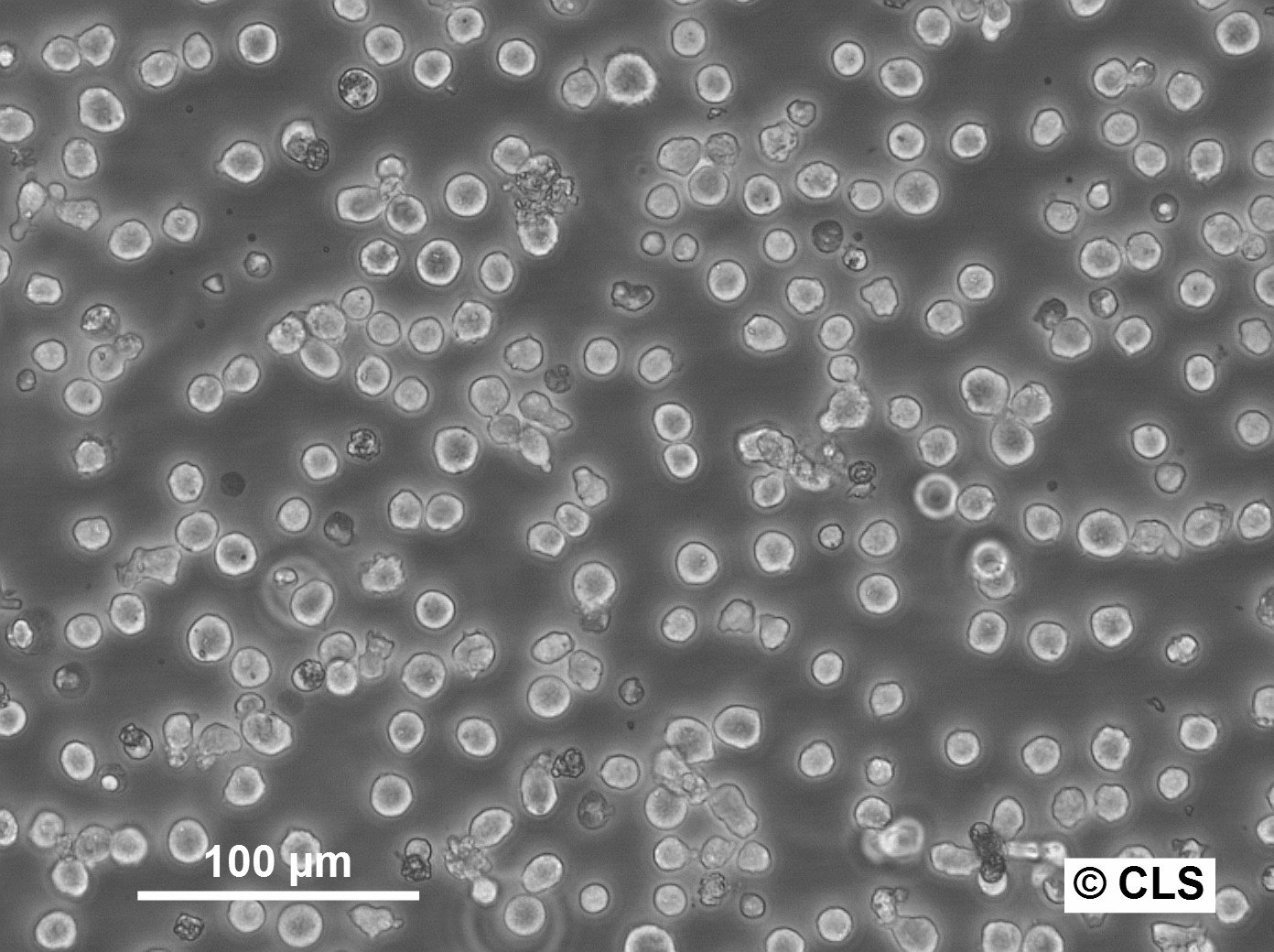
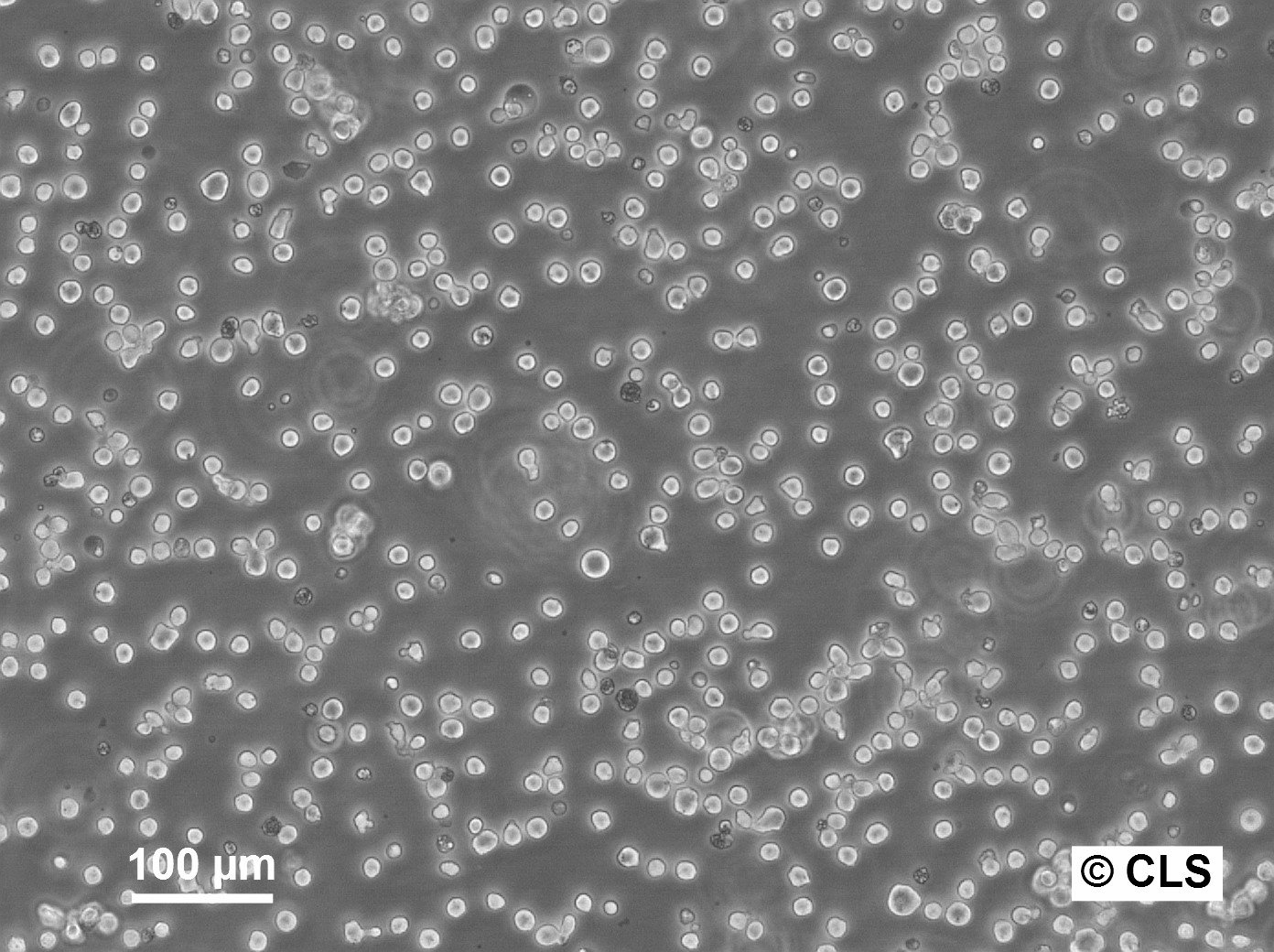
EGG Cells
CAD$1,104.00*
Products are shipped frozen on dry ice in cryotubes. Each cryotube typically contains 3 × 10⁶ cells for adherent lines or 5 × 10⁶ cells for suspension lines (refer to the batch CoA for details).
General information
| Description | EGG is a murine leukemia cell line derived from an adult mouse of the DBA strain (Mus musculus). It is classified as a cancer cell line and is associated with mouse leukemia. The line originates from hematopoietic malignant cells and displays characteristics consistent with murine lymphoid leukemia models, including suspension growth and rapid proliferative capacity under standard culture conditions. The sex of the originating animal is unspecified. As a DBA-derived leukemia model, EGG cells are suitable for in vitro studies of murine hematologic malignancy biology, including investigations into leukemic cell proliferation, differentiation status, apoptosis regulation, and responses to cytotoxic or targeted therapeutic agents. Because the DBA background is immunogenetically distinct from other common laboratory strains (such as C57BL/6 or BALB/c), EGG may be particularly relevant in studies examining strain-specific tumor biology, host-tumor interactions, and transplantation compatibility in syngeneic or allogeneic mouse systems. |
|---|---|
| Organism | Mouse |
| Tissue | Blood |
| Disease | Leukemia |
Characteristics
| Breed/Subspecies | DBA |
|---|---|
| Age | Adult |
| Gender | Unspecified |
| Morphology | Lymphocytic |
| Growth properties | Suspension |
Regulatory Data
| Citation | EGG (Cytion catalog number 400171) |
|---|---|
| Biosafety level | 1 |
| NCBI_TaxID | 10090 |
| CellosaurusAccession | CVCL_5739 |
Biomolecular Data
| Tumorigenic | Yes, in DBA mice |
|---|---|
| Viruses | MAP-test negative: Sendai, Ektromelie, Polyoma, K-Virus, Kilham, Reo 3, PVM, LCM, M.pulmonis, MVM, Theiler's GD VII, Toolan's H-1, MHV, LDV, RCV/SDA, M-Adenovirus, B.piliformis. |
Handling
| Culture Medium | RPMI 1640, w: 2.0 mM stable Glutamine, w: 2.0 g/L NaHCO3 (Cytion article number 820700a) |
|---|---|
| Supplements | Supplement the medium with 10% FBS |
| Subculturing | Maintain cultures by periodically adding or replacing the medium. Initiate cultures with a density of 5 x 10⁵ cells/ml and keep the cell concentration within the range of 3 x 10⁵ to 1 x 10⁶ cells/ml for optimal growth. |
| Seeding density | 0.1 x 10⁶ cells/ml |
| Fluid renewal | Every 3 to 5 days |
| Post-Thaw Recovery | After thawing, allow the cells to recover from the freezing process for at least 24 hours |
| Freeze medium | As a cryopreservation medium, we use complete growth medium (including FBS) + 10% DMSO for adequate post-thaw viability, or CM-1 (Cytion catalog number 800100), which includes optimized osmoprotectants and metabolic stabilizers to enhance recovery and reduce cryo-induced stress. |
| Thawing and Culturing Cells |
|
| Incubation Atmosphere | 37°C, 5% CO2, humidified atmosphere. |
| Flask Coating | None |
| Shipping Conditions | Cryopreserved cell lines are shipped on dry ice in validated, insulated packaging with sufficient refrigerant to maintain approximately −78 °C throughout transit. On receipt, inspect the container immediately and transfer vials without delay to appropriate storage. |
| Storage Conditions | For long-term preservation, place vials in vapor-phase liquid nitrogen at about −150 to −196 °C. Storage at −80 °C is acceptable only as a short interim step before transfer to liquid nitrogen. |
Quality Control & Molecular Analysis
| Sterility | Mycoplasma contamination is excluded using both PCR-based assays and luminescence-based mycoplasma detection methods. To ensure there is no bacterial, fungal, or yeast contamination, cell cultures are subjected to daily visual inspections. |
|---|