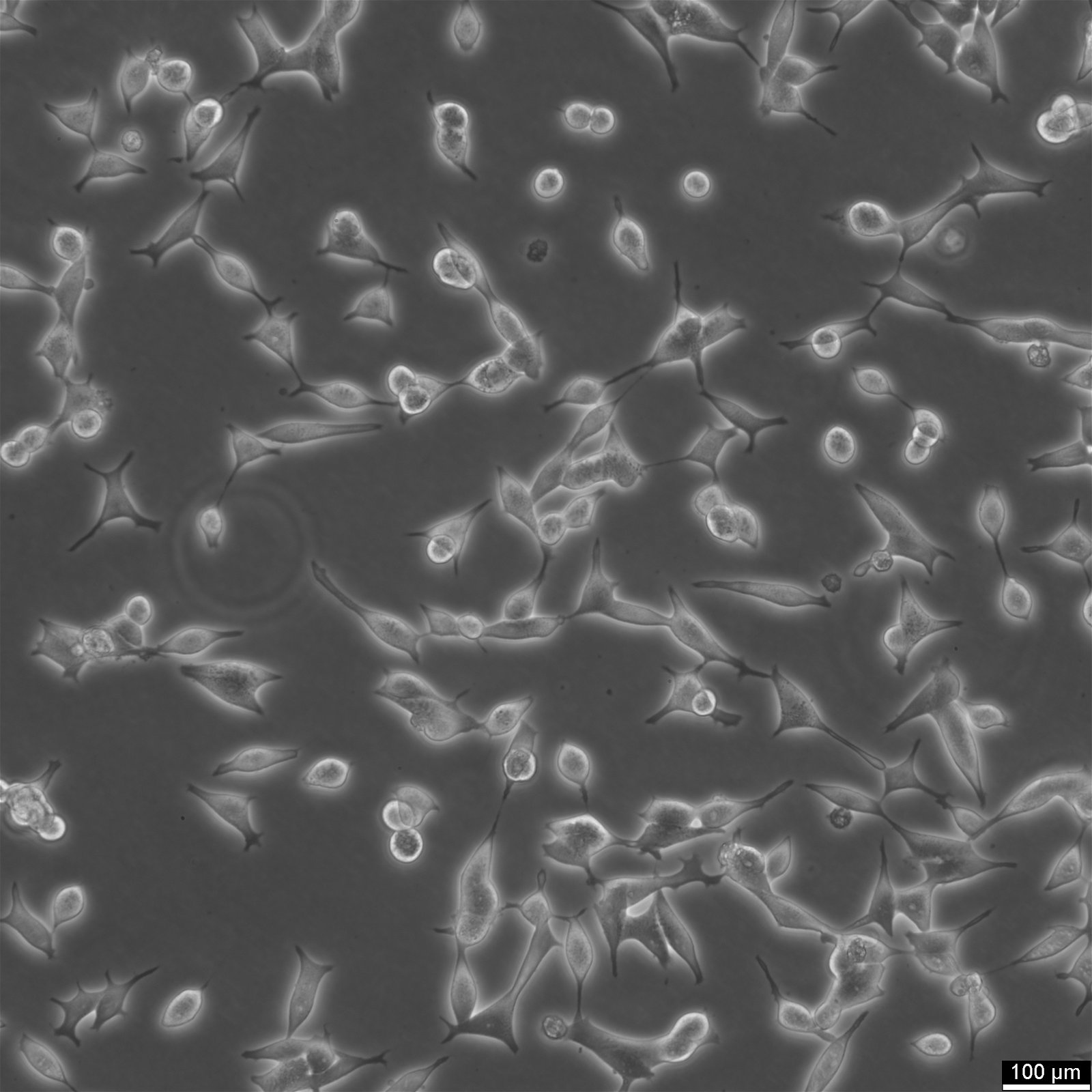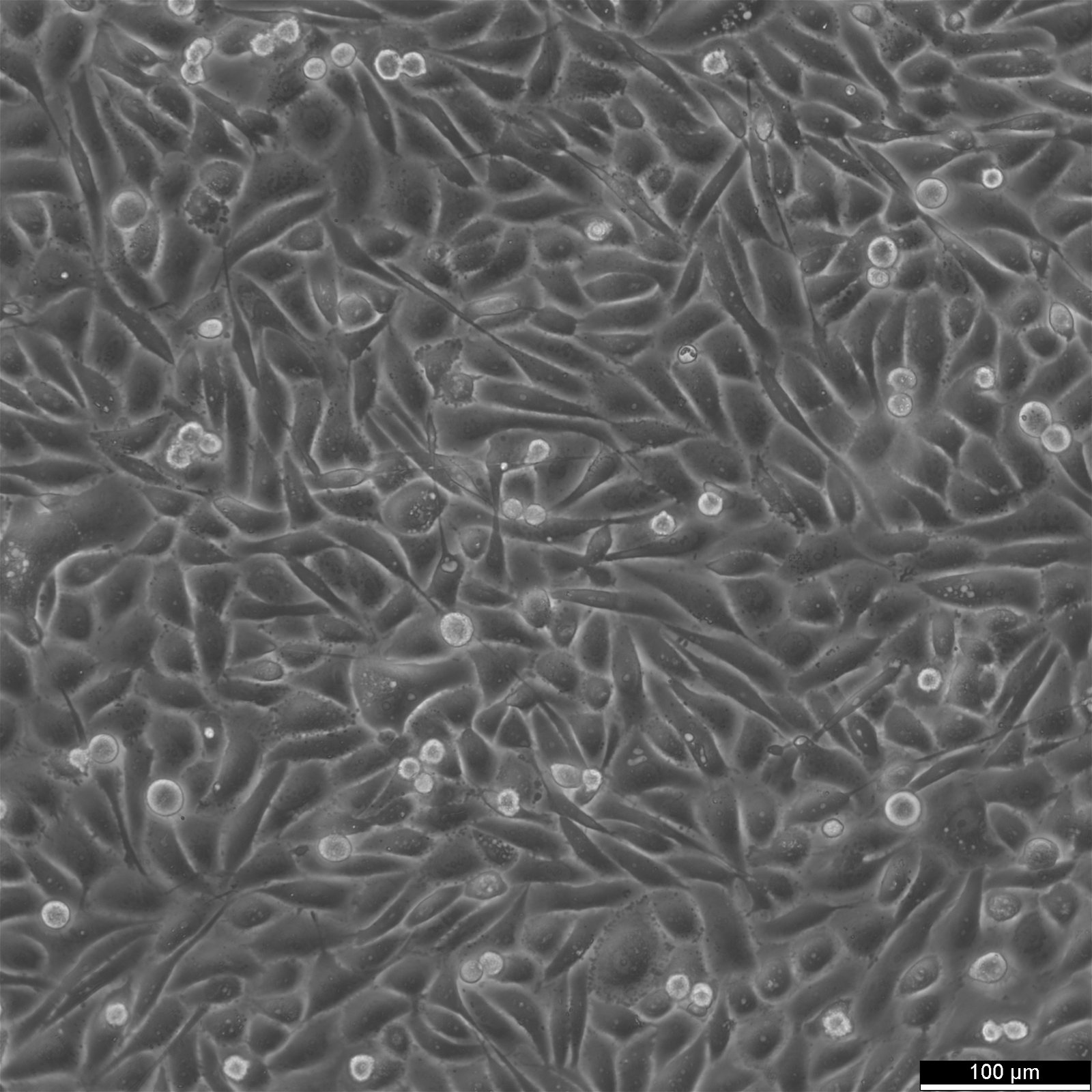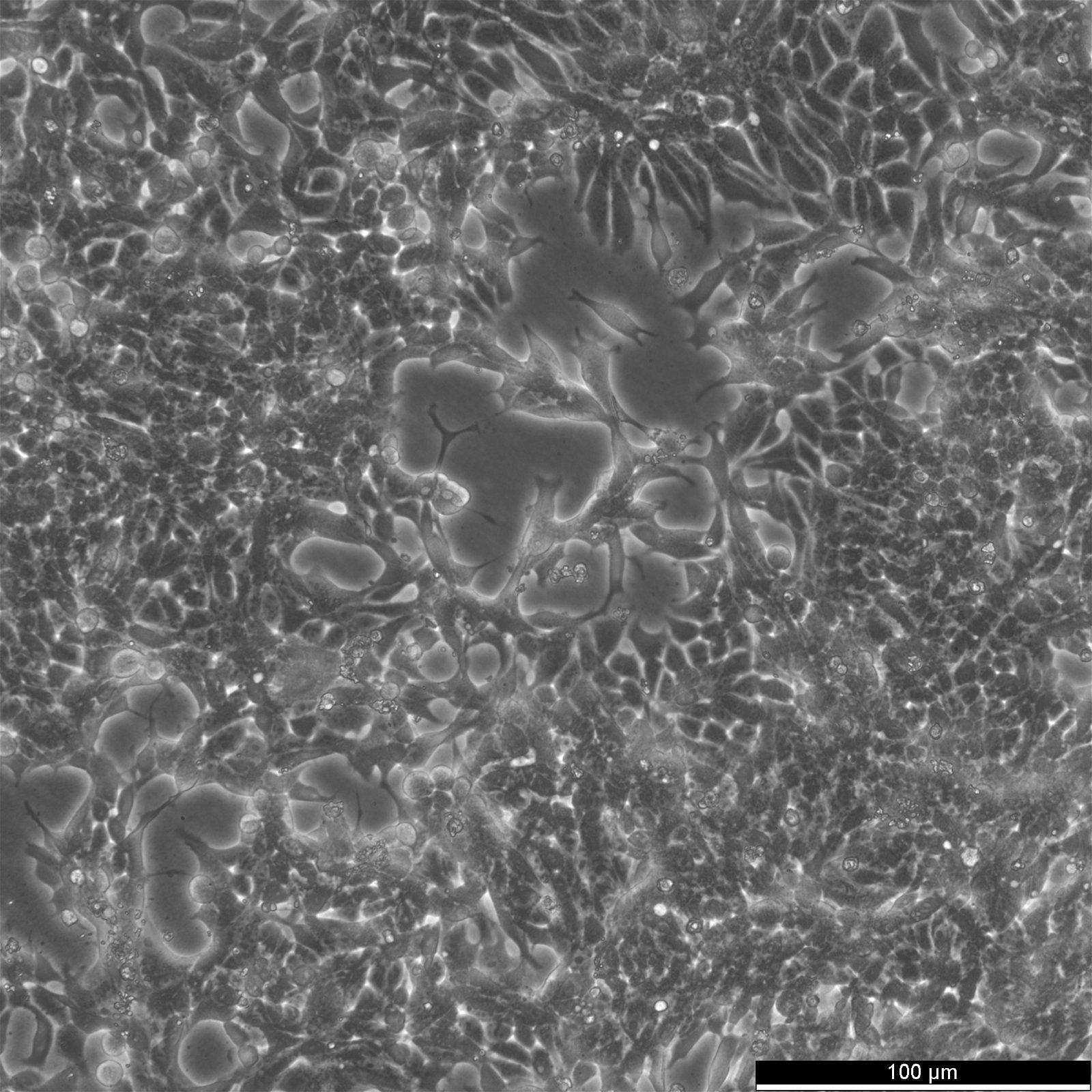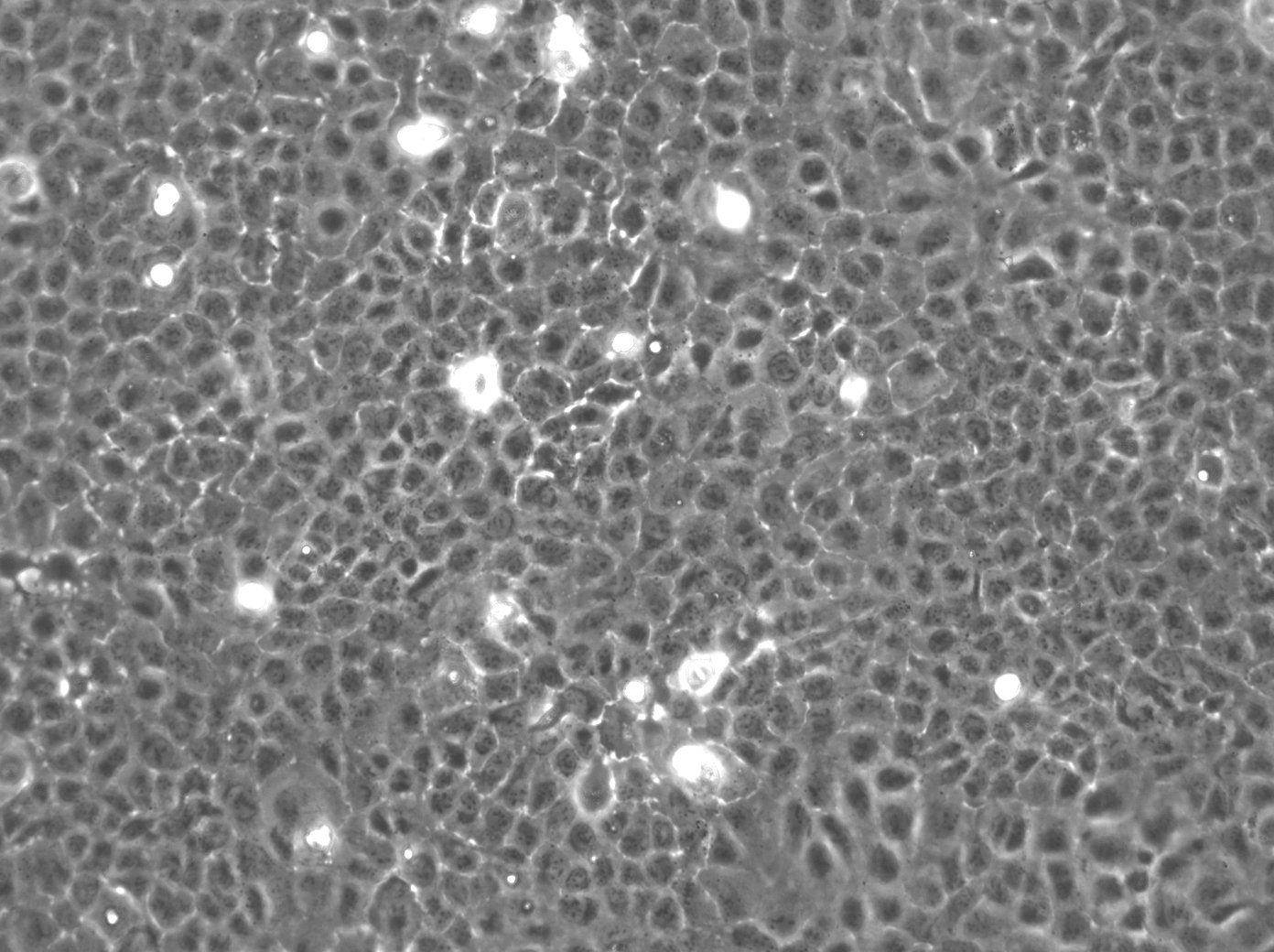
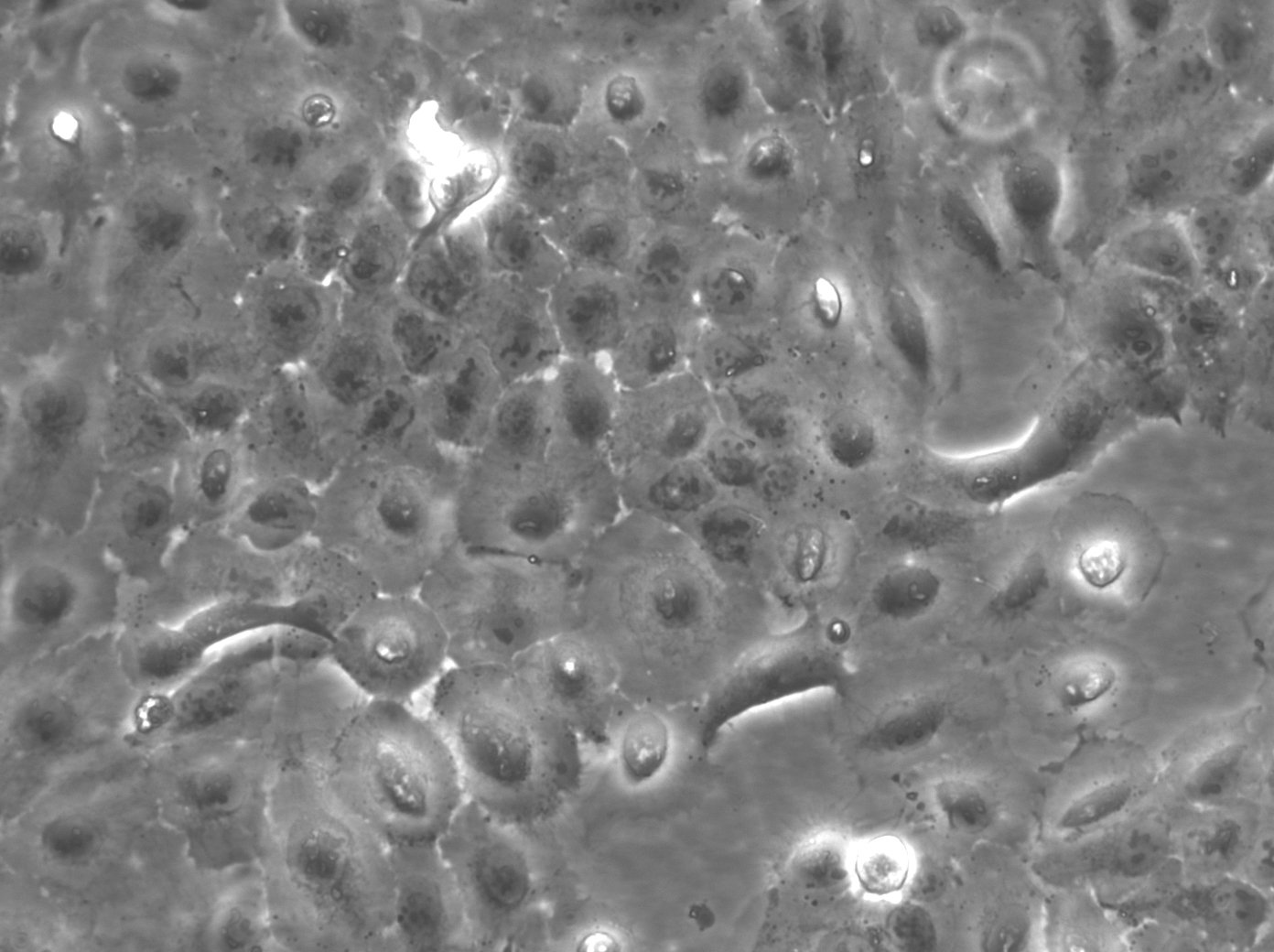
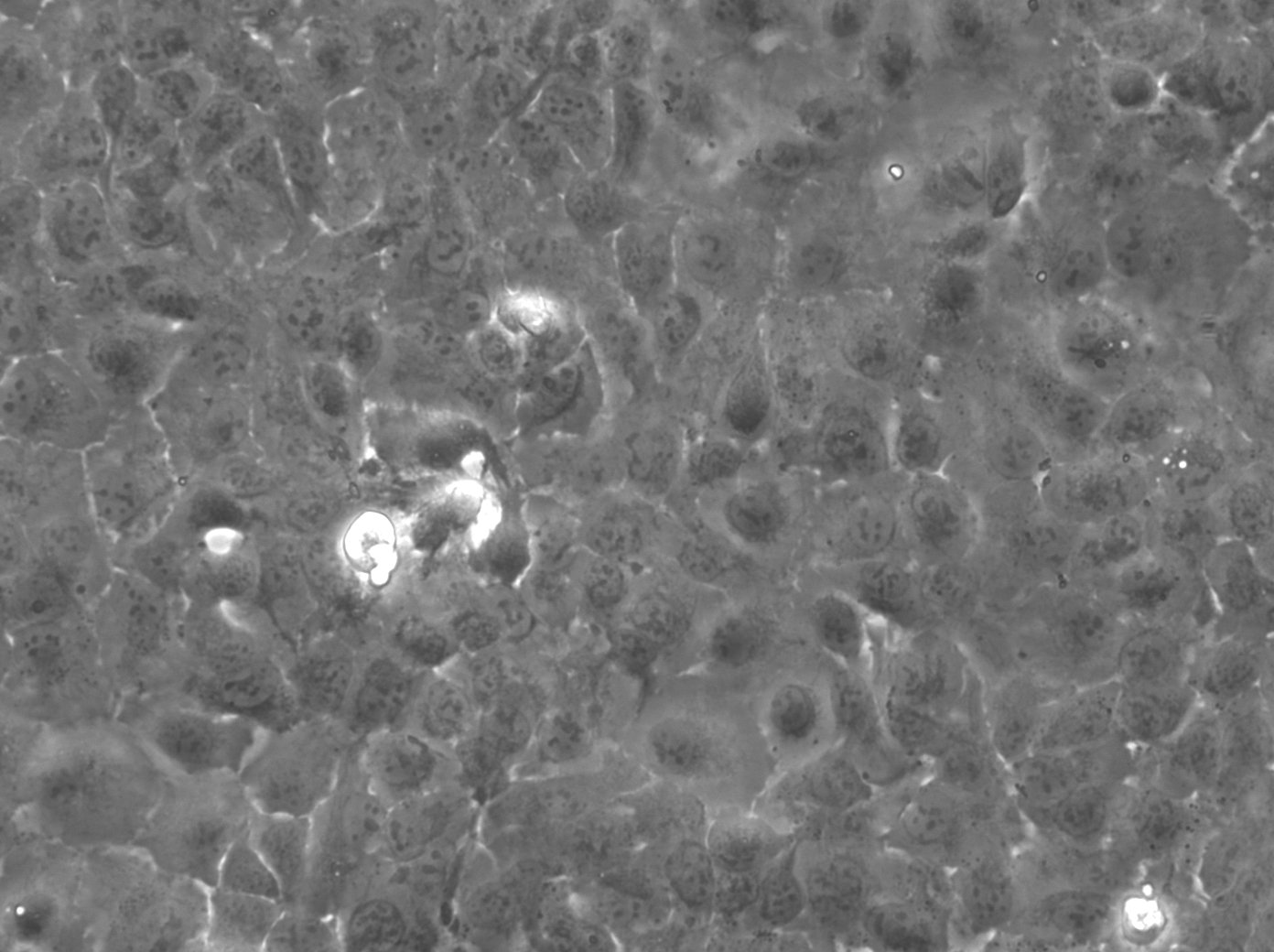
DU-145 Cells
CAD$545.10*
Products are shipped frozen on dry ice in cryotubes. Each cryotube typically contains 3 × 10⁶ cells for adherent lines or 5 × 10⁶ cells for suspension lines (refer to the batch CoA for details).
Investigating androgen receptor influence in the human prostate cancer cell line DU-145
| Description | DU145 is a human prostate cancer cell with an epithelial morphology commonly used in prostate cancer research. The cell line was established from the brain of a 69-year-old male with prostate cancer. They express androgen receptors and are considered tumorigenic with moderate metastatic potential, forming adenocarcinoma (grade II) consistent with prostatic primary when injected into nude mice. In terms of karyotype, DU145 cells are hypotriploid and have several marker chromosomes, including t(11q12q), del(11)(q23), 16q+, del(9)(p11), del(1)(p32), among others. They express several isoenzymes, including AK-1, ES-D, G6PD, GLO-I, Me-2, PGM1, and PGM3. However, the cells do not express the prostate antigen. DU145 cells are weakly positive for acid phosphatase and capable of forming colonies in soft agar. The presence of microvilli, tonofilaments, desmosomes, any mitochondria, well-developed Golgi, and heterogenous lysosomes was reported by ultrastructural analyses. DU145 cells have a doubling time of approximately 30-40 hours and are suitable transfection hosts. DU145 cells are a valuable tool in the therapeutic research of prostate cancer. Along with PC3 and LNCaP cell lines, DU145 is a standard prostate cancer cell line used in medicinal research. Along with PC-3 cells, DU-145 cells express androgen receptor proteins. However, when treated with an androgen ligand, the cells did not show stimulation of the activity of an AR-responsive reporter gene. Therefore, these cells are considered to be androgen non-responsive. |
|---|---|
| Organism | Human |
| Tissue | Prostate |
| Disease | Carcinoma |
| Metastatic site | Brain |
| Synonyms | DU145, Du-145, DU 145, DU_145, DU.145, Duke University 145 |
Features
| Age | 69 years |
|---|---|
| Gender | Male |
| Morphology | Epithelial-like |
| Growth properties | Adherent |
Specification
| Citation | DU-145 (Cytion catalog number 300168) |
|---|---|
| Biosafety level | 1 |
| NCBI_TaxID | 9606 |
| CellosaurusAccession | CVCL_0105 |
Genotype of the human prostate cancer cell line DU-145
| Antigen expression | Blood Type O, Rh+ |
|---|---|
| Isoenzymes | Me-2, 1-2, PGM3, 2, PGM1, 1, ES-D, 1, AK-1, 1, G6PD, B, GLO-1, 2, Phenotype Frequency Product: 0.0041 |
| Tumorigenic | Forms adenocarcinoma (grade II) consistent with prostatic primary |
| Karyotype | (P75) hypotriploid to tetraploid with abnormalities including breaks, dicentrics, minutes and large telocentric marker |
Handling DU145 cells
| Culture Medium | EMEM (MEM Eagle), w: 2 mM L-Glutamine, w: 2.2 g/L NaHCO3, w: EBSS (Cytion article number 820100a) |
|---|---|
| Supplements | Supplement the medium with 10% FBS and 1% NEAA |
| Dissociation Reagent | Accutase |
| Subculturing | Remove the old medium from the adherent cells and wash them with PBS that lacks calcium and magnesium. For T25 flasks, use 3-5 ml of PBS, and for T75 flasks, use 5-10 ml. Then, cover the cells completely with Accutase, using 1-2 ml for T25 flasks and 2.5 ml for T75 flasks. Let the cells incubate at room temperature for 8-10 minutes to detach them. After incubation, gently mix the cells with 10 ml of medium to resuspend them, then centrifuge at 300xg for 3 minutes. Discard the supernatant, resuspend the cells in fresh medium, and transfer them into new flasks that already contain fresh medium. |
| Seeding density | 2 x 10⁴ cells/cm2 will yield in a confluent layer in about 4 days |
| Fluid renewal | 2 to 3 times per week |
| Post-Thaw Recovery | After thawing, allow the cells to recover from the freezing process for at least 24 hours. |
| Freeze medium | As a cryopreservation medium, we use complete growth medium (including FBS) + 10% DMSO for adequate post-thaw viability, or CM-1 (Cytion catalog number 800100), which includes optimized osmoprotectants and metabolic stabilizers to enhance recovery and reduce cryo-induced stress. |
| Thawing and Culturing Cells |
|
| Incubation Atmosphere | 37°C, 5% CO2, humidified atmosphere. |
| Shipping Conditions | Cryopreserved cell lines are shipped on dry ice in validated, insulated packaging with sufficient refrigerant to maintain approximately −78 °C throughout transit. On receipt, inspect the container immediately and transfer vials without delay to appropriate storage. |
| Storage Conditions | For long-term preservation, place vials in vapor-phase liquid nitrogen at about −150 to −196 °C. Storage at −80 °C is acceptable only as a short interim step before transfer to liquid nitrogen. |
Genetic profile
| Sterility | Mycoplasma contamination is excluded using both PCR-based assays and luminescence-based mycoplasma detection methods. To ensure there is no bacterial, fungal, or yeast contamination, cell cultures are subjected to daily visual inspections. |
|---|
Certificate of Analysis (CoA)
| Lot Number | Certificate Type | Date | Catalog Number |
|---|---|---|---|
| 300168-260424 | Certificate of Analysis | 23. May. 2025 | 300168 |
| 300168-810 | Certificate of Analysis | 23. May. 2025 | 300168 |
-
Related products
Related products