
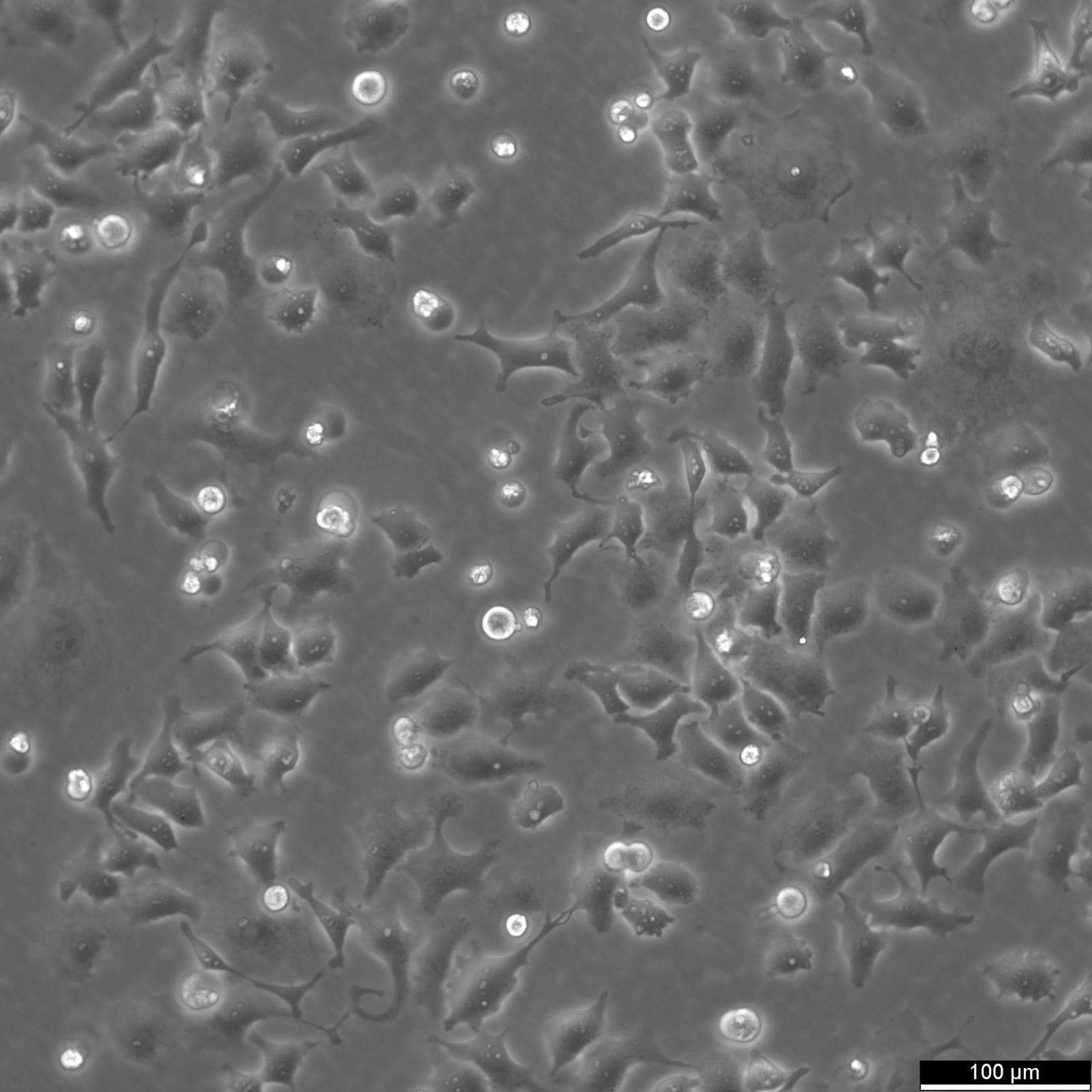
DMS-114 Cells
CAD$759.00*
Products are shipped frozen on dry ice in cryotubes. Each cryotube typically contains 3 × 10⁶ cells for adherent lines or 5 × 10⁶ cells for suspension lines (refer to the batch CoA for details).
General information
| Description | DMS-114 is a human small-cell lung cancer (SCLC) cell line with unique features distinguishing it from other SCLC subtypes. Recent research has indicated that DMS-114, previously classified within the YAP1-expressing SCLC category (SCLC-Y), harbors pathogenic mutations in SMARCA4, an ATPase subunit of the SWI/SNF chromatin-remodeling complex. These mutations are associated with the absence of RB1 mutations, contrary to the typical mutational landscape of SCLC, which commonly features concurrent TP53 and RB1 alterations. This cell line's profile includes reduced expression of SMARCA4 mRNA and protein, contributing to its reclassification as a SMARCA4-deficient undifferentiated tumor (SMARCA4-UT) rather than a traditional SCLC. Morphological assessments have shown that DMS-114 aligns more closely with thoracic SMARCA4-UT, exhibiting traits such as lower neuroendocrine marker expression and a distinctive immunohistochemical profile. The revised classification of DMS-114 as a SMARCA4-deficient malignancy rather than SCLC has significant implications for its use as a preclinical model. It serves as an important resource for studying therapeutic strategies targeting SMARCA4-related pathways and investigating the biology of aggressive thoracic cancers that mimic SCLC. Unlike conventional SCLC, SMARCA4-deficient tumors, including DMS-114, often present with unique gene expression profiles marked by high YAP1 expression, loss of certain neuroendocrine markers, and distinct molecular vulnerabilities. This insight underscores the necessity of comprehensive molecular and histopathological analysis for accurate tumor classification and the development of effective treatment strategies. |
|---|---|
| Organism | Human |
| Tissue | Lung |
| Disease | Thoracic SMARCA4-deficient undifferentiated tumor |
| Synonyms | DMS-114, DMS114, Darmouth Medical School 114 |
Characteristics
| Age | 68 years |
|---|---|
| Gender | Male |
| Ethnicity | Caucasian |
| Growth properties | Adherent |
Regulatory Data
| Citation | DMS-114 (Cytion catalog number 305364) |
|---|---|
| Biosafety level | 1 |
| NCBI_TaxID | 9606 |
| CellosaurusAccession | CVCL_1174 |
Biomolecular Data
| Receptors expressed | Epidermal growth factor (EGF), complement (CR3) |
|---|---|
| Protein expression | Genes expressed: adrenocorticotropin (adrenocorticotropic hormone, ACTH), bombesin, glucagon, 17 beta estradiol, oxytocin - neurophysin (OT-NP) |
| Antigen expression | Leu 7 +, My23 +, CD11b + |
| Tumorigenic | Yes, in nude mice |
| Mutational profile | Mutation: SMARCA4, p.Glu1310Ter (c.3928G>T), homozygous; Mutation: PARD3B, Ex2-14del, homozygous; Mutation: TP53, p.Arg213Ter (c.637C>T), homozygous |
Handling
| Culture Medium | Waymouth's MB 752/1 medium (We do not supply this product; please consider other suppliers. Please let us know if you need further assistance) |
|---|---|
| Supplements | Supplement the medium with 10% FBS |
| Dissociation Reagent | Accutase |
| Fluid renewal | 2 times per week |
| Freeze medium | As a cryopreservation medium, we use complete growth medium (including FBS) + 10% DMSO for adequate post-thaw viability, or CM-1 (Cytion catalog number 800100), which includes optimized osmoprotectants and metabolic stabilizers to enhance recovery and reduce cryo-induced stress. |
| Thawing and Culturing Cells |
|
| Incubation Atmosphere | 37°C, 5% CO2, humidified atmosphere. |
| Shipping Conditions | Cryopreserved cell lines are shipped on dry ice in validated, insulated packaging with sufficient refrigerant to maintain approximately −78 °C throughout transit. On receipt, inspect the container immediately and transfer vials without delay to appropriate storage. |
| Storage Conditions | For long-term preservation, place vials in vapor-phase liquid nitrogen at about −150 to −196 °C. Storage at −80 °C is acceptable only as a short interim step before transfer to liquid nitrogen. |
Quality Control & Molecular Analysis
| Sterility | Mycoplasma contamination is excluded using both PCR-based assays and luminescence-based mycoplasma detection methods. To ensure there is no bacterial, fungal, or yeast contamination, cell cultures are subjected to daily visual inspections. |
|---|
Certificate of Analysis (CoA)
| Lot Number | Certificate Type | Date | Catalog Number |
|---|---|---|---|
| 305364-040425 | Certificate of Analysis | 23. May. 2025 | 305364 |