
Alab Cells
CAD$759.00*
Products are shipped frozen on dry ice in cryotubes. Each cryotube typically contains 3 × 10⁶ cells for adherent lines or 5 × 10⁶ cells for suspension lines (refer to the batch CoA for details).
General information
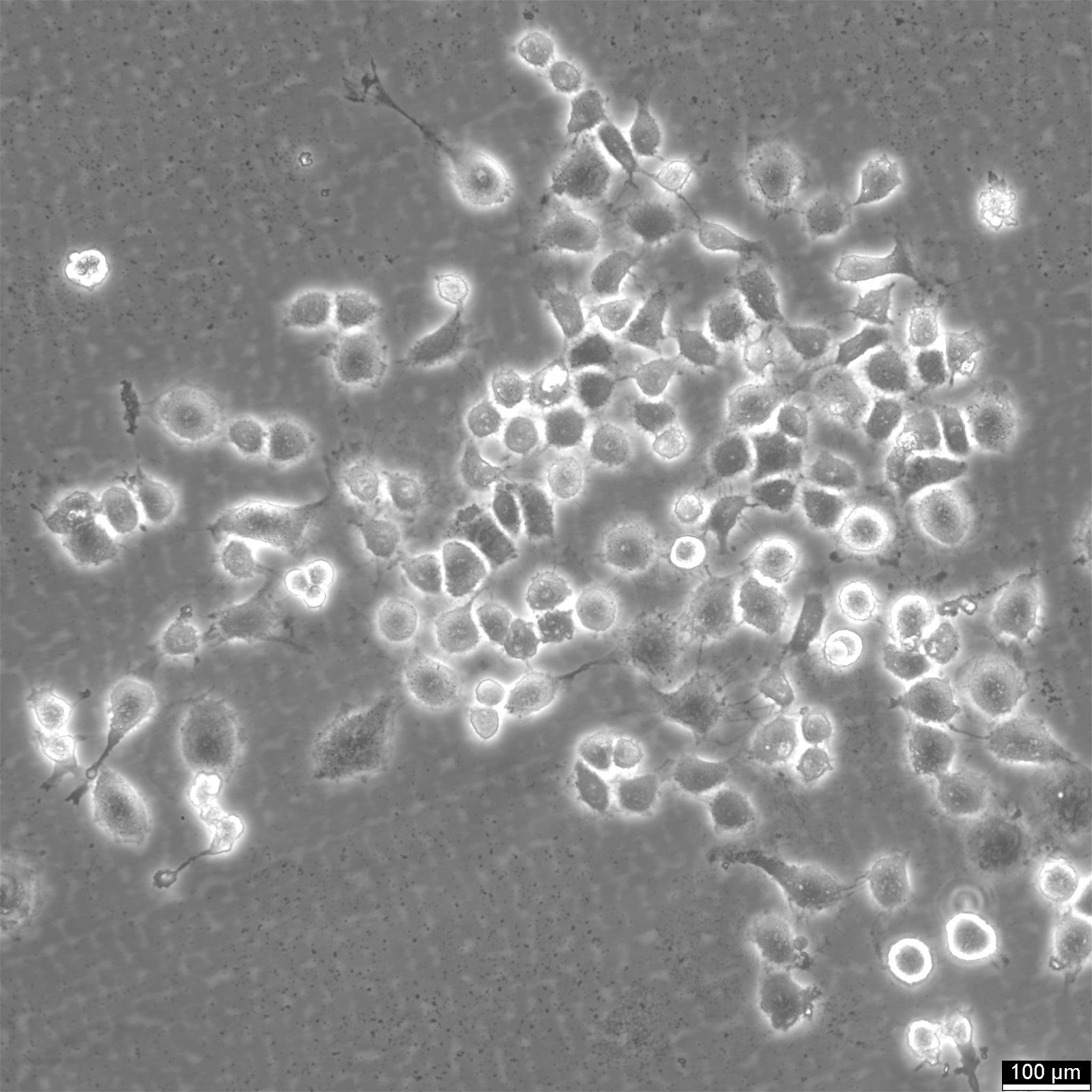
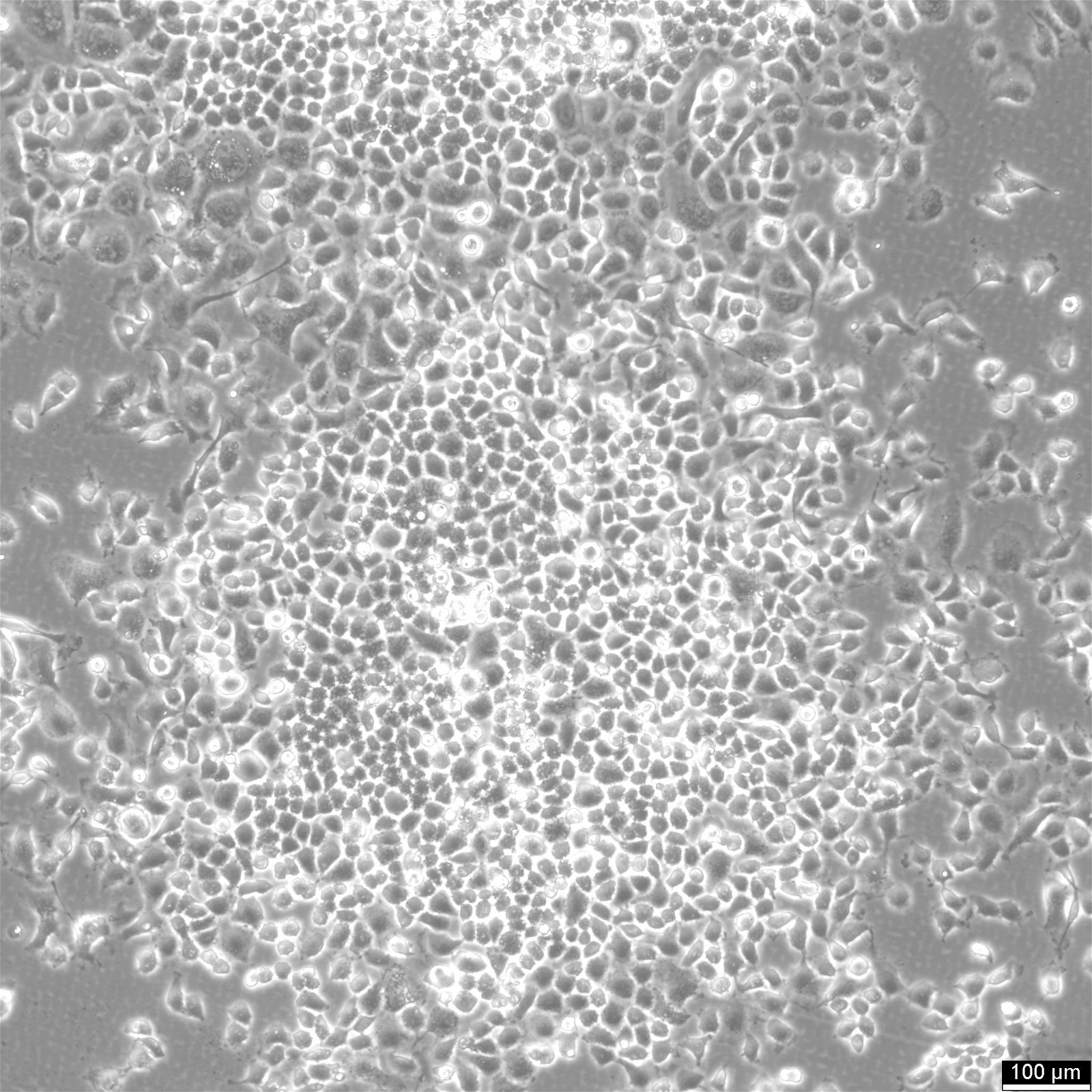
| Description | The ALAB cell line is a human mammary adenocarcinoma cell line derived from a mammary tumor. It has been adapted to grow in vitro, particularly on collagen substrates, which facilitates the study of tumor cell behavior in mammary carcinomas. ALAB cells are notably used in research focused on calcium-binding and collagen-binding proteins (CaBP and CBP, respectively). In these cells, the calcium-binding proteins were isolated and analyzed, revealing a significant 38 kDa protein, which is closely associated with annexins, a family of proteins involved in cellular processes such as membrane trafficking and signal transduction. One of the key proteins identified in ALAB cells is annexin II, a calcium-dependent protein that binds to collagen and plays a role in various cellular functions, including exocytosis and cytoskeletal organization. Immunofluorescence studies of ALAB cells reveal a perinuclear granular pattern of annexin II expression, indicating its involvement in protein secretion and cellular differentiation. The 38 kDa annexin II protein detected in these cells is also associated with collagen-binding properties, which can be crucial for tumor progression and metastasis, making ALAB a valuable model for studying mammary tumor biology and protein interactions. |
|---|---|
| Organism | Human |
| Tissue | Breast |
| Disease | Adenocarcinoma |
| Synonyms | AlAb, ALAB, A1Ab, AIAB |
Characteristics
| Age | 54 years |
|---|---|
| Gender | Male |
| Growth properties | Adherent/suspension |
Regulatory Data
| Citation | Alab (Cytion catalog number 300280) |
|---|---|
| Biosafety level | 1 |
| NCBI_TaxID | 9606 |
| CellosaurusAccession | CVCL_U957 |
Biomolecular Data
Handling
| Culture Medium | DMEM:Ham's F12 (1:1), w: 3.1 g/L Glucose, w: 2.5 mM L-Glutamine, w: 15 mM HEPES, w: 0.5 mM Sodium pyruvate, w: 1.2 g/L NaHCO3 (Cytion article number 820400a) |
|---|---|
| Supplements | Supplement the medium with 5% FBS |
| Dissociation Reagent | Accutase |
| Subculturing | Gather the suspension cells in a 15 ml tube and gently wash the adherent cells with PBS lacking calcium and magnesium (use 3-5 ml for T25 flasks and 5-10 ml for T75 flasks). Apply Accutase (1-2 ml for T25 flasks, 2.5 ml for T75 flasks) ensuring full coverage of the cell layer. Allow the cells to incubate at room temperature for 10 minutes. Following incubation, combine and centrifuge both the suspension and adherent cells. After centrifugation, carefully resuspend the cell pellet and transfer the cell suspension into new flasks containing fresh medium. |
| Freeze medium | As a cryopreservation medium, we use complete growth medium (including FBS) + 10% DMSO for adequate post-thaw viability, or CM-1 (Cytion catalog number 800100), which includes optimized osmoprotectants and metabolic stabilizers to enhance recovery and reduce cryo-induced stress. |
| Thawing and Culturing Cells |
|
| Incubation Atmosphere | 37°C, 5% CO2, humidified atmosphere. |
| Shipping Conditions | Cryopreserved cell lines are shipped on dry ice in validated, insulated packaging with sufficient refrigerant to maintain approximately −78 °C throughout transit. On receipt, inspect the container immediately and transfer vials without delay to appropriate storage. |
| Storage Conditions | For long-term preservation, place vials in vapor-phase liquid nitrogen at about −150 to −196 °C. Storage at −80 °C is acceptable only as a short interim step before transfer to liquid nitrogen. |
Quality Control & Molecular Analysis
| Sterility | Mycoplasma contamination is excluded using both PCR-based assays and luminescence-based mycoplasma detection methods. To ensure there is no bacterial, fungal, or yeast contamination, cell cultures are subjected to daily visual inspections. |
|---|